Liberia is fighting a war, which has already killed hundreds and is showing no signs of relenting. We health workers are in the front line of this war, and count for over 8% of the victims Ebola in West Africa.
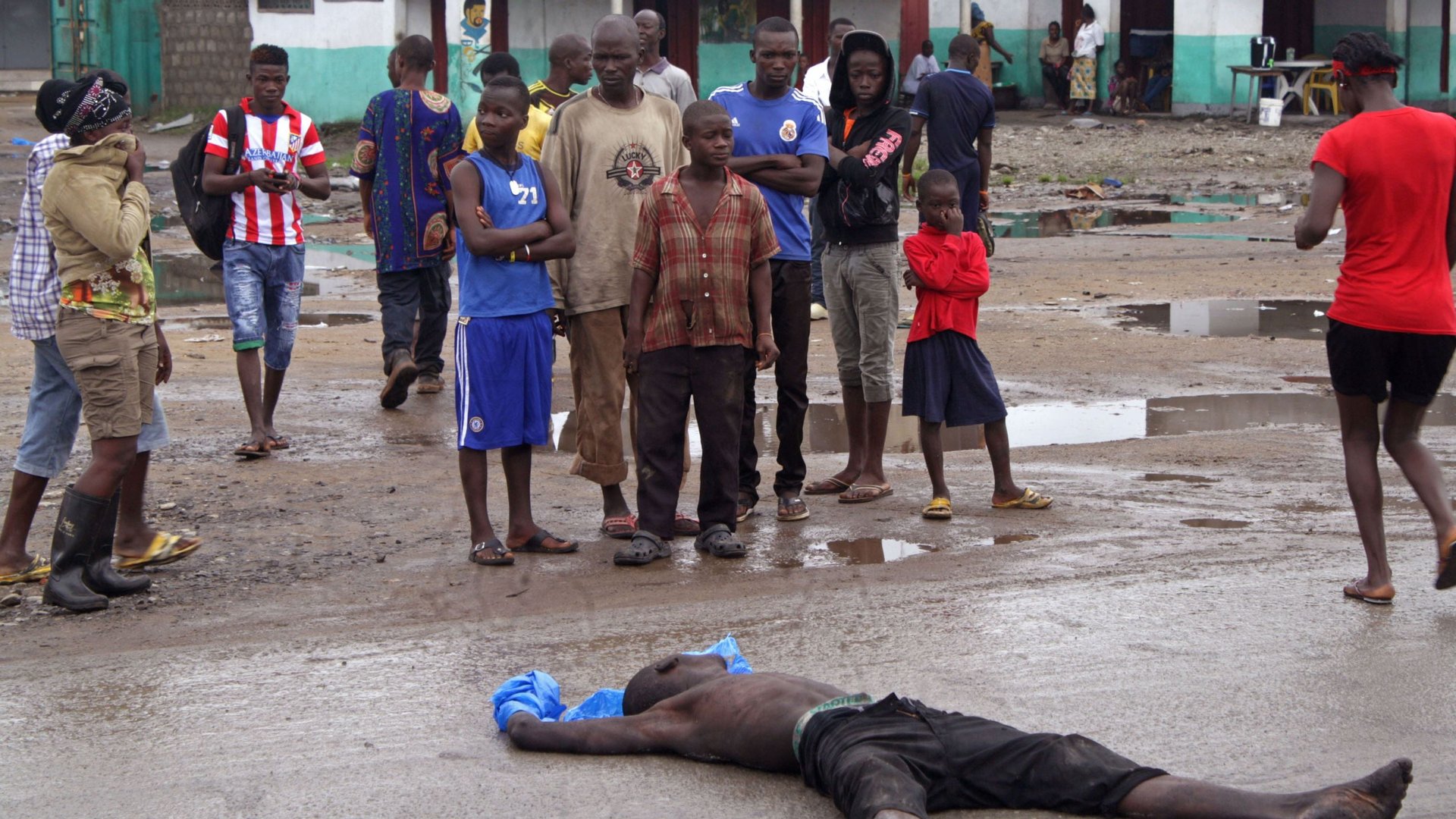
Liberia is fighting a war, which has already killed hundreds and is showing no signs of relenting. We health workers are in the front line of this war, and count for over 8% of the victims Ebola in West Africa.
We’re called “front liners,” “national heroes,” “true patriots” and yet we are not paid proportionally to the risk we are taking, nor are we provided with the necessary gear to minimize the chance of contagion, or given the vital psychological support as we watch our colleagues die. The families of those who die aren’t given support, even though they may have lost their sole breadwinner.
Join 500,000+ readers who start their day with Quartz.
By subscribing, you agree to our Terms of Service and Privacy Policy.
Every Ebola victim is first of all a human who deserves to be treated with dignity and accorded all the inalienable rights, including the provision of holistic medical service of which quality social and mental health support are fundamental component. Ebola victims particularly need to have access to professional counseling because they are not just victims of physical illness but of gross discrimination and abject neglect. In most cases, Ebola’s victims are prey to minor depression, which speedily degenerates into acute depression, which can be a staunch barrier to physical healing.
But this isn’t true only of the victims—health workers experience vicarious trauma and we need to feel that the Ministry of Health and Social Welfare and the Ebola National Task Force consider it their priority to guarantee support and care for us, as well as for the victims.
When doctor Kent Brantly and his colleague Nancy Writebol chose to serve in the Ebola treatment center, they fearlessly did so for many reasons knowing very well (as all Americans do) that in the worst-case scenario their government would watch their backs. Sure enough, when the worst situation occurred, the US didn’t default on its promises and eventually airlifted and treated the ill in their best facilities.
Dare Liberia not raise the argument that we lack the capacity to follow suit: when the same happened before our eyes, our heroes and heroines were not given the best treatment.
I have not lost hope in Liberia. On the contrary, despite the unfavorable figures and data, I still believe that we have a chance in fierce fight against Ebola. But to make it, we have to change a few things now:
This isn’t done by simply waving a magic wand; there are hurdles and constraints of all sorts. Yet I am of the staunch conviction that if the right people are empowered, monitored and listened to, we as a nation can overall prevail against Ebola and other foes as we have with sweat, blood and diligence overcome in the past.
