Hollywood loves to hate on artificial intelligence. Plot 1 is an all-out dystopian nightmare. Plot 2 seduces until the fragile fantasy of happiness shatters as the heroic protagonist realizes that it’s rotten to the core. See Plot 1.
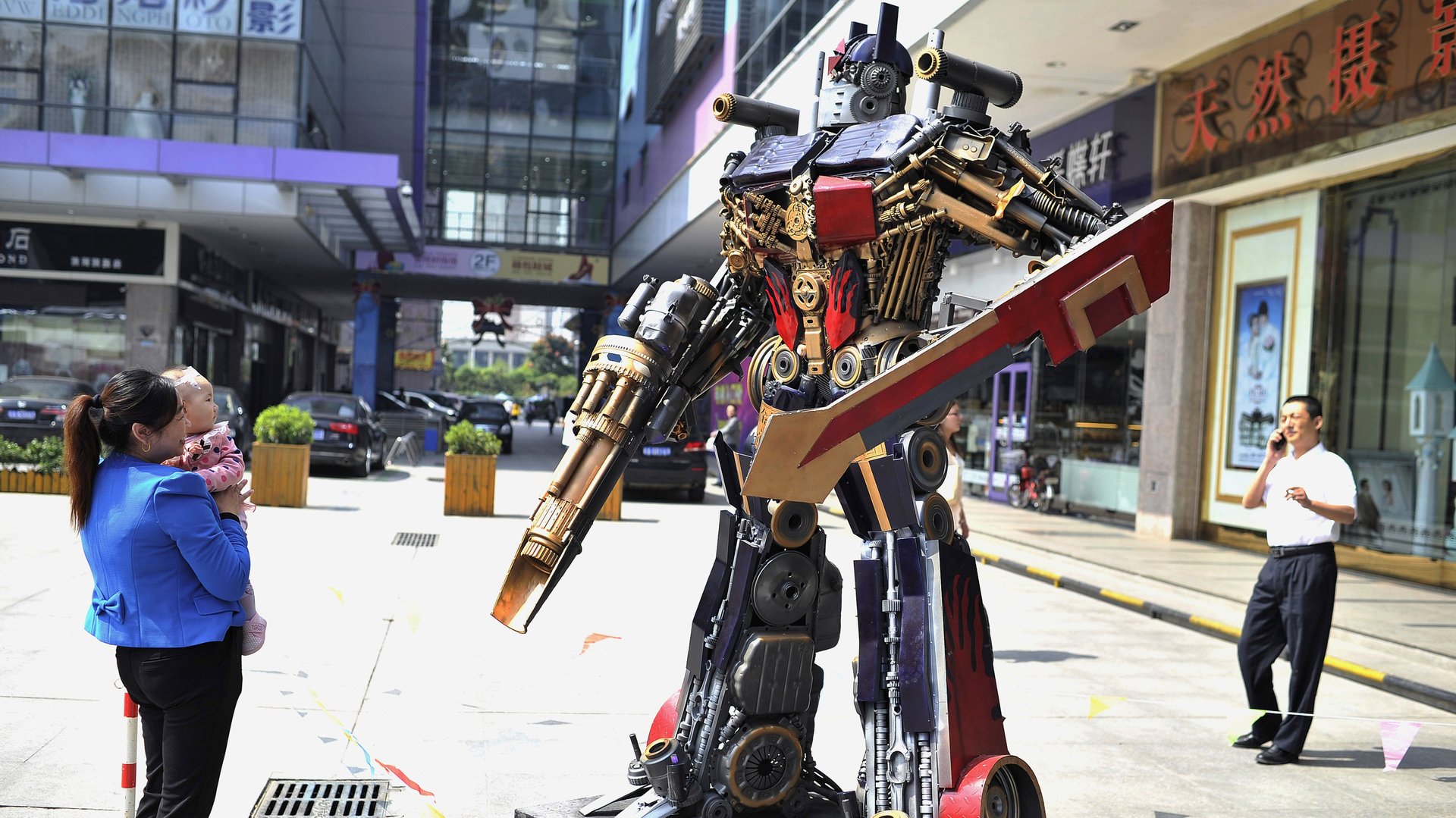
Hollywood loves to hate on artificial intelligence. Plot 1 is an all-out dystopian nightmare. Plot 2 seduces until the fragile fantasy of happiness shatters as the heroic protagonist realizes that it’s rotten to the core. See Plot 1.
The New York Times’ Jayson Greene tries to explain what’s behind this generally dismal vision. Referencing Arthur C. Clark’s essay, “The Hazards of Prophecy,” which posits that it’s the failure of imagination and the failure of nerve that results in fatalistic views, Greene writes that we fail to envision a hopeful future because we imagine the worst. Beware the Terminator, Hal, NS-54s and Preston—all about power and control. The assumption seems to be that artificial intelligence will drive to our base, ruthless instincts.
Join 500,000+ readers who start their day with Quartz.
By subscribing, you agree to our Terms of Service and Privacy Policy.
But then there’s Star Wars. Humanity comes in the form of C3PO and R2D2—and Chroon-Tan B.
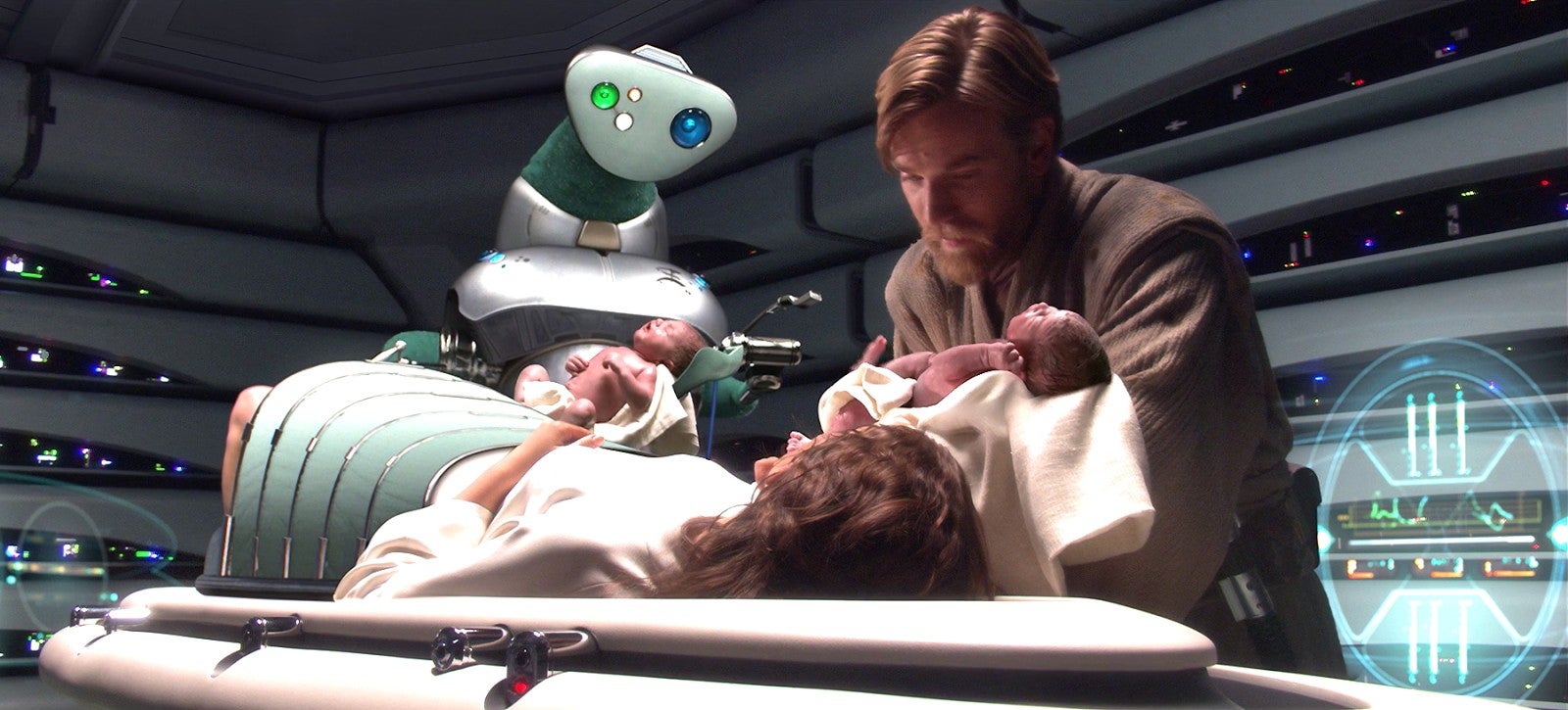
In 2005, Chroon-Tan B made an appearance in the public consciousness as the midwife robot in Star Wars III; Revenge of the Sith. She, because she definitely sounded like a she, crooned softly as she gently cradled the newborn twins Leia and Luke, as their mother was unceremoniously and traumatically despatched to film heaven. It was an odd little gentle interlude before the gory scenes that followed as dad Anakin was despatched limb by limb to his Darth future.
Imagine my surprise earlier this week when I found an iteration of Chroon-Tan on AngelList, the site to invest in early-stage startups. BabyBe was clearly a device created by engineers who understand the role of mothers (rather, the need for mothers) in the lives of preemie children.
Take a look here for what BabyBe does—its tag line is “soft Robotics for neonatal healthcare.”
The product is a brilliant use of data, sensors, and new materials that make the preemie child and mother’s experience so much more fulfilling, and I suspect ensures better outcomes for the life of the child. It consists of three modules:
Here is a robot that has the wellbeing of mother and child squarely in mind and design. Rather than imagining the worst like Hollywood does, BabyBe’s creators imagined the best—they have FDA approval for their materials, they work not only with maternal data, but maternal feelings, they prioritize not only the child’s vitals but her emotional well-being.
There are takeaways about the future of artificial intelligence here but also on innovation overall:
