This item has been corrected.

This item has been corrected.
Google $GOOGL is on the road in Europe, travelling with a merry band of enlisted experts from Madrid to Brussels via other major European cities. The roadshow is part of Google’s effort to drum up support for its point of view about the “right to be forgotten,” which allows Europeans to request Google to take down links to material about them that is ” irrelevant, outdated, or otherwise inappropriate.” Meanwhile, the European Union has its own (somewhat less sophisticated) PR exercise underway (pdf).
Join 500,000+ readers who start their day with Quartz.
By subscribing, you agree to our Terms of Service and Privacy Policy.
While there is plenty of spin from both sides, facts on the ground remain scarce. In July, Google told the European Commission’s Article 29 Working Party, a body of data protection commissioners, that it had received over 91,000 requests for some 328,000 links to be taken down because of obsolete information since the ruling went into effect in May. More recently, the New Yorker reported that the number of requests had climbed to 120,000, at an average of four links per request. That suggests the flood is turning into a trickle: Google got 10% of those on the first day of launching its online request form.
How is Google dealing with those requests? Forget.me, a service from the people at Reputation VIP, has some answers. Forget.me has so far requested the removal of 15,000 links from people in 30 countries. That’s 4.5% of the total number of links Google is being asked to remove—a respectable sample size. Here are trends that have emerged from Forget.me’s requests:
Of the 15,061 links submitted, Forget.me has so far received a response for 7,085 of them, or just under half.
Google rejected the majority of those.
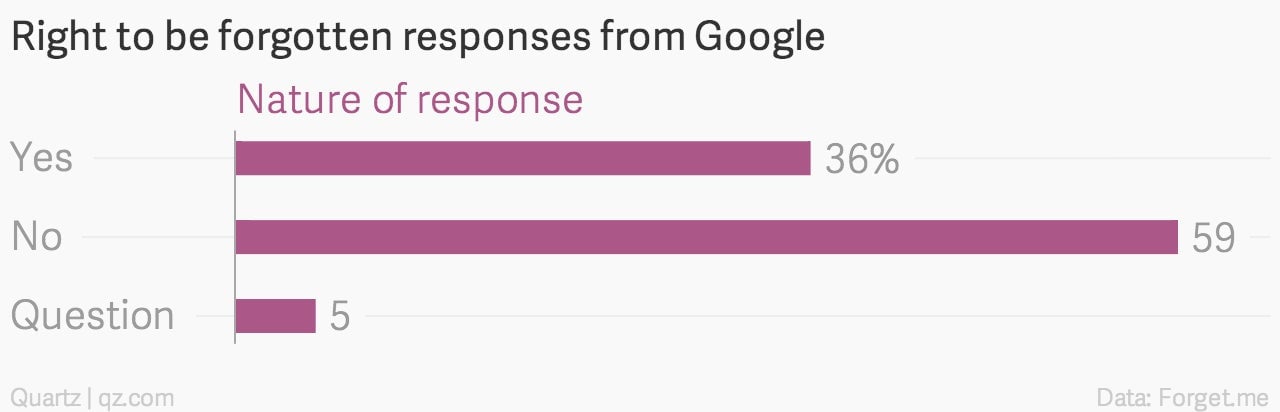
“Questions” can include things like “You have made an error in your request, can you correct it?”; “Can you prove you are not guilty of what you were accused of?”; and “Can you prove what you were accused of is no longer relevant?”
If a request is refused, Google offers an explanation.
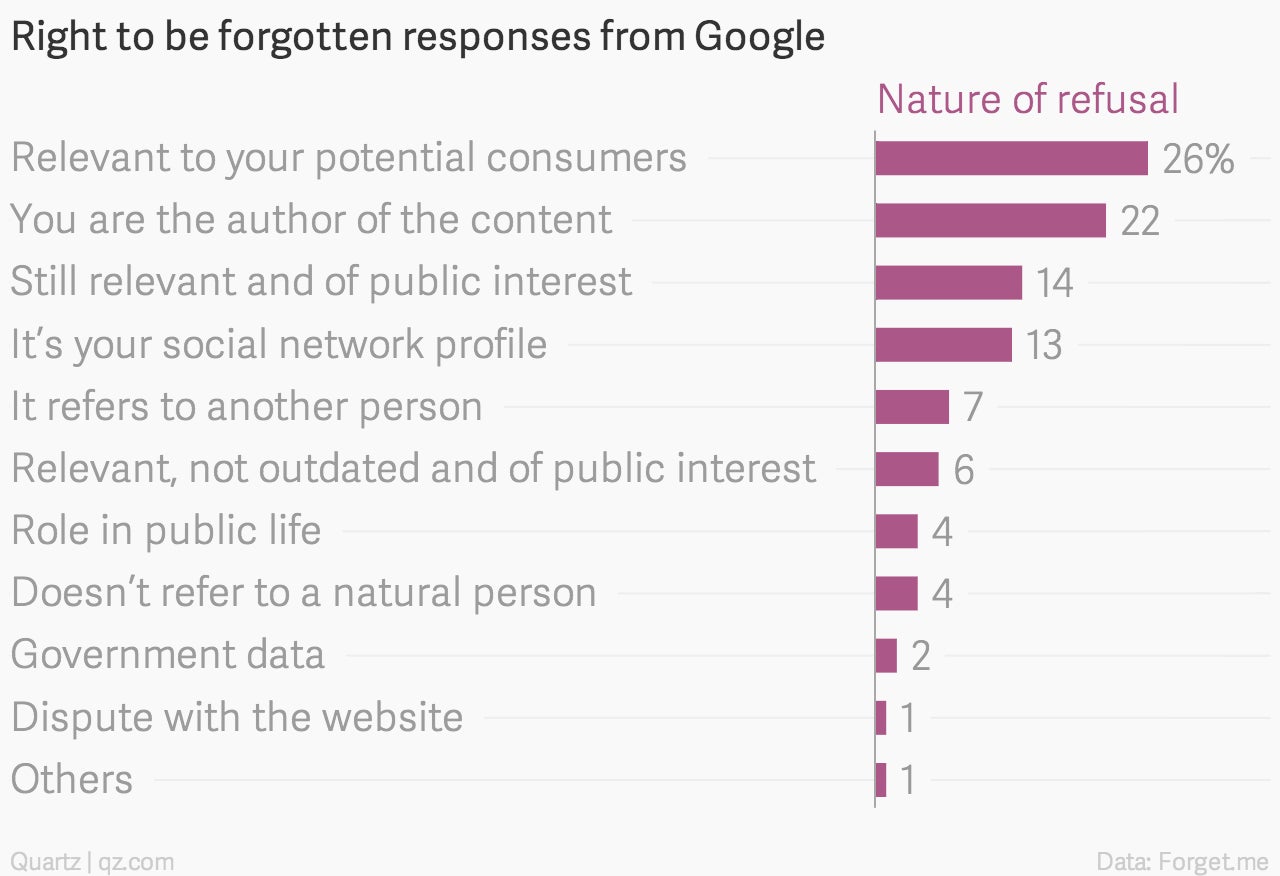
People who are considered to have a role in public life include TV presenters, journalists, politicians, and business leaders, among others.
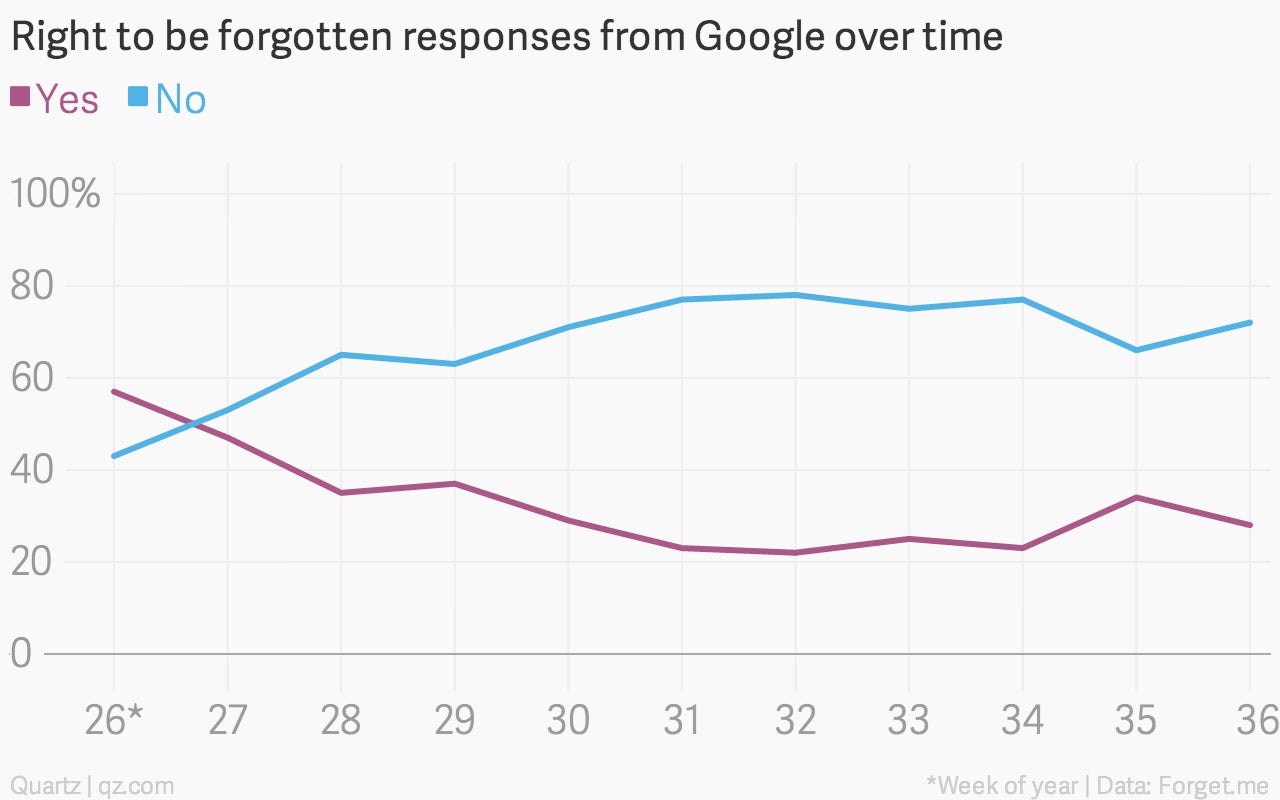
Forget.me found that Google is becoming less likely to respond favorably as time passes.
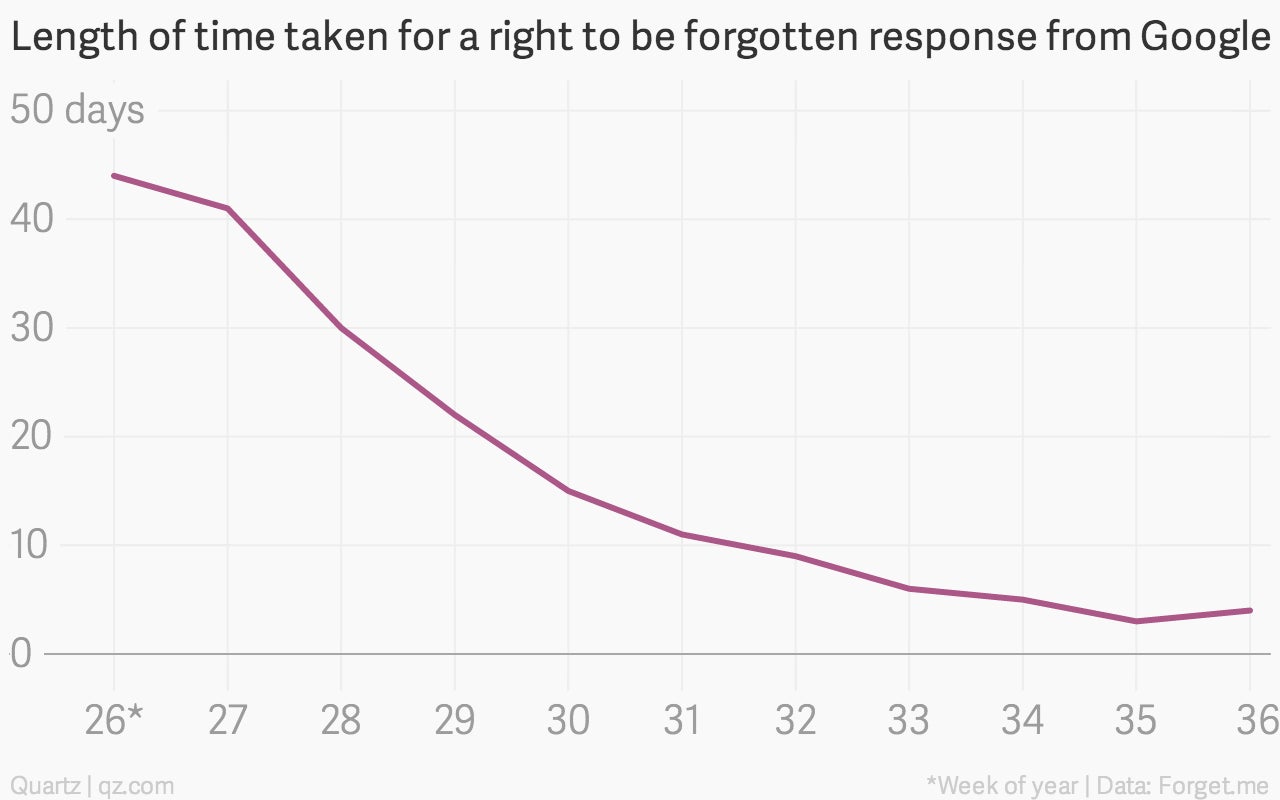
But at least Google is taking less time to process the requests. “However,” adds Forget.me, “even though the average time it takes to deal with a request has changed considerably, we must remember that more than half of the URLs have not yet been dealt with, and therefore be prepared to wait many weeks for a reply.” Google has not yet responded to a request for comment.
Correction (Sept. 25, 2014): An earlier version of this article incorrectly referred to Forget.me as a service from Reputation.com. It is in fact a product of Reputation VIP. Hopefully we can all just forget about this error.
