- Experience advisory board (EAB): An EAB is a group of individuals from different parts of the company, with a preference toward customer- facing employees versus managers or back operations peo- ple. Members of the board are given alternative channels of communication (such as Slack $WORK or other collaboration tools) to ensure that ideas, suggestions, and issues that come from the EAB can be easily captured and to allow for further col- laboration outside the board. The idea behind an EAB is to break down the barriers of traditional silos or reporting line systems and brainstorm ideas, ideate, and then feed sugges- tions directly to executive leadership.
- Center of excellence (CoE): A CoE is a team of representa- tives from management, lines of business (LOB), and IT. The CoE provides the organization with best practices around a particular area of interest when there is a knowledge deficit or skills gap. For example, a new CoE may be set up to man- age the adoption and integration of a new CRM system, meet regularly to develop a needs assessment, interview employees who will use the system, and keep communication between groups open. An important goal of a CoE is to eliminate in- efficiency and help achieve excellence.
- Employee resource group (ERG): An ERG is a group of employees who join together in their workplace based on shared characteristics or life experiences. ERGs generally help pro- vide peer-to-peer support, enhance career development, and contribute to personal development in the work environment. ERG members typically have a pulse on what is going on in the business around their specific area and can provide CEOs with an on-the-ground perspective.
- Voice of the employee (VoE): VoE is a structured process in which companies directly solicit and gather employees’ stated needs, wants, expectations, and performance experience about the systems, technology, and processes they have been provided. The voice can be captured via direct observation, surveys, interviews, focus groups, and data, or from in- ternal groups like EABs, CoEs, and ERGs.
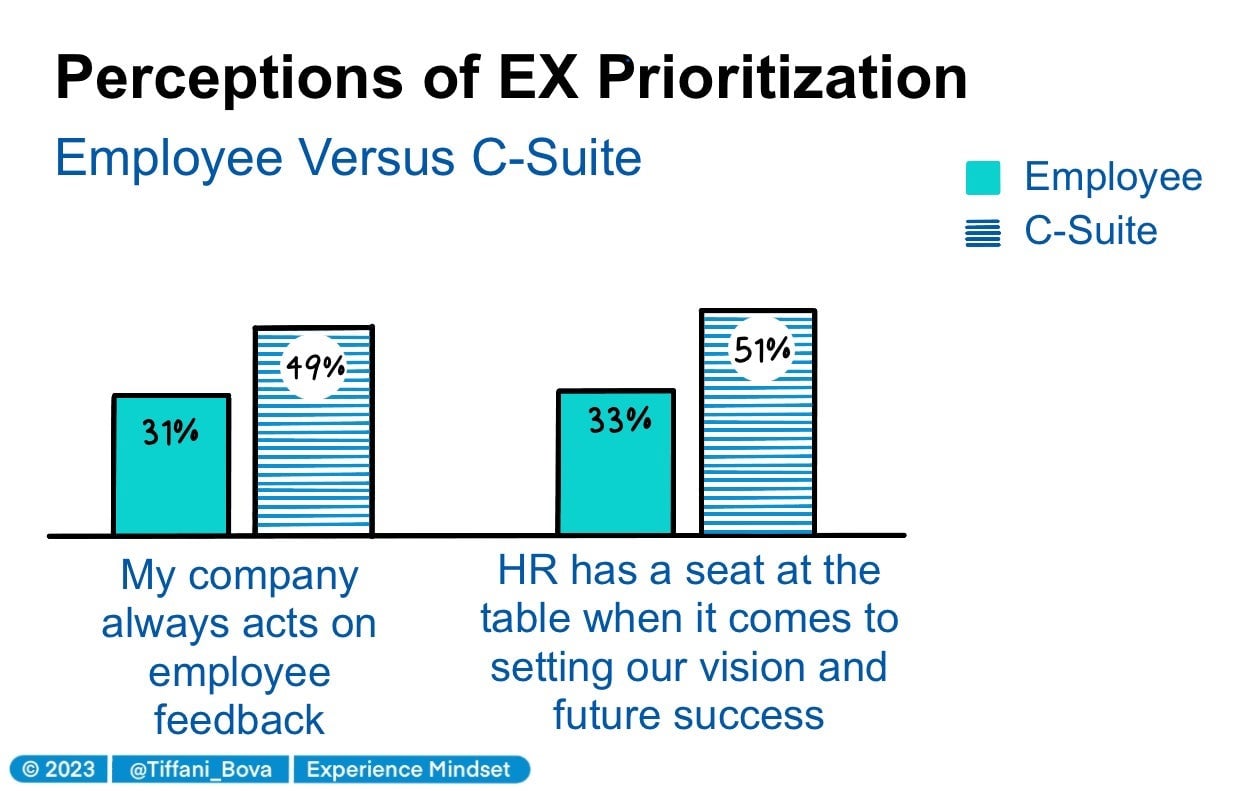
Uncovering what employees want and need may seem like a daunting task, but it doesn’t have to be, and it is crucial to developing a supportive culture. Any or all of these groups or processes can provide a more formal and structured way to de- velop greater accountability between the c-suite and employees. Without at least one of these, or a similar group or initiative, you risk losing connection with your employees. When the connection between employees and leadership is lost, so is account- ability.