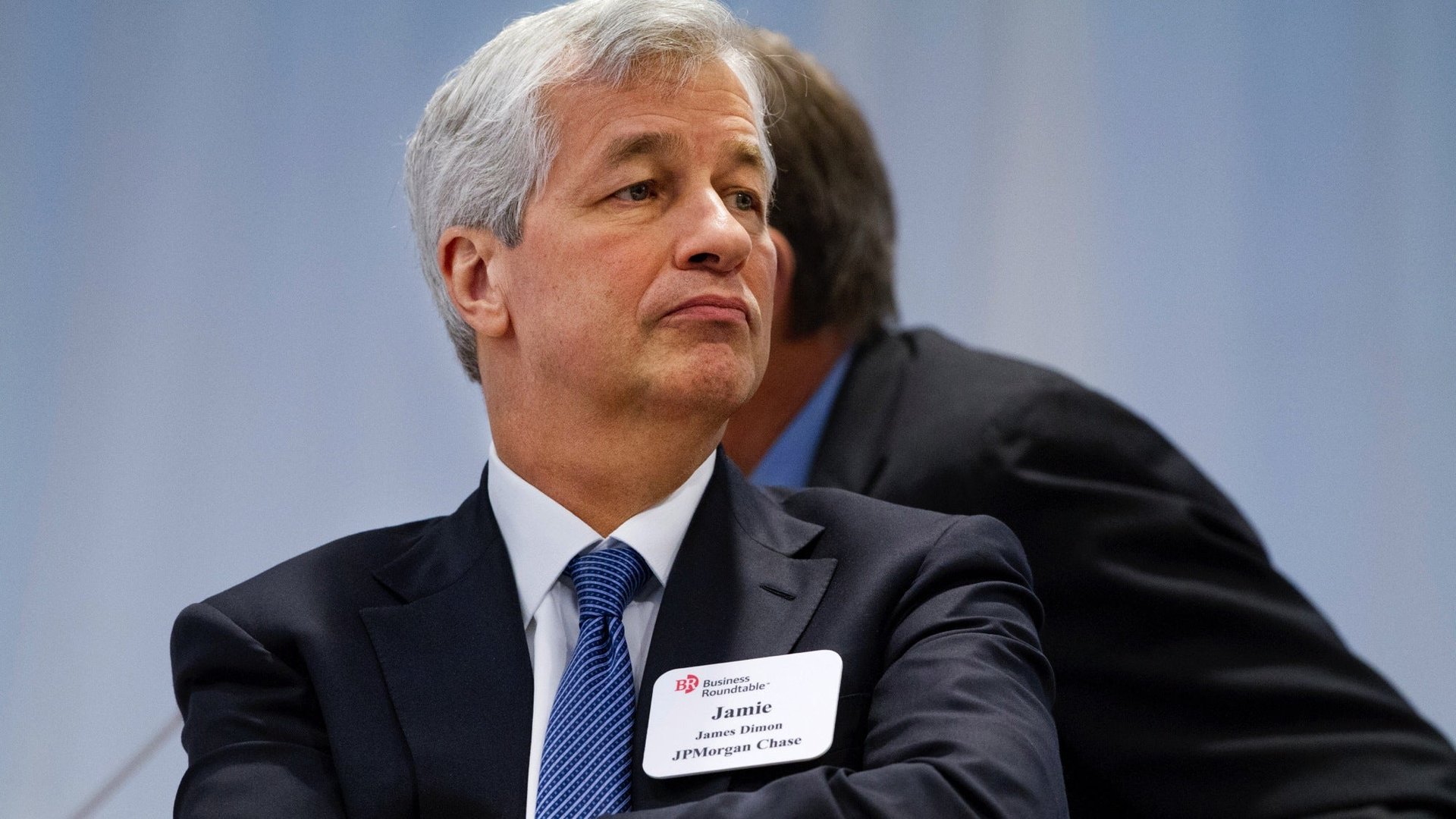
JP Morgan Chase chief Jamie Dimon pretty much shrugged off global financial turmoil and said the most significant impact was a major shift in how US companies raised capital.
America’s largest bank by assets, which reported a 5.2% jump in second-quarter profits on Tuesday (July 14), said it hasn’t been affected by China’s tanking stock market or worries over the fate of the eurozone as Greece teeters on economic collapse.
“Greece is a very, very small percentage of the eurozone in total, so economically it’s not a driving factor,” even if the Greek drama took a psychological toll on investors, Dimon said.
The one effect the bank did see was a “tremendous amount” of American companies financing deals in euros—something it has “almost never seen before of American companies” because of how cheap European debt has become, even when swapped back to dollars.
Coca Cola, Toyota $TM, and Warren Buffett’s Berkshire Hathaway $BRK.B Inc. are among the American companies rushing to take advantage of the incredibly low borrowing costs in Europe, a strategy JP Morgan touted to its corporate clients in a nine-page explainer to CFOs on how a global US firm could lower its currency risk and boost earnings by issuing euro-dominated debt.
The moves led to record-highs for non-European issues of euro-denominated bonds.
As for China, where the government has prohibited certain people from selling their stock in a bid to prop up plunging markets, Dimon said he hasn’t seen a retreat from the open markets.
With China, “you’ve got to look and plan for the long run,” he said, pointing to China’s long term economic growth and booming global businesses.
“You can argue whether [the government] should have gotten that involved in the stock market,” he said. “But they still seem very committed to more and more market reform.”
