Bill Gates started Microsoft’s research arm in 1991 so that it could do research for the sake of research. The division, aptly named Microsoft Research, didn’t interact with the company’s commercial product staff, an arrangement that led to missed opportunities. One-time upstarts like Google and Facebook were beating it to the punch. A big miss, for example, was the research arm pioneering digital mapping in 1998, but no one thought to commercialize it until 2005, when Google Maps was launched.
Bill Gates started Microsoft $MSFT’s research arm in 1991 so that it could do research for the sake of research. The division, aptly named Microsoft Research, didn’t interact with the company’s commercial product staff, an arrangement that led to missed opportunities. One-time upstarts like Google $GOOGL and Facebook $META were beating it to the punch. A big miss, for example, was the research arm pioneering digital mapping in 1998, but no one thought to commercialize it until 2005, when Google Maps was launched.
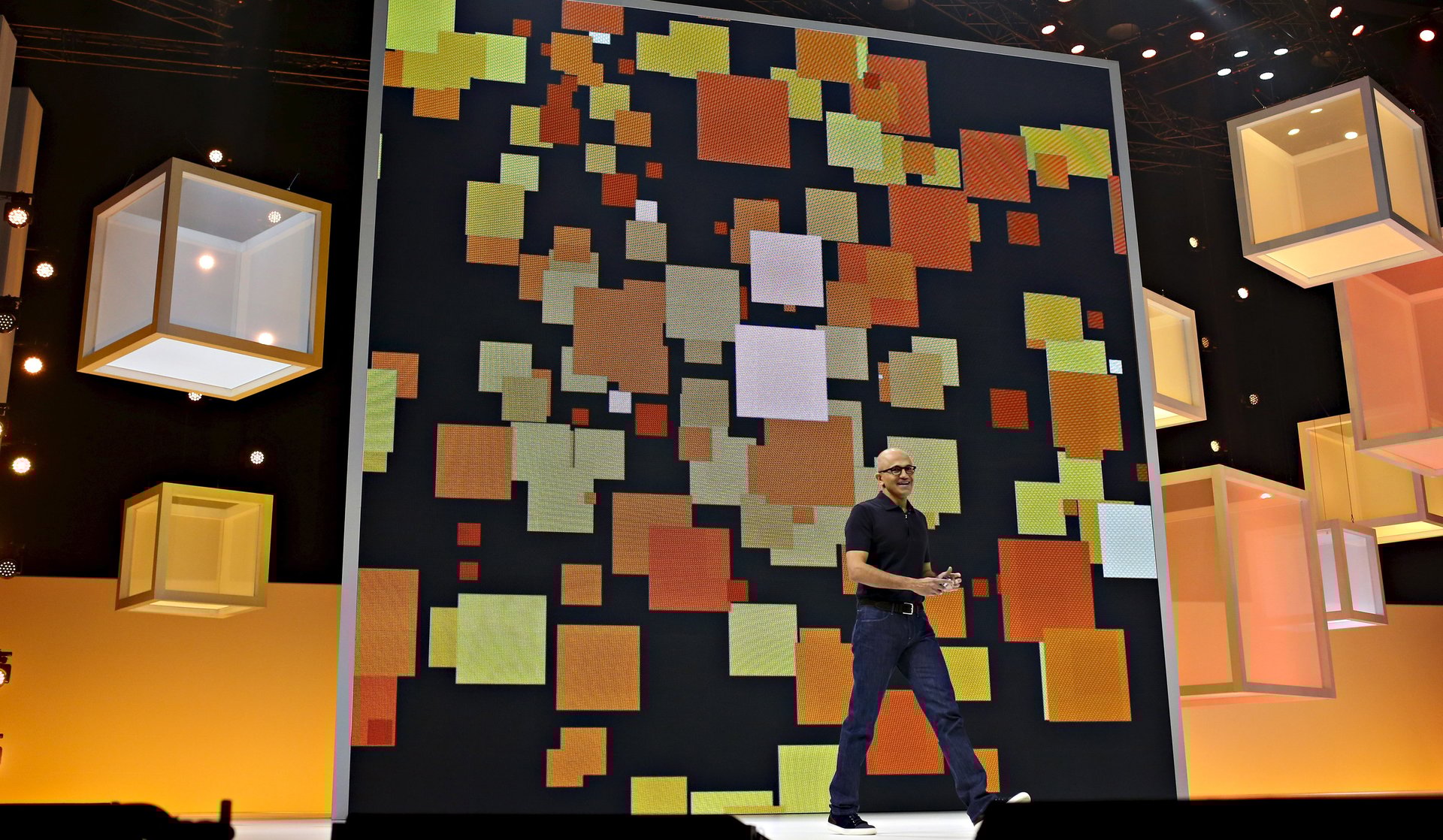
Now, 25 years later, newish Microsoft CEO Satya Nadella is breaking the research unit out of its silo, using its knowhow to boost the company’s product teams for the first time. To do this, Nadella has cut Microsoft Research’s 1,000-strong “basic research” staff in half, and has embedded the other half with teams working on products like Azure, Skype, and Office, according to a . The idea is for product and research to work together to beat rivals to market.
Join 500,000+ readers who start their day with Quartz.
By subscribing, you agree to our Terms of Service and Privacy Policy.
The new, commercially-oriented research unit is called MSR NeXT, and it’s working on some interesting projects, if this video featuring Ken Woodberry, a deputy managing director of Microsoft Research in the UK, is anything to go by.
Among them:
The Bloomberg piece also reveals that the attention-grabbing Skype Translator—which translates a Skype call spoken in another language in real-time—was the result of an “intercession” from Nadella, who spotted its potential during a February 2014 retreat. Nadella gave his executives three months to get the feature demo-ready, forcing research and product teams to work closely together.
The Translate project’s success gave momentum to the current changes, according to Bloomberg. It also instilled in the teams working on it, including current Microsoft Research strategy head Vikram Dendi, the belief that the restructuring could work.
As a result, Microsoft now looks a lot more like its competition. At Google, for example, research has a “porous connection” with product teams. This lets Google deploy features like Smart Reply, which uses artificial intelligence to suggest email responses, in four months. Facebook also worked quickly on its AI digital assistant M, going from research paper to testing in under a year.
The new Microsoft unit has been busy. It just worked on a feature, released Jan. 25, that lets the digital assistant Cortana read e-mails, pull out tasks, and set reminders to get them done.
