Quartz
Subscribe
Quartz
Subscribe
Edition
Business News
A.I.
Technology
Money & Markets
Leadership
Lifestyle
Latest

Get Quartz in your inbox

Free daily briefing on global business news.

Business News
AirlinesAutomobilesFoodPharmaceuticalsPolitics & GovernmentRetail & EcommerceSpace & AerospaceEarnings
Technology
A.I.ComputingConsumer TechSpace & AerospaceEarnings
Money & Markets
Economic IndicatorsMarketsPersonal FinanceEarnings
Lifestyle
Cars & BikesCollectingEntertainmentFood & Fine DiningHealth and FitnessReal EstateTravel
News

The world’s largest aircraft just crashed in a painfully slow nosedive

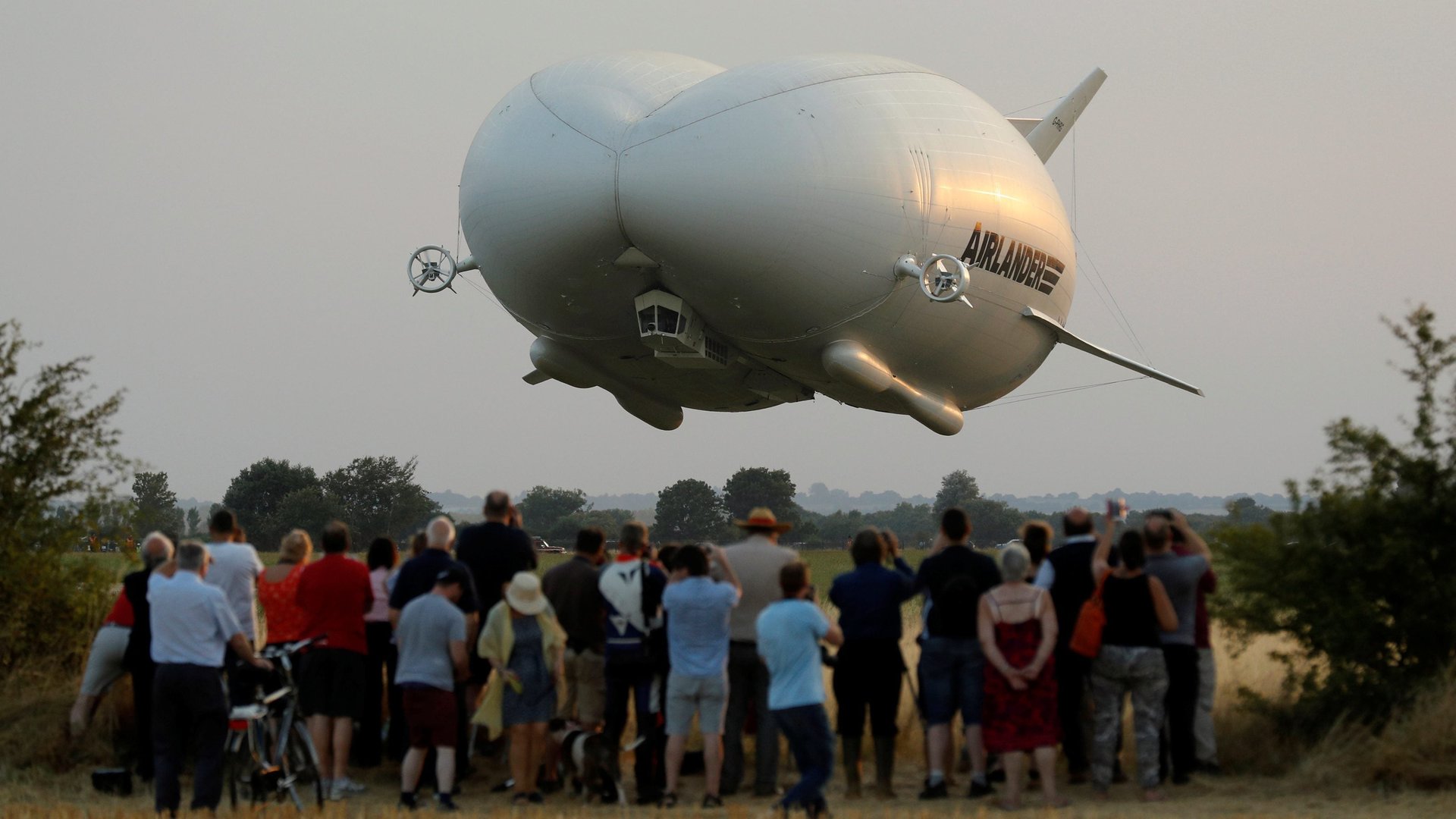
The Airlander 10, currently the largest aircraft in the world, has just gracefully crashed onto the ground during its second test flight in the north of London, UK.

By Selina Cheng·1 min read·Updated July 21, 2022
Add QZ to Google

The Airlander 10, currently the largest aircraft in the world, has just gracefully crashed onto the ground during its second test flight in the north of London, UK.

In a video uploaded to YouTube, the airship nicknamed the “Flying Bum” because of its peculiar shape, is seen nosediving at painfully low speed, finally touching ground after about 26 seconds.

The aircraft is about 92 meters in length (300 feet), 21 meters longer than a Boeing $BA 747, according to The Guardian. With four engines carrying 38,000 cubic meters of helium in a hull made of ultralight carbon fiber, the Airlander 10 can fly as fast as 80 knots.

Hybrid Air Vehicles, the British company developing the aircraft, says the front of the aircraft was damaged but the pilot was unhurt during the accident, according to CNN. The company did not explain what caused the crash, but a maiden flight last week was cut from 90 minutes to 20 minutes because of a technical problem.

The aircraft initially received $300 million from the US military to be developed for surveillance purposes and transporting cargo, but the project was aborted after the US government cut its military expenditure in 2013. The company later raised funds by crowdfunding, from the European Union and the UK government to continue development. It can remain in the air for five days if manned, and up to 21 days when unmanned.

Daily Brief

The essential business news, delivered fresh every morning.

Join 500,000+ readers who start their day with Quartz.

By subscribing, you agree to our Terms of Service and Privacy Policy.

Quartz

Global business news for a smarter world

Topics

  • Business News
  • Money & Markets
  • Tech & Innovation
  • Generation A.I.
  • Lifestyle
  • Leadership

Products

  • Daily Brief
  • Weekly Digest
  • Member Benefits
  • Quartz Pro

Legal

  • Sitemap
  • About
  • Accessibility
  • Privacy
  • Terms of Service
  • Advertising

© 2026 Quartz Media, Inc. All rights reserved.