After a recording of Donald Trump bragging about sexually assaulting women was revealed last week, the Republican presidential candidate needed a miracle to redeem himself among women voters. But at last night’s presidential debate, he only continued to anger them.
After a recording of Donald Trump bragging about sexually assaulting women was revealed last week, the Republican presidential candidate needed a miracle to redeem himself among women voters. But at last night’s presidential debate, he only continued to anger them.
A poll by CNN on the night of the debate, Oct. 10, showed that women thought Democratic nominee Hillary Clinton performed much better than Trump. Sixty-four percent of women said Clinton did the “best job” during the debate, compared to 30% who favored Trump. Meanwhile, 49% of men thought Clinton did better, and 38% thought Trump was the winner. A poll by YouGov showed a less stark difference between women, but still gave Clinton’s performance a 22-point advantage over Trump‘s.
Join 500,000+ readers who start their day with Quartz.
By subscribing, you agree to our Terms of Service and Privacy Policy.
According to CNN’s poll, women viewed Clinton in a more positive light in every single category, by margins of 20, 30, 40 points. She appeared to be the stronger leader, with a better temperament for presidency, and more trustworthy and honest. Women thought she could better handle the economy, terrorism, and immigration than Trump, and that she was more direct in her answers.
So what did Trump do that bothered women so much?
Sixty-nine percent of women said that Trump spent more time attacking Clinton than she did bashing him—and past debates show that Clinton gains in popularity when she is being assailed by a man. Trump was constantly on the offensive, even calling Clinton the “devil” and saying that she has “tremendous hate in her heart.”
Trump also leveled an extremely worrying and unprecedented threat: If he won, he said, he would prosecute Clinton—a tactic more common in authoritarian regimes than established democracies.
Trump’s attacks were painfully personal: Instead of focusing on Clinton’s policies or record, he harped on accusations of sexual assault against her husband, while failing to meaningfully apologize for his own lewd, predatory remarks. Bringing up Bill Clinton’s infidelities does not poll well, and Trump’s own recently-resurfaced remarks are dragging him down.
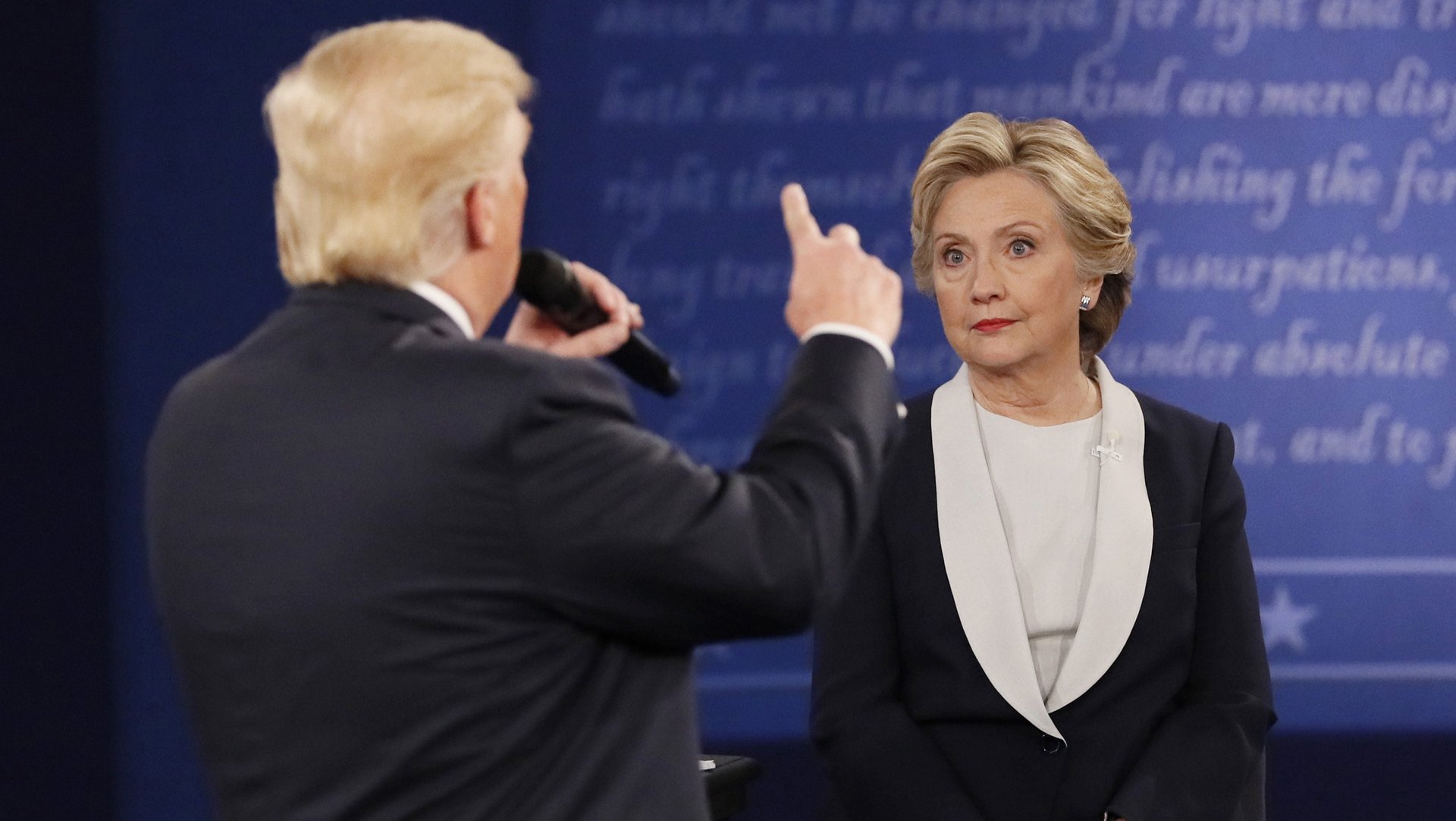
But it was more than just words. Throughout the debate, Trump, who is 6’2″, lurked behind Clinton, sometimes appearing to enter her personal space. He also pointed his finger at her, adopting the aggressive body language of some of Clinton’s past opponents, notably Rick Lazio, who famously crowded her by walking across the debate stage to have Clinton sign a campaign finance pledge during the 2000 congressional campaign. Overall, Trump appeared bullying, menacing and threatening—something that many female watchers noticed.
Finally, the difference between the two rivals’ preparation, policy knowledge and experience was stark—a contrast all too familiar to women in the working world.
