On Dec. 14, Uber put self-driving cars into service for riders in San Francisco in what turned out to be a short and disastrous launch. Uber angered the state Department of Motor Vehicles by failing to obtain an autonomous vehicle testing permit. It enraged a local bicycle group for knowingly introducing vehicles to city streets that made “right-hook turns,” the leading cause of collisions between cars and cyclists. Also, one of its cars was filmed running a red light.
On Dec. 14, Uber $UBER put self-driving cars into service for riders in San Francisco in what turned out to be a short and disastrous launch. Uber angered the state Department of Motor Vehicles by failing to obtain an autonomous vehicle testing permit. It enraged a local bicycle group for knowingly introducing vehicles to city streets that made “right-hook turns,” the leading cause of collisions between cars and cyclists. Also, one of its cars was filmed running a red light.
The company, which argued that its cars were not truly driverless and therefore shouldn’t require an autonomous testing permit, tried to stand its ground. But yesterday (Dec. 21)
Join 500,000+ readers who start their day with Quartz.
By subscribing, you agree to our Terms of Service and Privacy Policy.
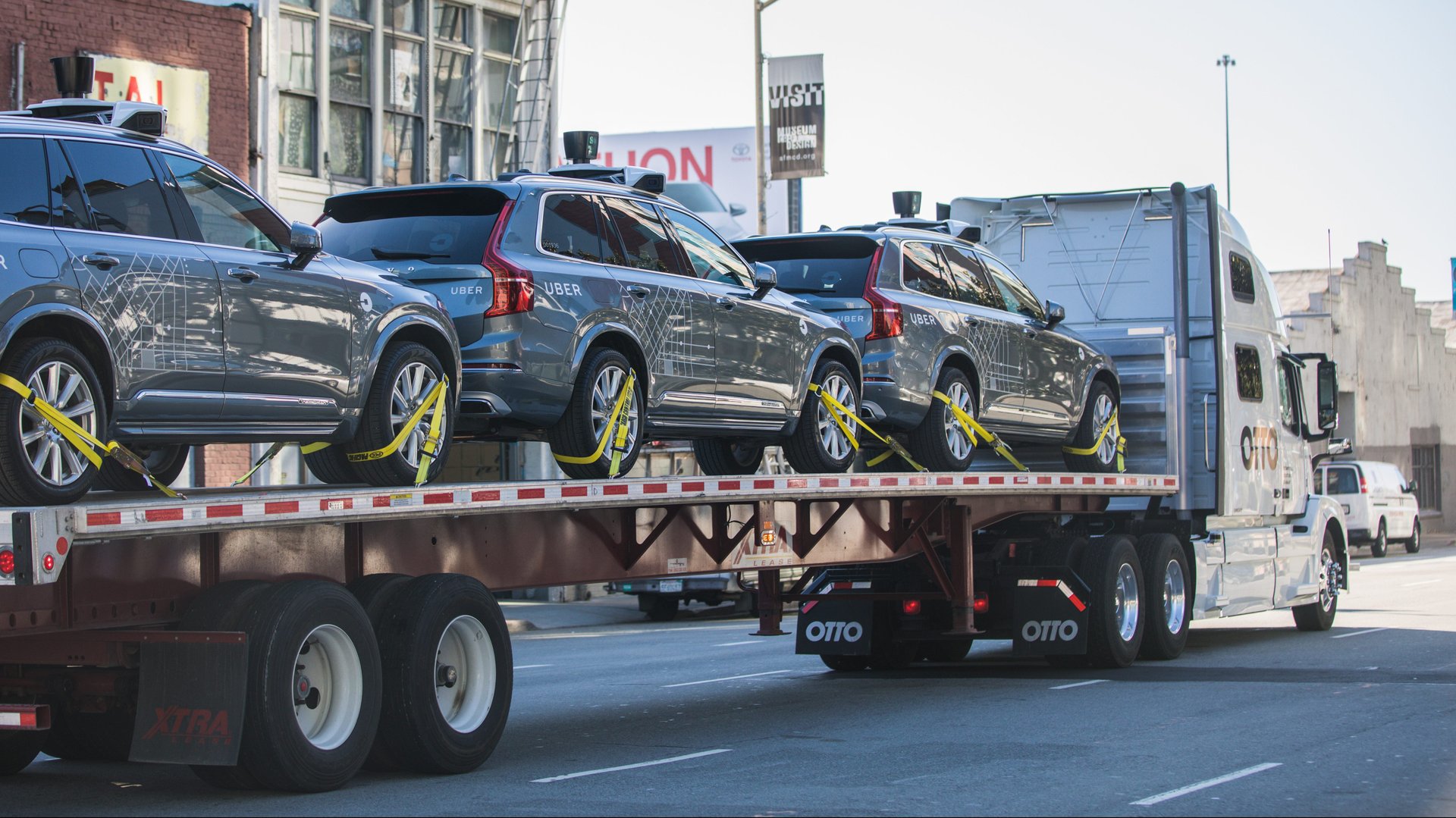
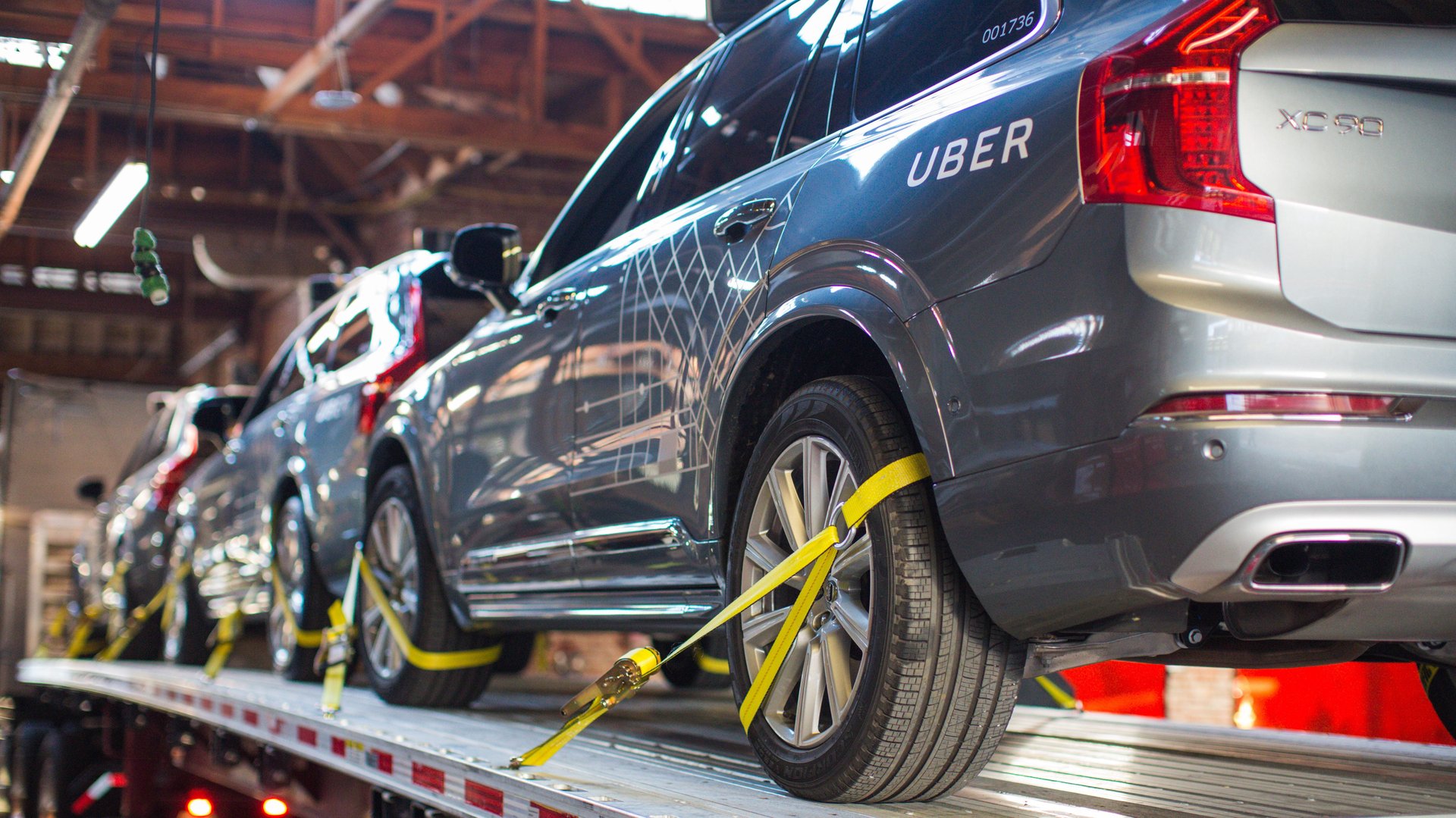
Today, Uber has a new update. Those self-driving cars that California doesn’t want on public roads without proper permitting? They’re heading to Arizona—on the self-driving trucks that Uber acquired with its purchase of autonomous trucking startup Otto this summer. (For this trip, the Otto trucks are being driven by humans.)
“Our cars departed for Arizona this morning by truck,” an Uber spokeswoman said in a statement. “We’ll be expanding our self-driving pilot there in the next few weeks, and we’re excited to have the support of [Arizona] governor [Doug] Ducey.”
The move to Arizona is only surprising insofar as it means Uber has admitted defeat in a regulatory fight, something the company is unaccustomed to doing. Uber has been working on self-driving technologies in Arizona since August 2015, when it paired up with the University of Arizona in Tucson to improve its mapping and optics.
Arizona has worked hard to attract companies like Uber, in large part by ensuring the autonomous vehicle industry is loosely regulated. In 2015, Ducey signed an executive order that directed state agencies to “undertake any necessary steps to support the testing and operation of self-driving vehicles” on Arizona’s public roads.
In the blog post announcing Uber’s self-driving debut in San Francisco, Anthony Levandowski, Uber’s head of autonomous technologies, cited Arizona as a “leader” that, like a handful of other states or cities, has “recognized that complex rules and requirements” for testing driverless vehicles “could have the unintended consequence of slowing innovation.” Google $GOOGL holding company Alphabet took its self-driving cars to Arizona earlier this year, after clashing with California over whether autonomous test vehicles needed to have a steering wheel, brake pedals, and licensed driver.
Uber will be welcomed in Arizona “with open arms and wide open roads,” Ducey said in a statement today. “California may not want you,” he said, “but we do.”
