“Noise is the most impertinent of all forms of interruption,” 19th-century German philosopher Arthur Schopenhauer once declared. “It is not only an interruption; it is also a disruption of thought.”

“Noise is the most impertinent of all forms of interruption,” 19th-century German philosopher Arthur Schopenhauer once declared. “It is not only an interruption; it is also a disruption of thought.”
The millions of employees who work in open offices today might agree. Many arrive at work every morning resolving to be doggedly focused and productive—only to be derailed by chatter, clatter, and other distractions. Studies have found that lack of sound privacy is the biggest drain on employee morale, and that workers lose as much as 86 minutes a day to distractions.
Join 500,000+ readers who start their day with Quartz.
By subscribing, you agree to our Terms of Service and Privacy Policy.
There are ways to cancel out the chaos and make noise-free work your resolution for the year. Here are some of the simplest.
Investing in a good, high-quality pair of headphones is the most obvious first step to ridding oneself of unwanted noise. Yet it can be hard to choose—not to mention financially commit.
To help, Quartz has compiled a few of the most popular choices that office dwellers and introverts swear by.
As for what you might want to play through your headphones, lyrics-less music and steady rhythms work best for maximum productivity. (See: Quartz’s guide to listening to music at work.)
Or you could decline to introduce a new layer of sound altogether. A new generation of experimental headphones is emerging that includes Doppler Labs’ Hear Active Listening—a pair of non-music-playing earbuds that act as a “live equalizer” in the ears, allowing users to remix, lessen, or filter out noises they don’t want to hear.
Ironically, our phones and computers—the devices that most distract us in our personal and social lives—can be most helpful in maintaining sharp focus in open offices and other helter skelter environments. When you don’t want to play music, you can instead plug your earphones into your phone or computer to cancel out distracting noise in the workplace with other digital tools.
Hear and Binaural are two mobile apps that help users narrow their concentration to the task at hand, by either jumbling or overlaying background noise. Binaural, in particular, can be used in sync with a second app; you can play its lulling rhythms over the sound of a Spotify $SPOT playlist, for example, to double up on the focus.
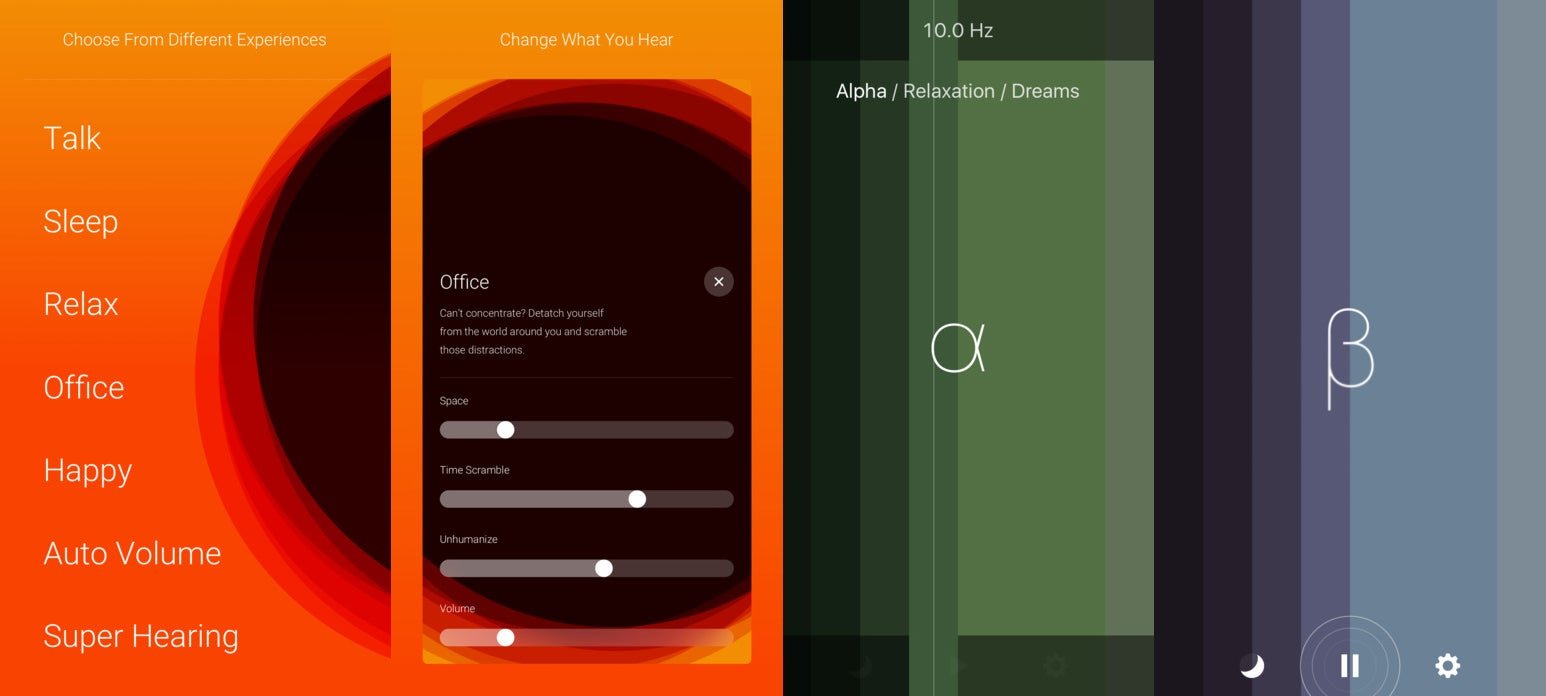
A handful of websites do a similar thing by providing sustained, repetitive sounds to cancel out random background noise.
To boost your focus, you could also try using a mindfulness app that teaches techniques for mentally cutting out distraction. Or, put on a podcast in a foreign language as you work (people in writing- or reading-based jobs might particularly find this method of forced focus—since you can’t understand what you’re hearing, your mind hones in on other senses instead—helpful).
Bottom line: If you can’t physically escape the noise around you, you can use technology to either distort or negate it.
“A 15-minute walk around the block can make you a lot more present in your job,” Susan Cain, the author of a best-selling book on work and introversion, advises employees in all kinds of careers.
Mind-clearing breaks don’t need to be literal walks. If your office is too noisy or distracting, what matters most is how you order the rest of your environment to counteract that.
If you can, sit near a window. Natural light has been proven to boost productivity far more than the artificial overhead lights with which many company buildings are filled. If that isn’t an option, buy a lamp with a focused point of light and point its beam at your immediate workspace.
Set up books, plants, or other barriers around your desk to keep a visual focus on your work. Meditate. When you find yourself too muddied in distractions, Cain suggests physically getting up and seeking a calmer environment (a coffee shop, a private room, a nearby park) for momentary reprieve, then heading back into the fray with a clearer view of what you want to accomplish for the rest of the day.
If all else fails, it may be time to beg for the option of a remote office—though there are pitfalls, too, of working entirely from home.
