Mexico’s president canceled his meeting with Trump after being baited on Twitter
In less than 48 hours, US-Mexico relations have devolved into an ugly stalemate.
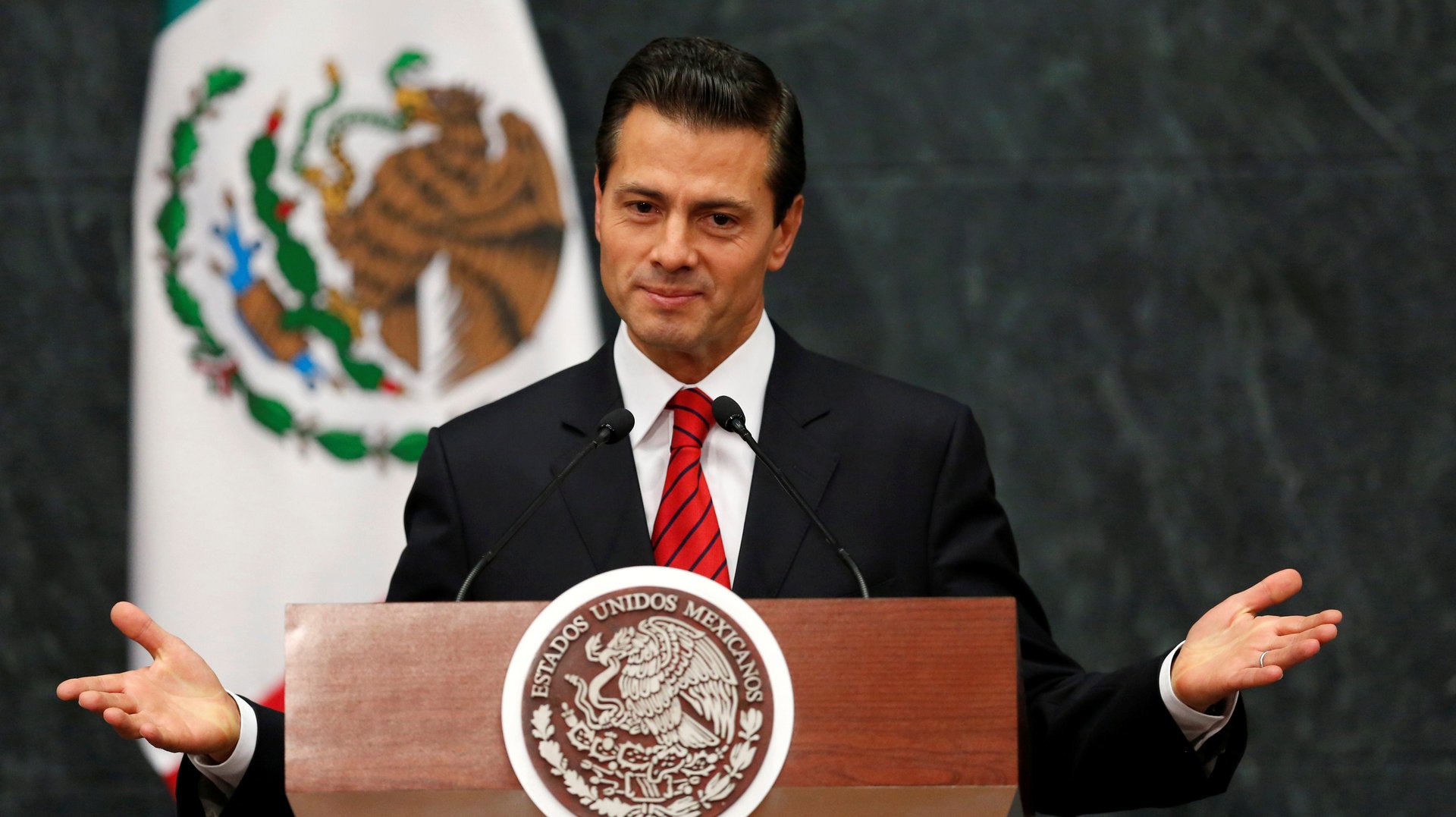
In less than 48 hours, US-Mexico relations have devolved into an ugly stalemate.
On Jan. 26, Mexican president Enrique Peña Nieto politely informed US president Donald Trump that he was ditching their planned meeting on Jan. 31 to discuss NAFTA, immigration and border security. ”This morning we informed the White House that I won’t attend the work meeting scheduled for next Tuesday with @POTUS,” Peña Nieto wrote on Twitter $TWTR.
Although it’s been customary for Mexico’s president to sit down with a new American president shortly after the election, the Jan. 31 visit had been framed as a full-fledged working meeting, not a getting-to-know-you chat. From the outset, Peña Nieto said publicly that Trump’s election, and his attitudes towards Mexico, called for a reengineering (link in Spanish) of US-Mexico relations. Their first formal conversation was part of that.
Here’s a timeline of how things broke down:
Jan. 22: Trump says he wants to renegotiate NAFTA on immigration and border security. He says Peña Nieto has been “really very amazing” and that the talks will have a very good result for all parties involved.
Jan. 23: Peña Nieto releases 10 principles to guide negotiations. They include issues such as the free flow of remittances from Mexican immigrants in the US to their families back home, and no trade tariffs. “Neither confrontation, nor submission,” he says. “The solution is dialogue and negotiation.”
Jan. 24: As his team prepares to leave for Washington D.C. to set the stage for negotiations, Trump tweets that he’s going ahead with plans to build a wall along the US-Mexico border.
The news is received with outrage in Mexico; people call for canceling talks.
Jan. 25:
- Peña Nieto’s team meets with White House staff. According to the Wall Street Journal’s Latin America editor, they tell Trump that if the public announcement of his immigration-related executive orders includes yet another demand that Mexico pay for the wall, Peña Nieto will have to cancel the meeting.
- Trump’s tone on immigration is strident during the executive-order presentation, but he skips comments on the wall payment. In a first, he also recognizes that a healthy Mexican economy is healthy for the US as well.
- Trump’s comments don’t play well in Mexico, where many renew calls for canceling the visit, and some begin proposing abandoning NAFTA altogether.
- During his first televised interview with ABC’s David Muir, Trump hedges on how exactly Mexico will be expected to fork over payment, and whether US taxpayers will foot the bill upfront. ”I’m just telling you there will be a payment,” he says. “It will be in a form, perhaps a complicated form.”
- Nieto gives a public address condemning the wall, and says he will bulk up Mexican consulates in the US to defend immigrants. “Mexico does not believe in walls,” he says. “I’ve said it time and again: Mexico won’t pay for any wall.”
Jan. 26:
- Trump tweets that if Mexico doesn’t want to pay for the wall, maybe it’s not worth talking after all.
- Peña Nieto takes to Twitter to officially cancel the visit.
The sticking point for both sides, at least publicly, is this question of who will pay, and how. Trump, who made sending the bill to Mexico a campaign promise, does not seem inclined to back down.
But neither does Peña Nieto. Making Mexico pay for the wall is an insult to national sovereignty that the country’s residents won’t stand for, especially after Trump has made disparaging comments about Mexicans and taken humiliating measures against Mexican immigrants on US soil. The mere suggestion of footing the bill brings back old and deep-rooted resentment about the US’ past imperialistic behavior in Mexico.
Thus any mention by Trump of Mexico paying paints Peña Nieto into an even tighter corner. On one side, he’s being squeezed by the hulking pressure of salvaging Mexico’s multibillion-dollar commercial relationship with the US, the lifeblood for huge chunks of the Mexican economy. On the other is an increasingly exasperated electorate that is rapidly eating away at whatever political capital he still has. To say nothing of the preservation of national—and personal—dignity. The confluence of those factors made canceling virtually Peña Nieto’s only option.
He did leave Trump an open door, though. On Thursday morning, Peña Nieto reiterated on Twitter that Mexico “will to work with the US to achieve agreements in favor of both nations.” It was a slight but significant edit from a similar tweet he made the previous day: ”We endorse our friendship with the American people and our will to reach deals with their government. Deals in favor of Mexicans.”
Trump struck a less conciliatory tone, saying the cancellation was a joint decision. “Unless Mexico is going to treat the United States fairly with respect, such a meeting would be fruitless and I want to go a different route,” he said, according to the White House press pool. “We have no choice.”
