For some three decades, Warren Buffett, the CEO of investing giant Berkshire Hathaway, has paid himself the exact same salary: a modest $100,000. (Of course, his personal wealth, at some $77 billion, comes from his stake in the company.) But since 2008 his total compensation has jumped, sometimes breaching $500,000.
For some three decades, Warren Buffett, the CEO of investing giant Berkshire Hathaway $BRK.B, has paid himself the exact same salary: a modest $100,000. (Of course, his personal wealth, at some $77 billion, comes from his stake in the company.) But since 2008 his total compensation has jumped, sometimes breaching $500,000.
But it’s not because he’s getting suddenly greedy. The increase mostly comes from the cost of his personal security.
Join 500,000+ readers who start their day with Quartz.
By subscribing, you agree to our Terms of Service and Privacy Policy.
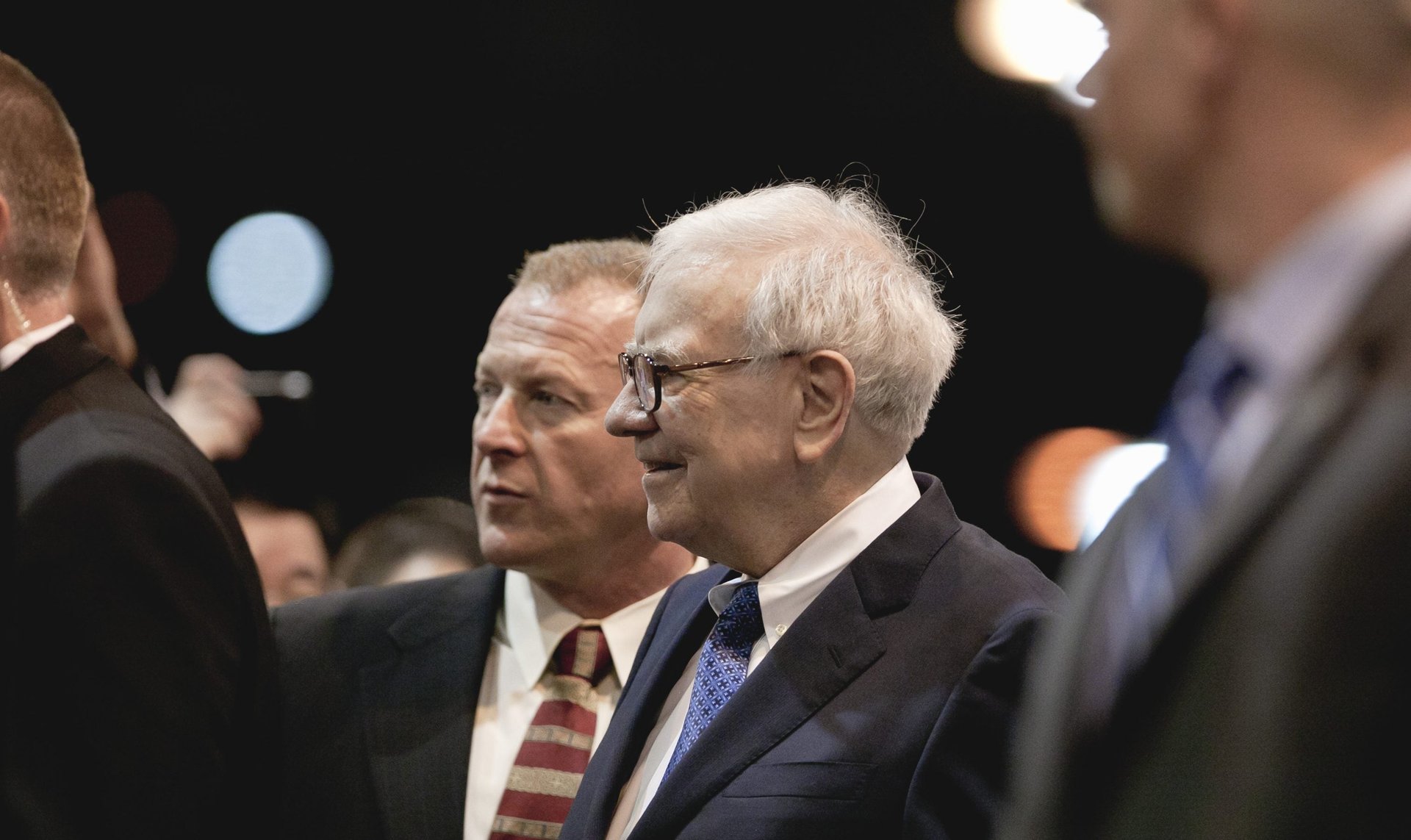
Buffett has employed a security guard, Dan Clark, for more than two decades, but company filings started disclosing security costs as part of his compensation only in 2008. An attempted break-in at his house the year before may have prompted the company to tighten up his security and start paying for it. Last year, as revealed in a filing posted on March 17, it spent $387,881 protecting Buffett.
It’s not uncommon for top executives to make a lot less in salary than they do in other benefits, mostly stock grants but often services like corporate jets or security guards. An analysis by Equilar named Amazon $AMZN’s Jeff Bezos as the most highly secured Fortune 100 CEO in 2013, with $1.6 million in security costs as against just $81,840 in salary.
Companies don’t report these additional benefits in an entirely consistent way, though, which may be why Equilar missed Facebook $META’s Mark Zuckerberg. He earns an annual salary of one dollar, but had over $2.6 million in security costs in 2013 and more than twice that in 2014.
