The Uyghur people of China’s far-west Xinjiang region have long complained that government rules and policies discriminate against them. Things just got worse.

The Uyghur people of China’s far-west Xinjiang region have long complained that government rules and policies discriminate against them. Things just got worse.
Yesterday authorities in the violence-prone region passed a new regulation that will surely lead to more resentment among the 10 million or so Uyghur, most of whom are Muslim and speak a Turkic language. They comprise about 45% of Xinjiang’s population; 40% are Han Chinese.
Join 500,000+ readers who start their day with Quartz.
By subscribing, you agree to our Terms of Service and Privacy Policy.
Taking effect on Saturday (April 1), the regulation bans over a dozen behaviors that authorities deem ”abnormal.” Among them:
Of course it’s unclear how authorities would know whether someone has watched enough state TV or meddled in another person’s wedding. But then many laws in China are vague, which is useful to authorities wanting a wide berth in interpretation.
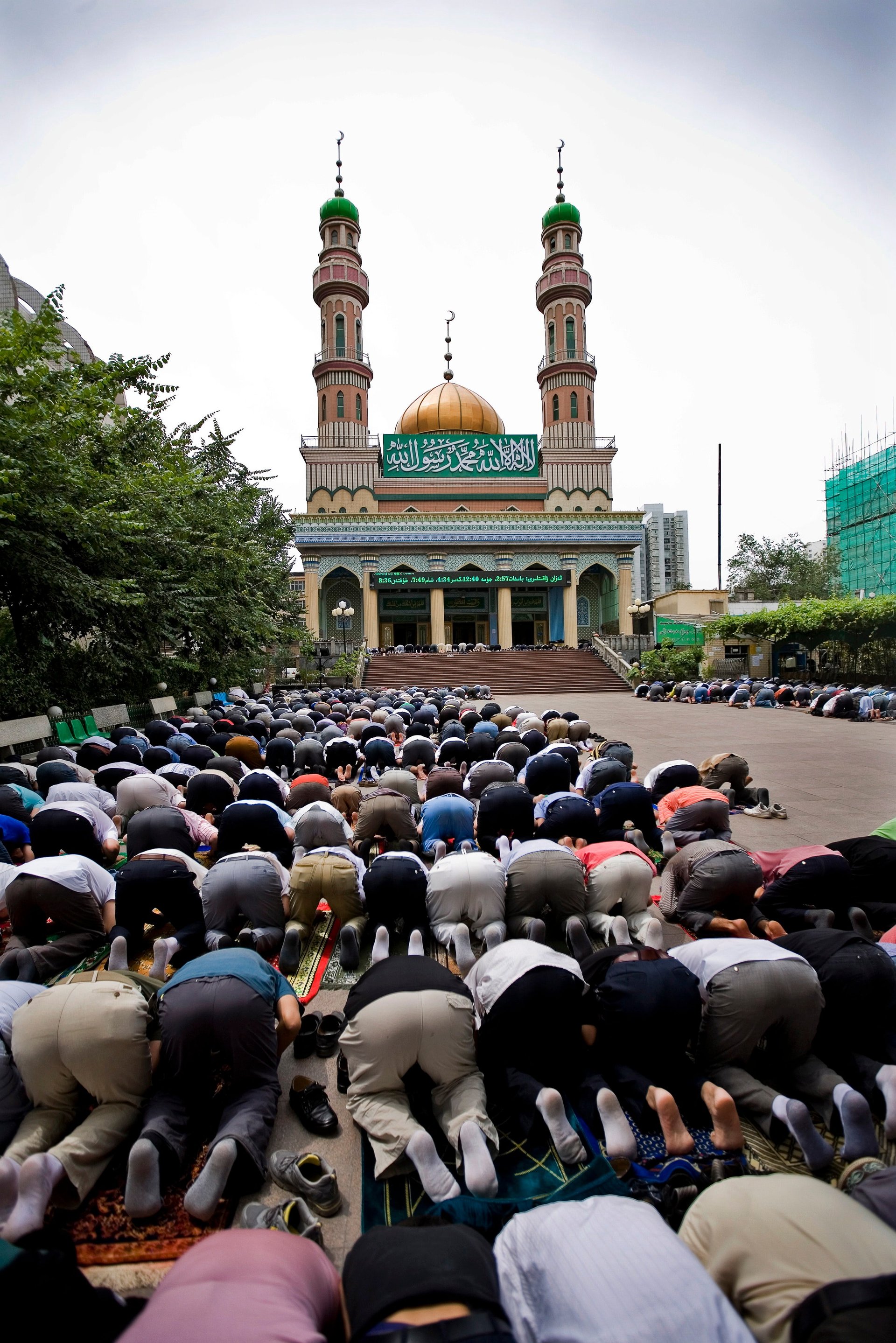
The new regulation builds upon similar ones passed in recent years to control perceived safety threats from an increasingly restive population. The administrative region, which borders Russia and several Central and South Asian countries, has a history of protests by groups who want to create an independent state named East Turkestan, and of violent crackdowns on the unrest by Chinese authorities.
Earlier this month a video, purportedly from ISIL, seemed to show Uyghur members training in Iraq. The video said the group would plant its flag in China and blood would “flow in rivers”—heightening alarm in Beijing.
In August 2014 a new rule in the region’s city of Karamay prohibited people with a certain look from boarding buses. Specifically anyone wearing:
(The latter is a symbol of Islam, one used on various national flags and also by separatist factions in the Uyghur population.)
A month earlier, authorities passed a new rule preventing bus passengers from carrying a variety of items, including yogurt, water, and cigarette lighters. Last fall authorities implemented rules banning religious activities in schools, and prohibiting parents from enticing or forcing their children to join religious activities.
And in the region’s Bayingolin Mongol Autonomous Prefecture last month, authorities initiated a program requiring all vehicles to have a GPS system installed for government tracking—and requiring gas stations to deny service to ones without it. The move was widely seen as targeting the area’s Muslim residents.
The voices of those seeking reconciliation have also been silenced. In September 2014 the government jailed for life Ilham Tohti, a prominent scholar who encouraged better communication between the Han Chinese (who make up about 90% of China) and the Uyghur community. They charged Tohti, winner of major human rights prize, with being a separatist.
