South Africa’s parliamentary committee will hold a two-day hearing Sept. 20 and 21 discuss why the country’s data costs are so high after a social media campaign #DataMustFall went viral. The hashtag was started by a popular DJ who says he is trying to turn the social media debate into a movement.
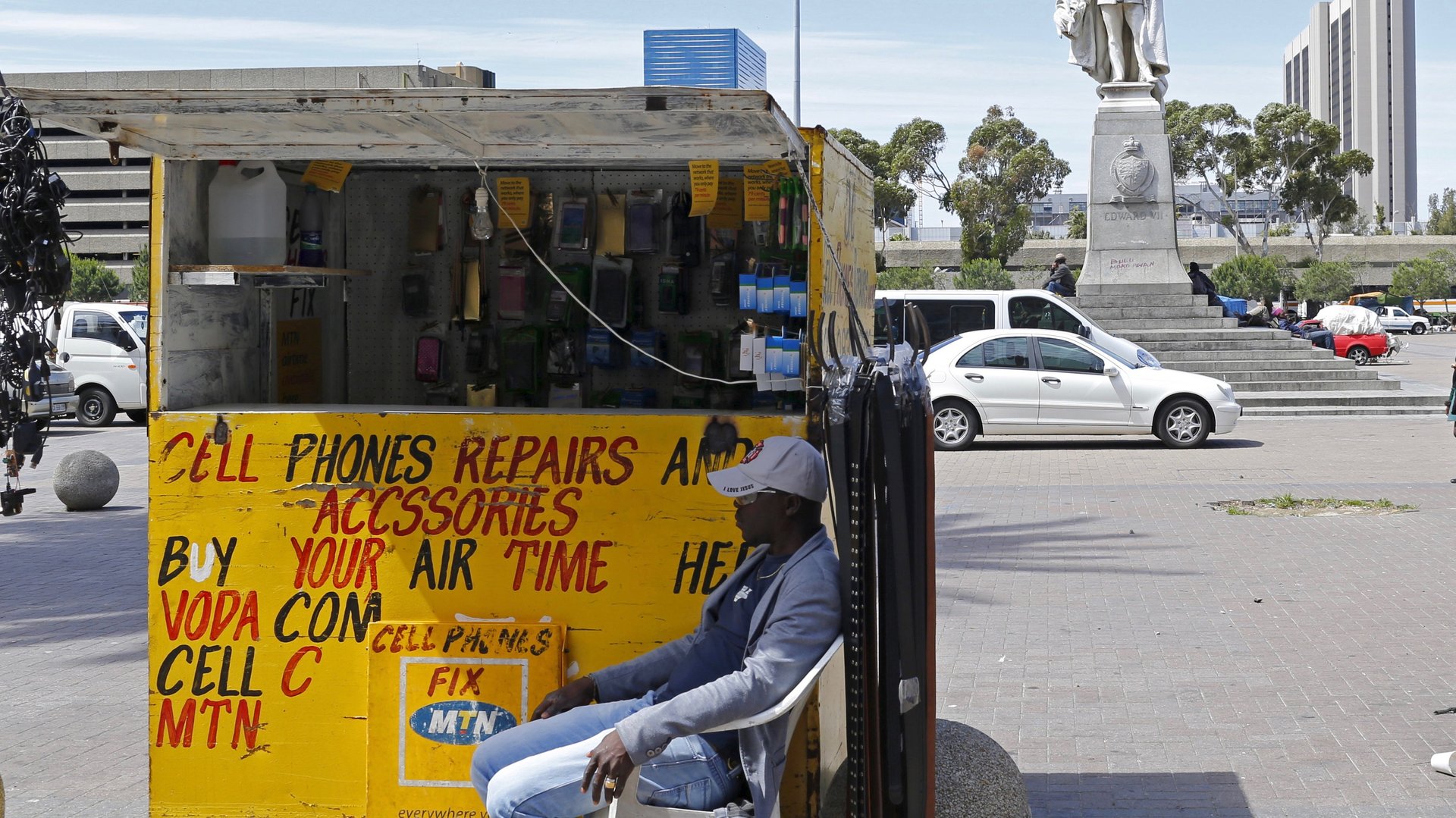
South Africa’s parliamentary committee will hold a two-day hearing Sept. 20 and 21 discuss why the country’s data costs are so high after a social media campaign #DataMustFall went viral. The hashtag was started by a popular DJ who says he is trying to turn the social media debate into a movement.
Thabo “Tbo Touch” Molefe asked listeners on his internet radio show and on Twitter $TWTR to imagine a South Africa where people could download a book and stream a video, all while listening to online radio. As the topic trended, the Economic Freedom Fighters political party, which advocated for free wifi as part of its election campaign, threw its weight behind the hashtag.
Join 500,000+ readers who start their day with Quartz.
By subscribing, you agree to our Terms of Service and Privacy Policy.
Molefe also tweeted that he’s meeting with the chairman of the Independent Communications Authority of South Africa, a national regulator. The DJ was so emboldened by the public response that he gave the three largest mobile networks 30 days to respond. The networks have not yet publicly commented.
South Africans tweeting #DataMustFall were even more incensed to discover that MTN, the South African company that has become Africa’s largest mobile network, charged less in Nigeria than it did in South Africa. In Nigeria MTN’s 1.5GB monthly plan costs 1,000 naira or $3.12, while in South Africa the prepaid 1GB deal costs 79 rand or $5.56, according to the MTN website.
According to the International Telecommunication Union’s 2015 report Measuring the Information Society, South Africans pay $9.12 a month for 500 megabytes of mobile data. That’s more than people in many other, poorer African countries. In Mozambique, for instance, monthly costs are about $3.19, the ITU says. In a ranking that took into account data costs, gross national income and purchasing power parity adjustments on exchange rates, South Africa rated more unaffordable than most African states.
South Africa, along with the Seychelles, Gabon, Cape Verde and Botswana, is one of the few African countries where broadband plans account for less that 5% of a user’s monthly income, according to the survey. Indeed, South Africans spend on average just 1.48% of their income on mobile broadband, but they argue that their internet usage costs are still too high. Prices are higher than in poorer countries, such as South Africa’s neighbor Mozambique, where people spend 6.28% of their income on mobile broadband. As the income of Mozambicans rises over time, this percentage is likely to come down, the ITU says, as long as broadband prices remain low.
