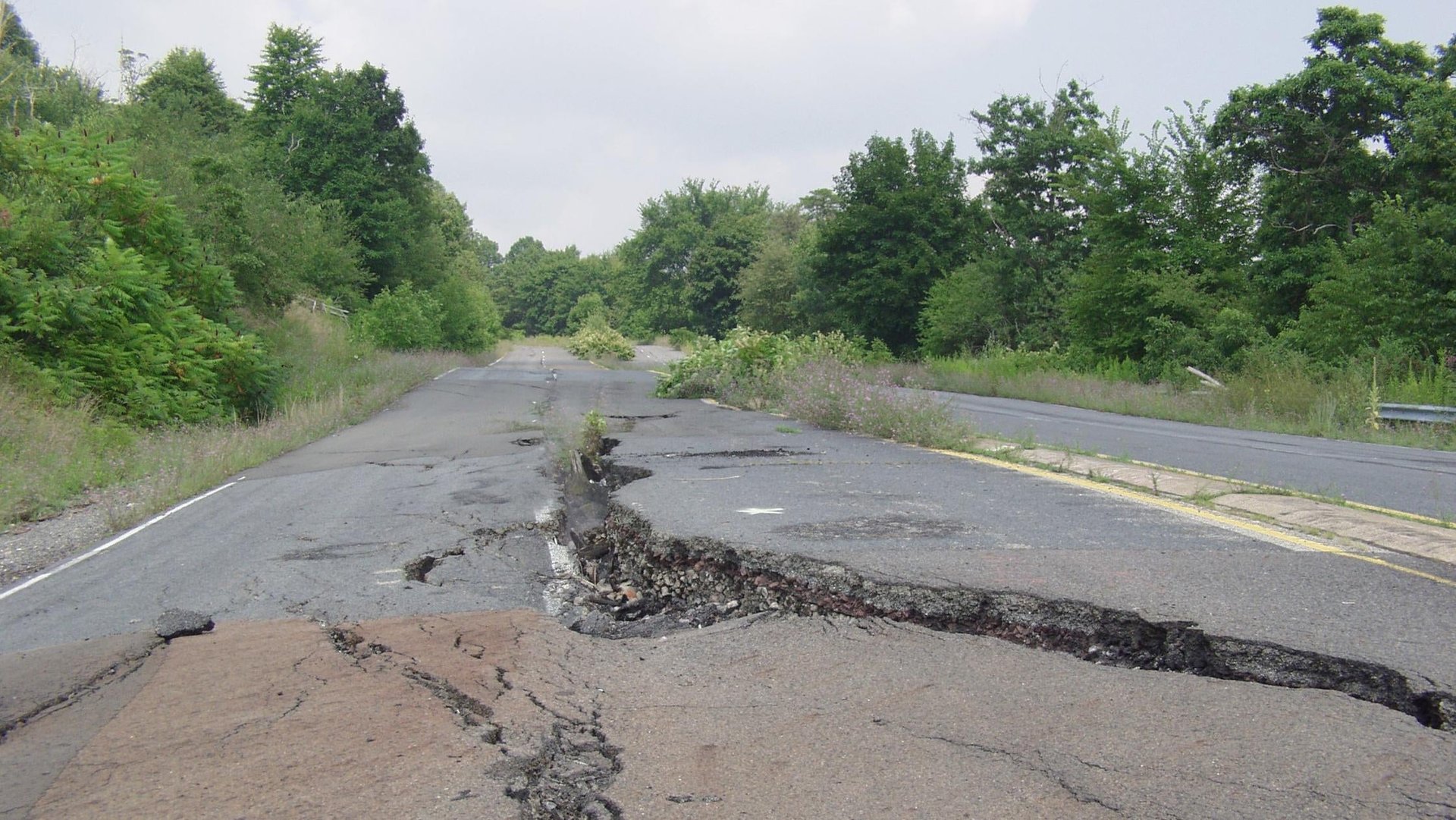
“A pavement blow-up occurs when the roadway surface expands at a crack or joint where moisture has seeped in. That crack weakens the pavement and the heat causes the pavement to buckle and warp. This usually occurs on very hot afternoons, as the maximum temperature for the day is reached, typically during afternoons with 90-degree or hotter temperatures.”
“A blow-up generally begins by slight spalling at the joint. The condition may either get progressively worse or the blow-up may occur instantaneously. In most cases, temporary or emergency repairs will be required to accommodate traffic.”
The road material does play a role in how susceptible the pavement is to buckling. Asphalt is more flexible than concrete. It’s better able to withstand temperature changes before breaking apart as a result. Some state DOTs have special mixes to deal with their particular climate. KJZZ in Salt Lake City noticed that Nevada has had less severe road buckling than Utah. A Nevada DOT spokesperson told the station about its polymer modified asphalt blend stating: