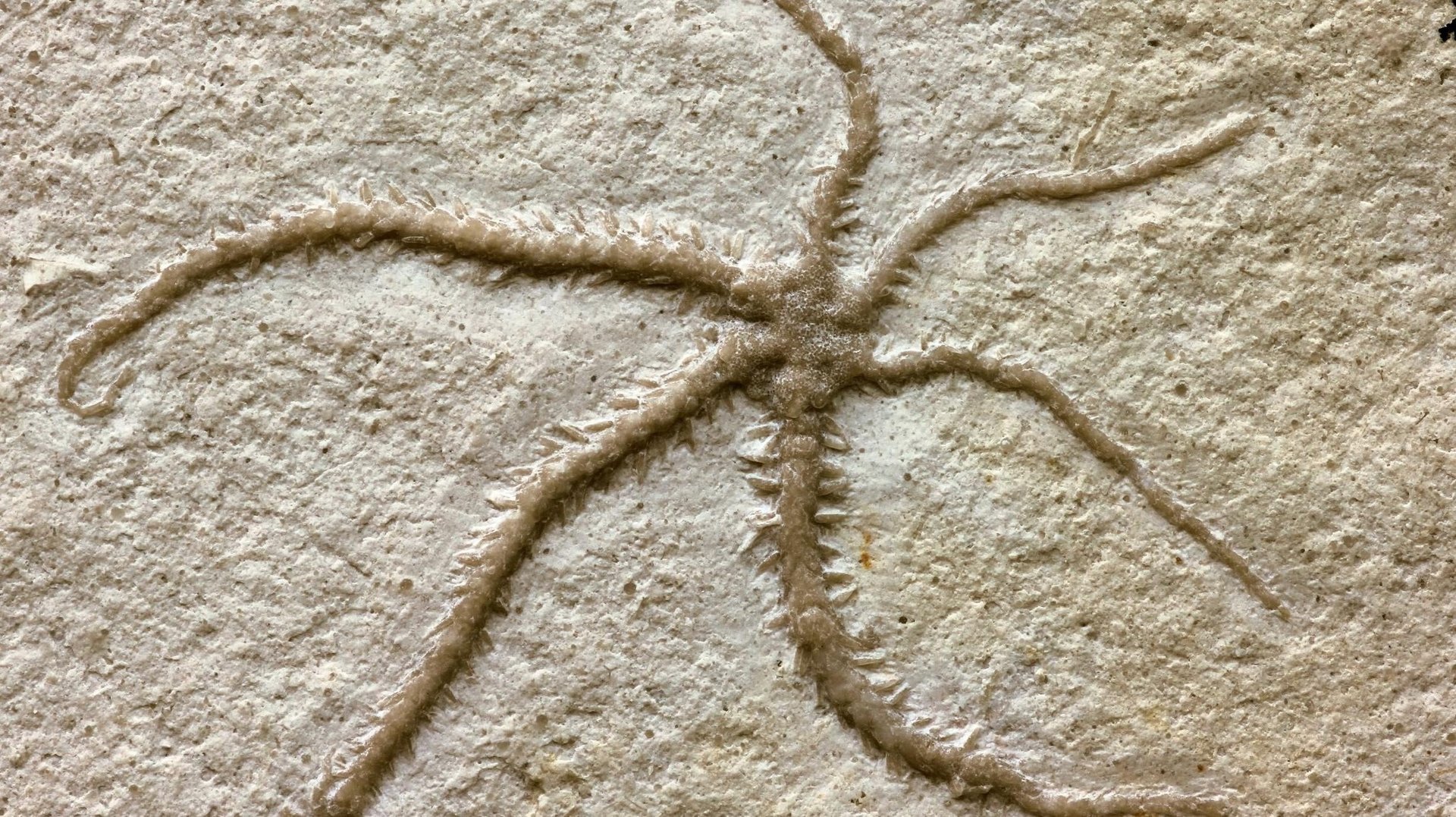
The specimen was a chance find during a 2018 dig in a limestone deposit west of Nusplingen, Germany. The same fossil bed yielded ancient sponges, crinoids, and ammonite coprolites and beaks. If you look closely, you’ll see the three arms on the fossil’s right side are thinner and slightly shorter than those on its left side. To the team’s knowledge, the specimen is just the second case of a fossil with a regenerating body half, and the first in which its regeneration appears connected to the animal’s six-fold symmetry and clonal fragmentation.