Quartz
Subscribe
Quartz
Subscribe
Edition
Business News
A.I.
Technology
Money & Markets
Leadership
Lifestyle
Latest

Get Quartz in your inbox

Free daily briefing on global business news.

Business News
AirlinesAutomobilesFoodPharmaceuticalsPolitics & GovernmentRetail & EcommerceSpace & AerospaceEarnings
Technology
A.I.ComputingConsumer TechSpace & AerospaceEarnings
Money & Markets
Economic IndicatorsMarketsPersonal FinanceEarnings
Lifestyle
Cars & BikesCollectingEntertainmentFood & Fine DiningHealth and FitnessReal EstateTravel
Quartz

Global business news for a smarter world

Topics

  • Business News
  • Money & Markets
  • Tech & Innovation
  • Generation A.I.
  • Lifestyle
  • Leadership

Products

  • Daily Brief
  • Weekly Digest
  • Member Benefits
  • Quartz Pro

Legal

  • Sitemap
  • About
  • Accessibility
  • Privacy
  • Terms of Service
  • Advertising
  • © 2026 Quartz Media, Inc. All rights reserved.

    Tech & Innovation

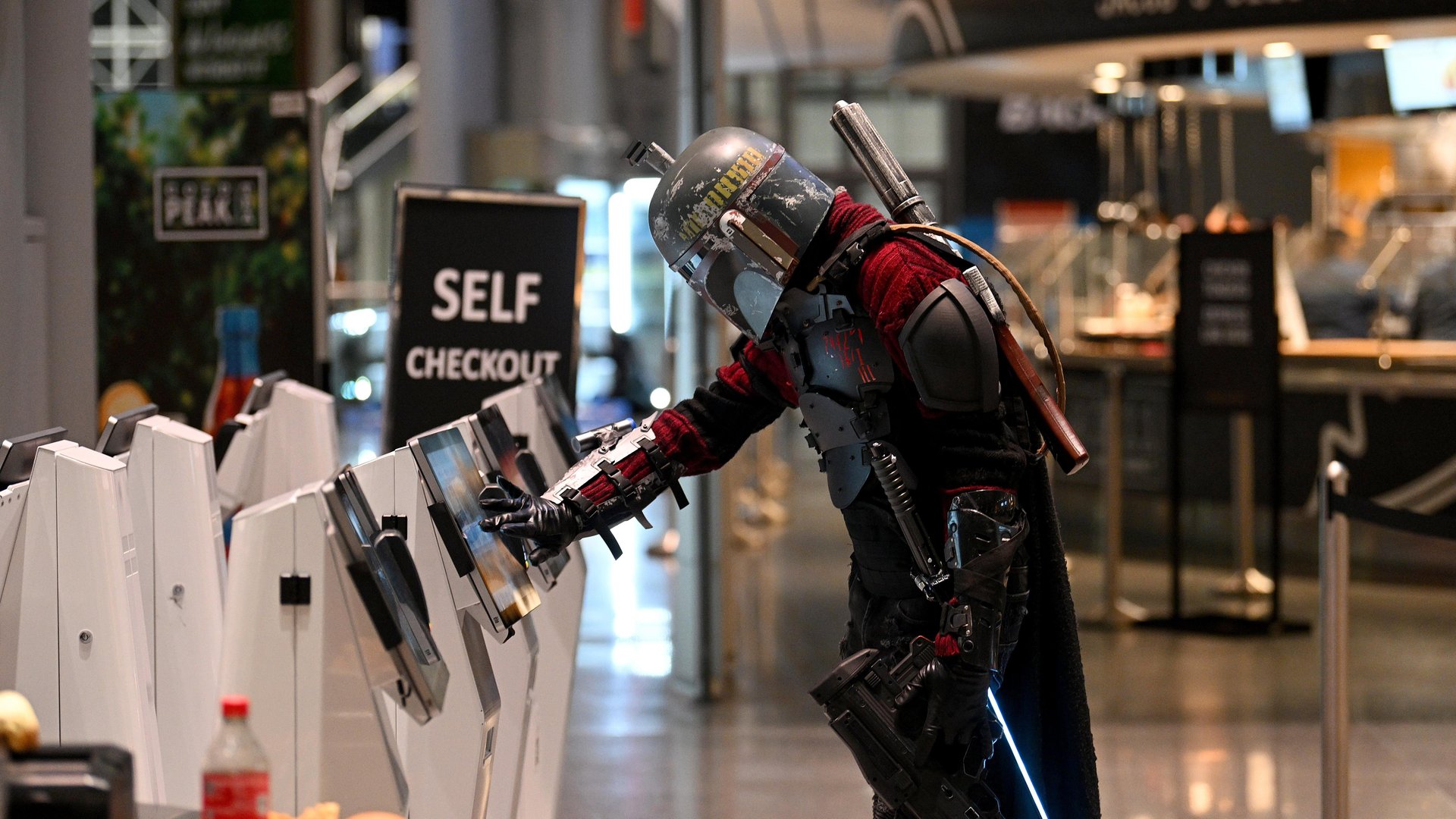
    Self-checkout kiosks and corporate America are in a toxic relationship

    Customers love them, sometimes, but certain executives seem to hate them, sometimes

    By Melvin Backman·2 min read·Updated March 14, 2024
    Add QZ to Google

    Dollar General $DG says it’s yanking a bunch of self-checkout kiosks from its stores because an AI says that people are using them to steal. Target $TGT is rolling out a self-checkout express lane that limits customers to 10 items because self-checkout lines are too long. Maybe the self-checkout nightmare, in which customers fumble frustratingly with weird machines instead of going to cashiers who know how to operate a company’s point-of-sale (POS) system, is coming to an end.

    But maybe it isn’t! Just last week, Ross Stores $ROST said on its earnings call that it’s piloting self-checkout in all of its locations. When Kohl’s gave investors a business update on Tuesday, it said it was going to expand its self-checkout system. What gives!

    Maybe it comes down to trust. Some retailers think their customers will jump at the first chance to swipe stuff, and some don’t. At a Citi real estate conference the other week, Brixmore Property Group CEO Jim Taylor got a question about whether retailers like the ones who rent space in his company’s shopping centers are dealing with the kinds of self-checkout problems that have dominated headlines.

    “I think that’s going to be in very specific markets where you have more crime and more of those issues, generally not the markets that we’re in where we’re not seeing quite that level of shrink experience from our tenants,” he said. Many of Brixmore’s shopping centers are in tony suburbs like Chicago-adjacent Oak Park, Illinois and Sugar Land, Texas, near Houston. Wink-wink, nudge-nudge.

    Overall, the self-checkout craze does seem to be waning. POS specialist ScanSource CEO Mike Baur recently said his company’s POS customers have grown cooler towards the technology. “We still believe that, for us, it’s an area that we expect to continue to have point-of-sale, self-checkout opportunities, but they’re going to be smaller,” he said on a recent earnings call. “The larger retailers acted first. And what we’re seeing now is the price points and the customers are smaller than they were in the prior year.”

    But given that Axios reports that 43% of U.S. consumers like self-checkout better than the cashier route, so it’s unlikely that America’s retailers will do a full return to tradition, as much as it pains them not to.

    Daily Brief

    The essential business news, delivered fresh every morning.

    Join 500,000+ readers who start their day with Quartz.

    By subscribing, you agree to our Terms of Service and Privacy Policy.

    Related

    MarketsRoblox stock posted its worst day ever after pulling its full-year outlook
    SpaceA discarded SpaceX rocket is about to slam into the moon at 5,400 mph
    Cloud ComputingSpaceX will take another year to remove xAI's unpermitted gas turbines near Memphis
    PharmaRohto is recalling nearly 12 million eye drop bottles over sterility concerns
    MarketsAn ex-OpenAI researcher's AI hedge fund collapsed from $45 billion to $10 billion in a week