
Tesla $TSLA CEO Elon Musk believes there's an answer to bringing down the U.S.'s $38 trillion national debt: artificial intelligence.
The Tesla CEO has a far more optimistic view of AI's effect on productivity compared to others studying the issue
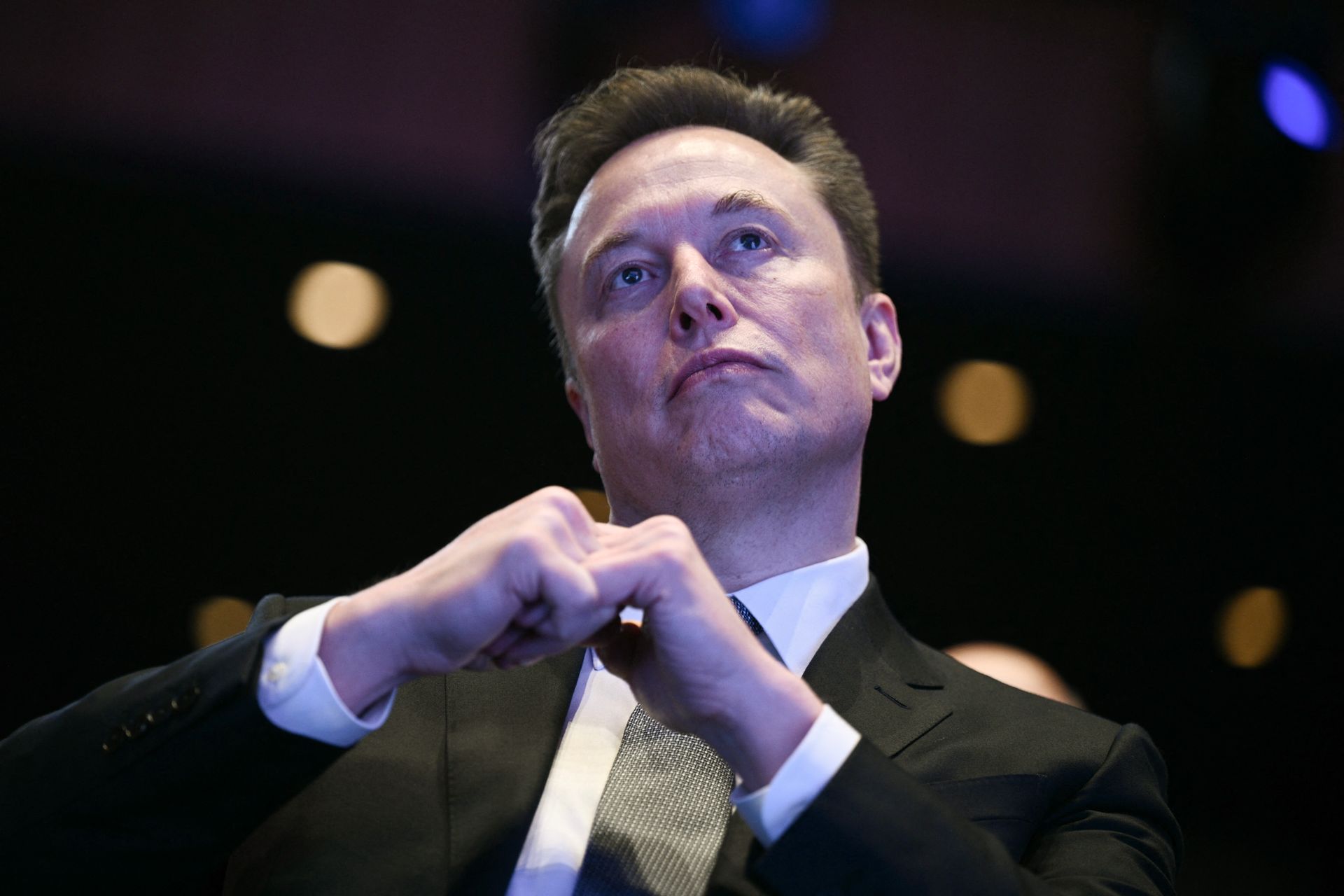
Brendan SMIALOWSKI / AFP
Tesla $TSLA CEO Elon Musk believes there's an answer to bringing down the U.S.'s $38 trillion national debt: artificial intelligence.
"I think, actually, the only thing that can solve for the debt situation is AI and robotics," Musk said in a podcast interview published Sunday with billionaire investor Nikhil Kamath. He believes it "probably would cause significant deflation."
"Currently the U.S. debt is insanely high and the interest payments on the debt exceed the entire military budget of the United States, just the interest payments," Musk said, adding it's set to increase in the short-term, in line with projections from fiscal policy experts.
Many companies, particularly in the tech sector, are spending billions on AI technology, but there hasn't yet been a corresponding, measurable gain in workplace efficiency, experts say. Musk acknowledged that, and then made a bold prediction on how long it will take for AI's productivity gains to offset the spending.
"We're not there yet," Musk said. "But if you say, like, how long would it take us to get there? I think it's three years."
A boost in productivity can set the stage for large wage gains as long as the elevated production in goods and services outpaces the higher labor costs. That way, employers aren't compelled to offload the bigger costs onto consumers to preserve their bottom line.
Musk, though, has a far more optimistic view of AI's effect on productivity compared to others studying the issue.
In September, the nonpartisan Penn Wharton Budget Model projected that generative AI's impact on productivity growth will be scant in the near-future. "AI’s boost to productivity growth is strongest in the early 2030s, with a peak annual contribution of 0.2 percentage points in 2032," the PWBM analysts said.
Join 500,000+ readers who start their day with Quartz.
By subscribing, you agree to our Terms of Service and Privacy Policy.