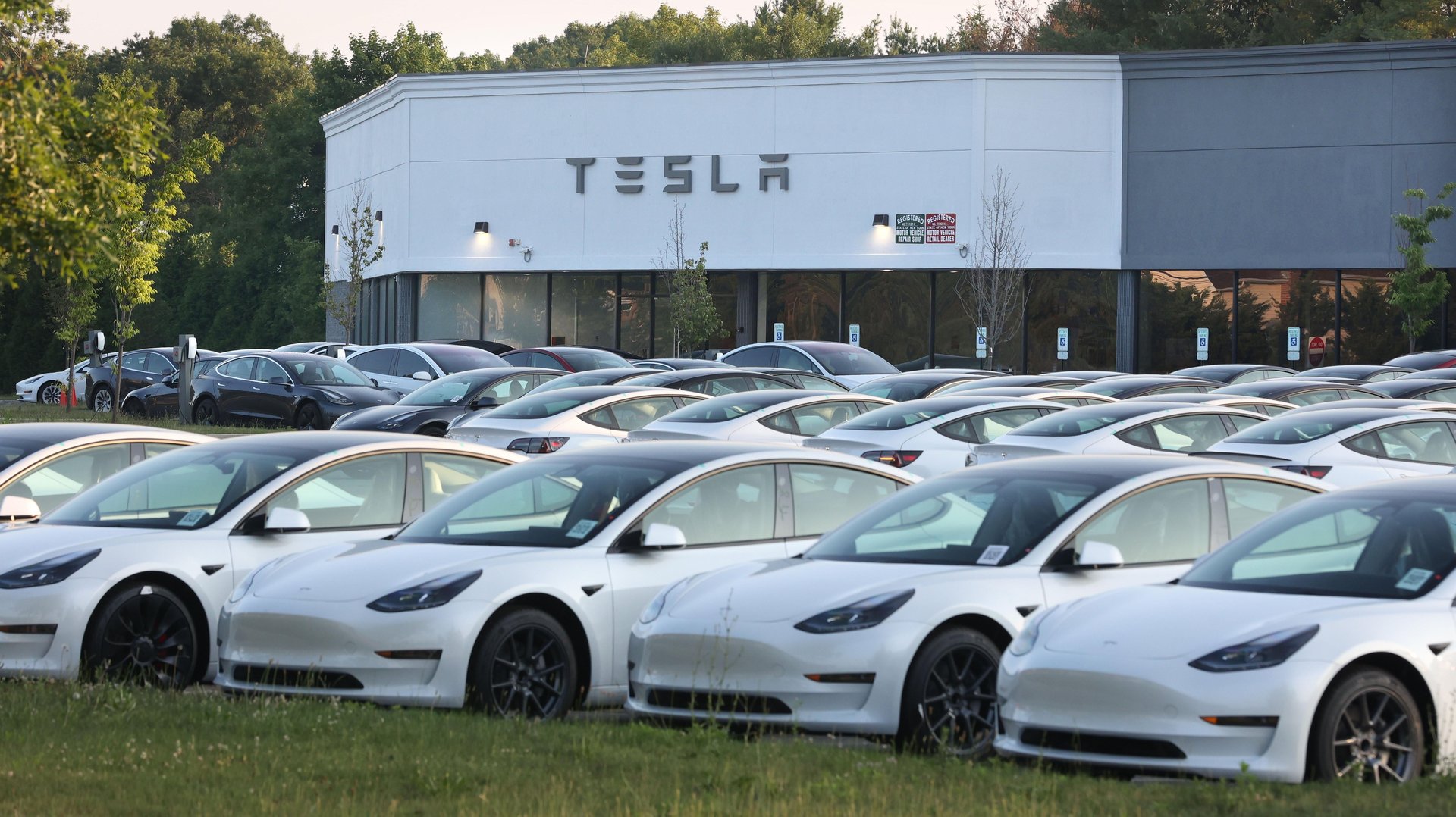
As of April 1, EVs were sitting on dealership lots for an average of 119 days. While that’s fallen from a peak of 169 days in mid-February — helped by the discounts — it’s still a lot higher than the 73-day supply average of gasoline-powered vehicles. Days’ supply — or the average number of days a vehicle stays in dealer inventory before selling — can include vehicles in progress, in transit and on dealership lots.
”Consumers … might want to wait” to buy EVs, said Stephanie Valdez Streaty, director of industry insights at Cox Automotive. “It’s a huge investment. Affordability is an issue.”
But some EVs that were out of the price range for many consumers are now among the more affordable options in the new-vehicle market. With incentives, 11 EV nameplates cost less than the first-quarter industrywide average transaction price. The Ariya sold for about $35,500, according to Cox Automotive data, while the Nissan Leaf is less than $28,000. The Hyundai Ioniq 6 is $36,506.
Tesla $TSLA and Ford $F cut sticker prices on EVs in addition to discounting. The Tesla Model 3 costs $40,547 while the Model Y costs $43,238, with modest incentives on average. The Ford Mustang Mach-E is $44,910 on average with incentives, according to Cox Automotive data. Retail prices don’t include shipping.
This is all happening for one simple fact: the demand for EVs is cooling alongside sales. Electric vehicles made up 7.3 percent of new vehicle sales in the first quarter of 2024, AutoNews reports. Sales volume rose 2.6 percent from a year earlier, which is the right direction, but it’s a much slower rate of growth than in previous quarters. EV volume jumped 46 percent year over year in the first quarter of 2023, and 81 percent in the first quarter of 2022. This is telling us the early-adopter era of EVs is pretty much over, and the next batch of consumers isn’t so sure about the tech. From Automotive News: