

Japan's already-struggling birth rate fell to a record low in 2022
The rate puts the country far below what is needed to maintain a stable population
By
The rate puts the country far below what is needed to maintain a stable population
After seven consecutive years of annual decline, Japan posted its lowest-ever birth rate in 2022, according to the health ministry.
The rate of fertility in the country is down to 1.256 (the number of children born to the average woman), beating a previous low of 1.260 set in 2005. A birth rate of at least 2.07 is needed to stabilize population numbers.
The number of babies born fell 5% last year to 770,747 (an all-time low), while deaths grew by 9% to 1.57 million (an all-time high). The pandemic has been a factor in population decline all over the world. Japan reported 47,000 deaths from covid-19 last year, as well as a decline in marriages and births because of social isolation measures.
Already the oldest country in the world, Japan has made raising birth rates a priority. This week, the Japanese government announced plans to invest 3.5 trillion yen ($25 billion) a year in childcare, healthcare, and a range of other incentives to encourage procreation.
Prime Minister Fumio Kishida addressed Japan’s aging population during a visit to a childcare center.
“The youth population will start decreasing drastically in the 2030s. The period of time until then is our last chance to reverse the trend of dwindling births,” Kishida said this week, according to a Reuters report.
Japan has one of the world’s lowest birth rates, according to the World Bank. East Asian countries have had disproportionately low rates of fertility, with South Korea and Hong Kong tied with Palau for the world’s lowest rate at 0.8.
🇯🇵 Japan is trying really hard to persuade women to start having babies again
📊 What are the factors impacting a country’s replacement rate?
👶 More American women over 40 are having babies. Their risk of dying from it keeps rising too
BlackRock-managed funds will own 80% of the venture, with Meta retaining 20% and leasing back the entire campus
Meta $META Platforms and BlackRock $BLK announced a venture Tuesday to develop and own a data center campus in El Paso, Texas, with total development costs of approximately $14 billion.
Under the agreement, funds managed by BlackRock will control 80% of the venture, with Meta keeping the remaining 20% stake. At financial close, Meta will transfer land and partially built construction assets worth around $2.3 billion into the venture, while BlackRock is set to put in roughly $4.9 billion in cash. Meta will also receive a one-time distribution of approximately $1 billion to align ownership stakes. A portion of BlackRock's investment will be funded through $12.5 billion in debt financing, the company said.
The facility, which is currently being built, will deliver 1 gigawatt of compute capacity when finished. Meta will be the sole occupant upon completion, which is expected in 2028. Meta will enter into lease agreements with the venture for use of the entire campus, with a four-year initial term and four extension options covering a potential 20-year period. The transaction is expected to close in the coming days, the company said.
"Building the infrastructure for superintelligence is key to making sure the benefits of this technology are distributed to everyone," Meta founder and CEO Mark Zuckerberg said in a statement. "Our partnership with Larry and the team at BlackRock allows us to move faster and at greater scale."
BlackRock Chairman and CEO Larry Fink said in a statement that the El Paso campus "will create thousands of skilled jobs and help drive economic growth in the local community."
Meta's investment in the El Paso project exceeds $10 billion, supporting more than 4,000 construction jobs at peak and 300 operational jobs once complete, with over 2,300 workers already on site, the company said. BlackRock's investment in the venture also involves Global Infrastructure Partners and HPS Investment Partners, both part of BlackRock.
The El Paso deal follows the same structure as an earlier arrangement in Louisiana, where Meta sought to sell more than $12 billion in bonds to help finance the campus through a holding company tied to BlackRock's ownership position in the project, named Project Sopaipilla Holdings. That structure mirrors what Meta applied at its Hyperion data center in Louisiana, where a joint venture issued debt to keep liabilities off Meta's books.
Meta has publicly committed to spending $600 billion on data center construction through 2028. Meta stock has fallen about 10% so far this year, with the company scheduled to report second-quarter results on Wednesday.
Meta said Morgan Stanley $MS and J.P. Morgan Securities acted as its financial advisors for the deal.
The deal gives AMD access to more than 500 megawatts of U.S. capacity beginning in 2027, with the option to expand to 2.5 gigawatts
AMD $AMD and Core Scientific announced a partnership on Tuesday under which AMD will secure up to 2.5 gigawatts of data center capacity to support customer deployments of AMD AI products.
The agreement gives AMD access to more than 500 megawatts of U.S. infrastructure beginning in 2027, with the ability to expand to 2.5 gigawatts, the companies said. Under the deal, Core Scientific and AMD will collaborate on physical infrastructure design and the deployment of AMD Instinct GPUs, EPYC CPUs, and ROCm software.
The first phase involves 529 megawatts of U.S. AI capacity committed under 15-year leases, with the company projecting base contracted revenue exceeding $14 billion, according to CoinDesk. AMD itself took on 377 megawatts at Core Scientific facilities in Pecos, Hunt County, Texas, and Muskogee, Oklahoma. A cloud provider whose name was not disclosed signed agreements backed by AMD for 152 megawatts at locations in Auburn, Alabama, and Dalton, Georgia.
AMD also received warrants to purchase Core Scientific common stock, subject to certain commercial conditions, the companies said. AMD received warrants to purchase up to 30 million Core Scientific shares at $23.47 per share, with about 6.5 million vesting when the initial leases were signed.
"Core Scientific's extensive portfolio of AI-ready data centers expands access to the infrastructure our customers need to deploy AMD AI solutions at scale," said Mathew Hein, senior vice president and chief strategy officer of corporate development at AMD, in a statement.
"Our proven execution capabilities and ability to deliver high-density infrastructure at scale position us to support AMD's technology roadmap and grow our relationship meaningfully over time," said Adam Sullivan, chief executive officer of Core Scientific, in a statement.
Core Scientific stock jumped about 6% in premarket trading on Tuesday, while AMD stock was down about 4%.
The deal accelerates Core Scientific's shift away from bitcoin mining toward AI data center hosting. In the second quarter, colocation brought in $136.7 million — representing 83% of Core Scientific's $164.2 million in total revenue — while its self-mining business saw revenue drop 66% to $21.5 million, according to CoinDesk. Separately, Core Scientific unwound its contract with Block $SQ for bitcoin-mining chips, a move that resulted in a $41.9 million charge.
The AMD partnership adds to a string of recent infrastructure commitments for the chipmaker. AMD announced a partnership with Anthropic to deploy up to 2 gigawatts of Instinct MI450 Series GPUs in Helios rack-scale systems, and expanded a partnership with Microsoft $MSFT to deploy its Helios rack-scale AI system on Azure.

The payments company said the cuts will fall on technology and product teams as CEO Ryan McInerney pushes to make the firm more efficient
Visa $V is eliminating roughly 2,600 jobs, or about 7% of its total workforce, as Chief Executive Officer Ryan McInerney moves to make the payments company more competitive. The cuts will fall on technology and product teams, according to Bloomberg, which reviewed a staff memo McInerney sent Tuesday.
"I have deep conviction that we are doing what is right for Visa, our clients and our partners as we continue to focus on driving efficiency across the company in order to reinvest in our highest potential opportunities," McInerney wrote in the memo.
Visa had roughly 34,100 employees at the end of its most recent fiscal year. Freed-up capital is expected to flow back into areas such as consumer payments, commercial and money-movement solutions, and value-added services — a category that spans stablecoin, cross-border, and business-to-business products — according to Bloomberg, which cited a person familiar with the company's reasoning.
Artificial intelligence is playing a role in the transition — streamlining routine tasks and quickening the pace of product development — though it was not the sole reason the company moved forward with the reductions. "AI is also helping to accelerate this evolution and shape the way work gets done at Visa," McInerney wrote.
Visa stock rose about 2.1% in premarket trading Tuesday. The company is scheduled to report quarterly results after U.S. markets close Tuesday.
The layoffs arrive as other payments and fintech companies have also reduced headcount. Earlier this year, Mastercard $MA announced plans to cut 4% of its global workforce, according to Reuters. Block $SQ announced in February that it planned to shed roughly 4,000 positions, representing close to half of its total headcount. PayPal $PYPL Holdings has also announced cuts.
The detention marks the first known instance of authorities taking legal action against an Nvidia employee in a chip smuggling case
Taiwan prosecutors detained an Nvidia $NVDA employee on Tuesday as part of an investigation into the alleged smuggling of AI servers equipped with restricted Nvidia chips to China, expanding a probe that has now ensnared seven people.
The Keelung District Prosecutors Office said investigators searched the home and workplace of a suspect identified only by the surname Chang on July 24. Prosecutors successfully sought Chang's detention, telling the court he could flee the country, tamper with evidence, or coordinate with others involved in the case, according to the prosecutors office. Taiwan's Mirror Media identified the suspect as an Nvidia employee, according to Reuters. Nvidia did not confirm whether Chang is its employee.
As far as is publicly known, no government had previously moved against an Nvidia employee over chip smuggling, making the detention potentially unprecedented, according to Bloomberg. Investigators searched Chang's desk at Nvidia's Taipei office, Bloomberg added, citing unnamed sources. Chang now sits in custody after a court approved the detention request, with forgery and breach of trust among the allegations cited.
Chang came to investigators' attention through material collected in prior operations focused on Super Micro, a source familiar with the case told AFP. According to prosecutors, the defendants falsified paperwork to facilitate the export of around 50 Super Micro servers to China, and an official told AFP that a portion of those units passed through Taiwan customs before continuing on through Japan.
In a statement, Nvidia said: "Smuggling is a nonstarter. We primarily sell our products to well-known partners, including OEMs, who help us ensure that all sales comply with U.S. export control rules. Even relatively small exporters and shipments are subject to thorough review and scrutiny on both sides of the globe, and any diverted products would have no service, support, or updates."
The Taiwan investigation, covering three rounds of raids and detentions, began in May when prosecutors announced they were looking into exports of high-end AI servers to China, Macau, and Hong Kong in violation of U.S. export controls. A second round in late June swept up two Super Micro workers at its Taiwan unit. Tuesday's action marks the third round. Seven people are now in custody, including two Super Micro employees and one employee of Taiwan-listed Albatron Technology.
The Taiwan probe runs alongside a separate U.S. case. Federal authorities charged Super Micro co-founder Yih-Shyan "Wally" Liaw and two others in March with diverting roughly $2.5 billion in Nvidia-equipped servers to China. Prosecutors in Taiwan have said it is too early to determine whether the two investigations are connected.
The United States has barred Nvidia's advanced AI chips from reaching China since 2022, citing fears that the technology could strengthen Beijing's armed forces. Taiwan does not currently have its own restrictions on AI chip sales to China, though President Lai Ching-te's administration is weighing tighter policies.
The deal, awarded by the Space Force's Rocket Systems Launch Program, covers 12 suborbital launches with options for up to 6 more
Rocket Lab Corporation announced Monday it has been awarded a $266 million multi-launch contract with the U.S. Space Force, the largest launch contract in the company's history.
Under the contract, awarded by the Space Force Space Systems Command's Rocket Systems Launch Program, Rocket Lab is tasked with 12 suborbital launches supporting missile defense capabilities, with the option to order as many as six more, the company said. The first launch under the contract is expected no earlier than the end of 2026.
Rocket Lab said the majority of missions will fly from a new facility it is establishing at the Pacific Spaceport Complex-Alaska in Kodiak, Alaska. The company also operates launch sites at Launch Complex 1 in New Zealand and at Launch Complex 2 and Launch Complex 3 in Virginia.
"The size and scale of this contract reflects the Space Force's confidence in our ability to meet their urgent national security demands with speed, responsiveness, and scale, and we're proud to provide the high-frequency launch capacity required to keep the U.S. ahead of global threats," Rocket Lab founder and CEO Sir Peter Beck said in a statement.
Earlier this year, the Pentagon awarded Rocket Lab a $190 million contract tied to hypersonic flight testing, according to the Wall Street Journal. Rocket Lab has also partnered with defense firm RTX on Golden Dome, the proposed U.S. space-based missile-defense architecture.
Rocket Lab's push into national security launches comes as the company has been expanding beyond its launch services roots. Last month, Rocket Lab agreed to acquire Iridium Communications in a cash-and-stock deal valued at approximately $8 billion, which would give it control over Iridium's 66-satellite low-Earth orbit network, globally licensed L-band spectrum, and more than 2.55 million subscribers spanning government, defense, aviation, maritime, and commercial markets. The transaction is expected to close in mid-2027, pending stockholder and regulatory approvals.
The Iridium acquisition would position Rocket Lab to compete more directly with SpaceX and its Starlink unit, which pairs launch services with a satellite communications business. Rocket Lab posted record first-quarter revenue of $200.3 million, a 63.5% increase from a year earlier, and ended the quarter with a backlog of $2.2 billion.
Rocket Lab stock rose 4.74% on Monday.
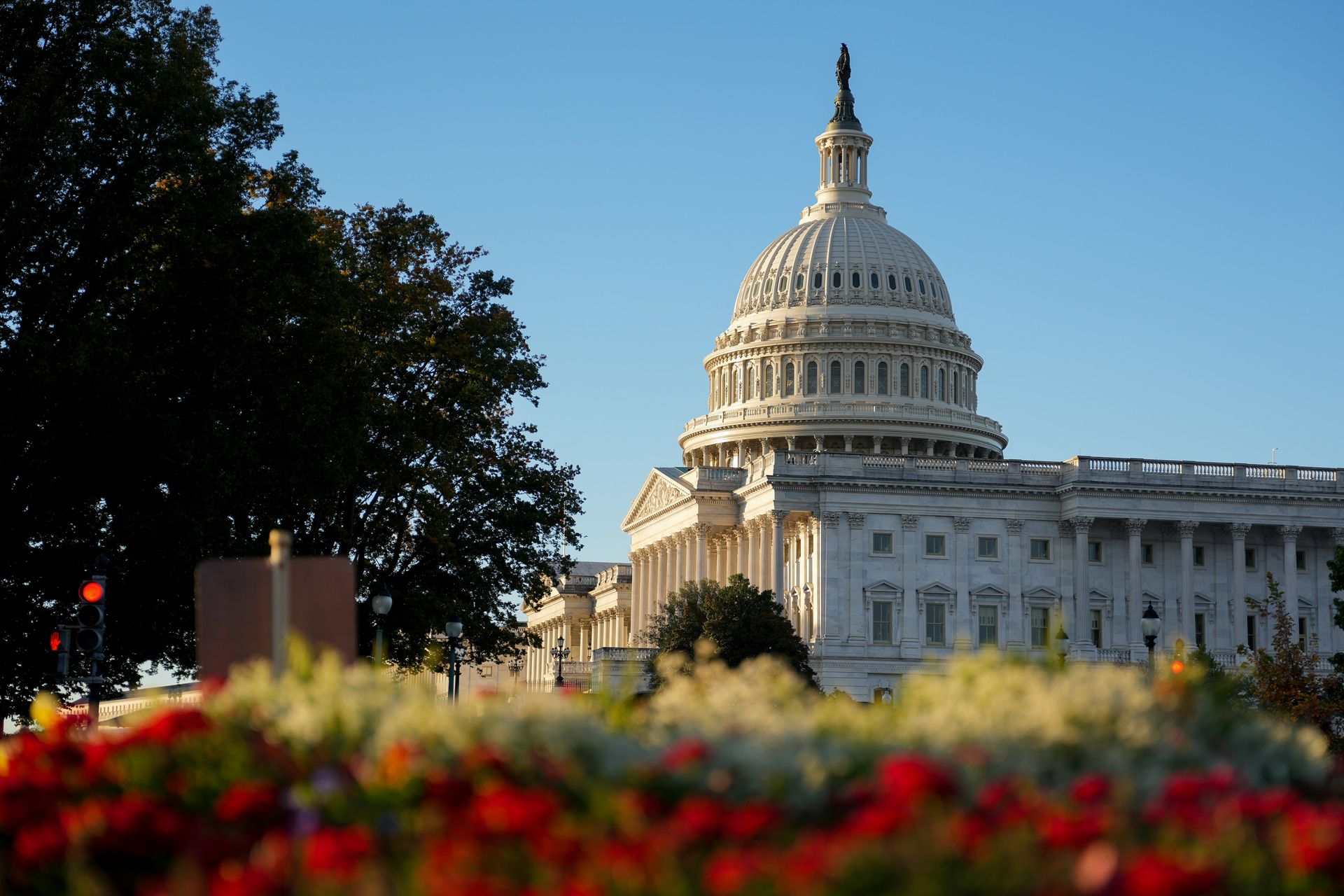
At least 5 of the 6 House members sit on committees with oversight of defense, AI, or securities markets — all areas central to SpaceX's business
At least six House members or their immediate families purchased SpaceX stock within six days of the company's June 12 initial public offering, drawing scrutiny over potential conflicts of interest given the lawmakers' committee assignments, according to CNBC.
The six House members are Reps. William Timmons, R-S.C.; John McGuire, R-Va.; Dan Meuser, R-Pa.; Gil Cisneros, D-Calif.; John James, R-Mich.; and Jared Moskowitz, D-Fla., according to CNBC. Combined, the purchases totaled between roughly $83,000 and $245,000, with individual transactions reported in ranges as required by disclosure rules.
Five of the six sit on committees overseeing areas directly tied to SpaceX's business. Rep. Timmons chairs a House oversight subpanel on military and foreign affairs and sits on a financial services subcommittee covering AI. Reps. McGuire and Cisneros both serve on the House Armed Services Committee, which holds oversight authority over the Pentagon and Space Force — among SpaceX's largest government clients. Rep. James is a member of the House Energy and Commerce Committee, whose jurisdiction includes oversight of AI data center development — an area where SpaceX subsidiary SpaceXAI has emerged as a significant builder of facilities across the country. Rep. Meuser sits on the House Financial Services Committee, which has jurisdiction over securities and exchanges.
Three of the six trades were made by a spouse or dependent child. Rep. James' wife purchased between $15,001 and $50,000 in SpaceX stock on June 12. A spokesperson for Rep. James said his wife bought the stock through a brokerage firm, as any member of the public could. Rep. McGuire's wife invested between $1,001 and $15,000 on June 15, and a dependent child of Rep. Meuser's purchased between $15,001 and $50,000 on June 15.
Rep. Timmons bought between $50,001 and $100,000 in his own name on June 15. Rep. Cisneros purchased between $1,001 and $15,000 on June 18, also in his own name. Rep. Cisneros said in a statement that professional financial advisors handle investment decisions for him and his wife. Rep. Moskowitz, who purchased between $1,001 and $15,000 on June 12, sits on the House judiciary and foreign affairs committees, neither of which has direct authority over SpaceX's core business.
CNBC found no indication that any of the lawmakers used inside information, ran afoul of congressional trading rules, or leveraged their offices to benefit SpaceX. Under current law, such purchases are permissible so long as members satisfy disclosure obligations and do not act on information obtained through their official roles.
Kedric Payne, ethics director at the Campaign Legal Center, said the SpaceX trades illustrate how congressional stock ownership can raise ethical problems that go well beyond the question of insider trading. "The potential conflict of interest exists when the committee assignment may overlap with this company as a government contractor," Payne said.
SpaceX's June 12 Nasdaq $NDAQ debut under the ticker SPCX raised roughly $75 billion, making it the largest IPO on record. The stock priced at $135, opened at $150, and reached a closing high of $201.80 before declining. As of Monday, SpaceX stock closed at $113.46 — about 16% below the IPO price.
The disclosures arrive as the House has passed the Stop Insider Trading Act, which would bar members of Congress and their families from acquiring new individual stock positions but would allow them to retain existing holdings and sell with advance public notice. The bill now moves to the Senate, where its fate is uncertain.
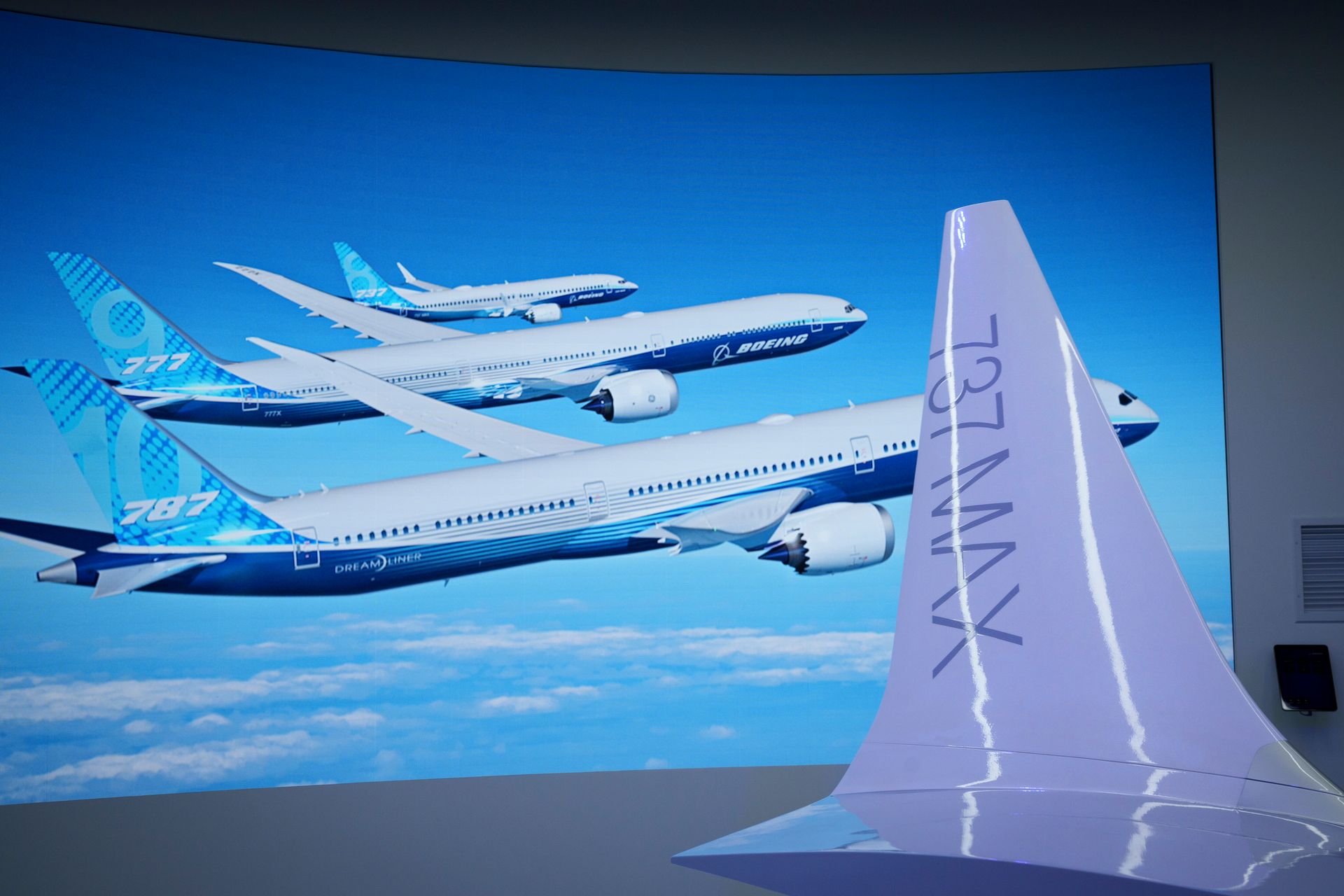
Seats on some MAX jets were incorrectly installed in their tracks and could disengage during turbulence or an emergency landing
The Federal Aviation Administration proposed an airworthiness directive Monday requiring airlines to inspect passenger seat installations on 453 Boeing $BA 737-8 and 737-9 aircraft registered in the United States.
The FAA said the directive stems from a report that certain passenger seat assemblies had been improperly seated in their tracks on some MAX jets. "A track-mounted passenger seat assembly that is installed incorrectly can disengage from the seat tracks if there is an increased load, turbulence, or emergency landing," the agency said. "This condition, if not addressed, could result in injury to passengers and crew during an emergency landing or could block the aisle, which could slow evacuation."
Each 737 MAX can have as many as 69 track-mounted passenger seat assemblies. The FAA estimated each assembly would take about one work-hour to fix, with total inspection costs for U.S. operators reaching approximately $2.7 million before any re-installation expenses, according to The Wall Street Journal. The directive did not specify a deadline for airlines to complete the work, according to CNN.
Boeing said it supported the FAA's decision to make the inspection guidance mandatory for operators. The 453 affected jets represent roughly a fifth of the more than 2,300 MAX aircraft in operation, according to The Wall Street Journal.
The directive comes on the heels of the FAA returning to Boeing the ability to sign off on the airworthiness of newly built 737s — a responsibility the agency stripped from the manufacturer in 2019 in the wake of two fatal MAX crashes.
Boeing reported a second-quarter net loss of $428 million on Tuesday, the same day the seat inspection directive drew attention. The company's Commercial Airplanes segment posted revenue of $11.8 billion in the quarter, up from $10.9 billion a year earlier, as deliveries climbed 14% to 171 planes. Boeing said certification flight testing has been completed on both the 737-7 and 737-10, with certification anticipated in 2026 and first delivery in 2027 for both variants.
Boeing has faced a series of manufacturing quality issues in recent years. In January 2024, a door plug blew out of an Alaska Airlines 737 MAX in flight, leading to a temporary grounding of dozens of jets and a proposed FAA fine exceeding $3 million.

The program, called Apple Upgrade, covers iPhone, Apple Watch, Mac, and iPad and replaces the existing iPhone Upgrade Program
Apple $AAPL launched a device leasing program on Tuesday called Apple Upgrade, offered in partnership with Klarna, covering iPhone, Apple Watch, Mac, and iPad at Apple Store locations and online in the United States.
Monthly lease payments start at $17.99 for iPhone, $11.99 for Apple Watch, $11.99 for iPad, and $24.99 for Mac, the company said. iPhone and Apple Watch are available on 12- or 24-month terms, while Mac and iPad carry 24- or 36-month options. No security deposit is needed, and the application involves only a soft credit check, leaving an applicant's credit score unaffected.
When a lease term ends, customers have three paths: sign a new lease on an updated device, buy the current device outright, or simply hand it back and walk away. Customers can track billing schedules and remaining payments through the Klarna app. Trading in a current device through Apple Trade In can lower monthly payments, and customers who pay with Apple Card earn 3% Daily Cash back on lease payments.
With the launch of Apple Upgrade, Apple said it is discontinuing the iPhone Upgrade Program and iPhone Payments in the United States. Customers currently enrolled in the iPhone Upgrade Program will have the option to lease a new device through Apple Upgrade, finance through Apple Card Monthly Installments, purchase outright, or use carrier financing, the company said.
Karen Rasmussen, Apple's vice president of the Apple Store online, called the program "a more flexible way to pay for the products they love," in a statement.
Not all devices qualify. The iPhone 16, MacBook Neo, and several other models are excluded from the program, the company said.
The announcement comes roughly a month after Apple raised starting prices on five MacBook and iPad models by $100 to $300, citing surging memory and storage costs. Those increases followed remarks by CEO Tim Cook, who described the component cost environment as a 'hundred-year flood' and said absorbing the full impact was no longer viable. Analysts have anticipated further price increases on iPhones when the next generation launches in September.
By quoting a monthly lease rate rather than a total purchase price, Apple redirects attention away from the full cost of the device. The iPhone 17 Pro illustrates the range: the company prices it at $1,099 to buy outright, while lease payments run $31.99 monthly over two years or $45.99 monthly over one year, according to Apple.
Apple is scheduled to report third-quarter earnings on Thursday, according to CNBC.
The payments company now expects full-year adjusted earnings of $5.38 a share, up from prior guidance that called for a slight decline
PayPal $PYPL reported second-quarter adjusted earnings of $1.38 a share on Tuesday, beating analyst expectations of $1.28, and raised its full-year profit guidance as CEO Enrique Lores's turnaround effort showed early signs of progress.
Revenue for the quarter rose 5% year over year to $8.68 billion. Analysts had expected $8.47 billion, according to The Wall Street Journal.
PayPal now expects full-year adjusted earnings of $5.38 a share, compared with $5.31 in 2025. The company had previously guided for a low-single-digit decline to slightly positive growth. For the full year, PayPal also expects transaction margin dollars — a key profitability measure — of roughly $15.6 billion, up from $15.5 billion in 2025 and a reversal of prior guidance that had called for a slight decline.
In the second quarter, transaction margin dollars increased 1% to $3.9 billion, a figure that climbs to 3% growth once interest on customer balances is stripped out. On a currency-neutral basis, total payment volume reached $486.4 billion, a 9% year-over-year increase. Non-GAAP operating margin contracted 248 basis points year over year to 17.4%, as non-transaction-related expenses rose 9%.
On a GAAP basis, the company posted net income of $1.1 billion, or $1.25 a share, down from $1.26 billion, or $1.29 a share, a year earlier.
Lores, who took the top job in March after succeeding Alex Chriss, pointed to progress across PayPal's three newly formed business divisions. "We moved with urgency to sharpen our transformation plan and advance our growth strategies across our three businesses," Lores said in a statement. "Branded checkout has further stabilized and we're building on the strong momentum in Venmo and Braintree as well as diversifying our business model through financial services."
The company said Venmo Debit Card monthly active accounts grew more than 50% year over year, while Braintree total payment volume grew in the mid-teens. The company also said it is on course to achieve $400 million in gross run-rate savings in 2026, with a longer-term target of at least $1.5 billion to be realized over the following two to three years.
Looking ahead to the third quarter, PayPal projected that adjusted earnings would slip by a low-single-digit percentage against the $1.34 a share it posted in the year-ago period.
PayPal stock fell roughly 2% in premarket trading Tuesday.
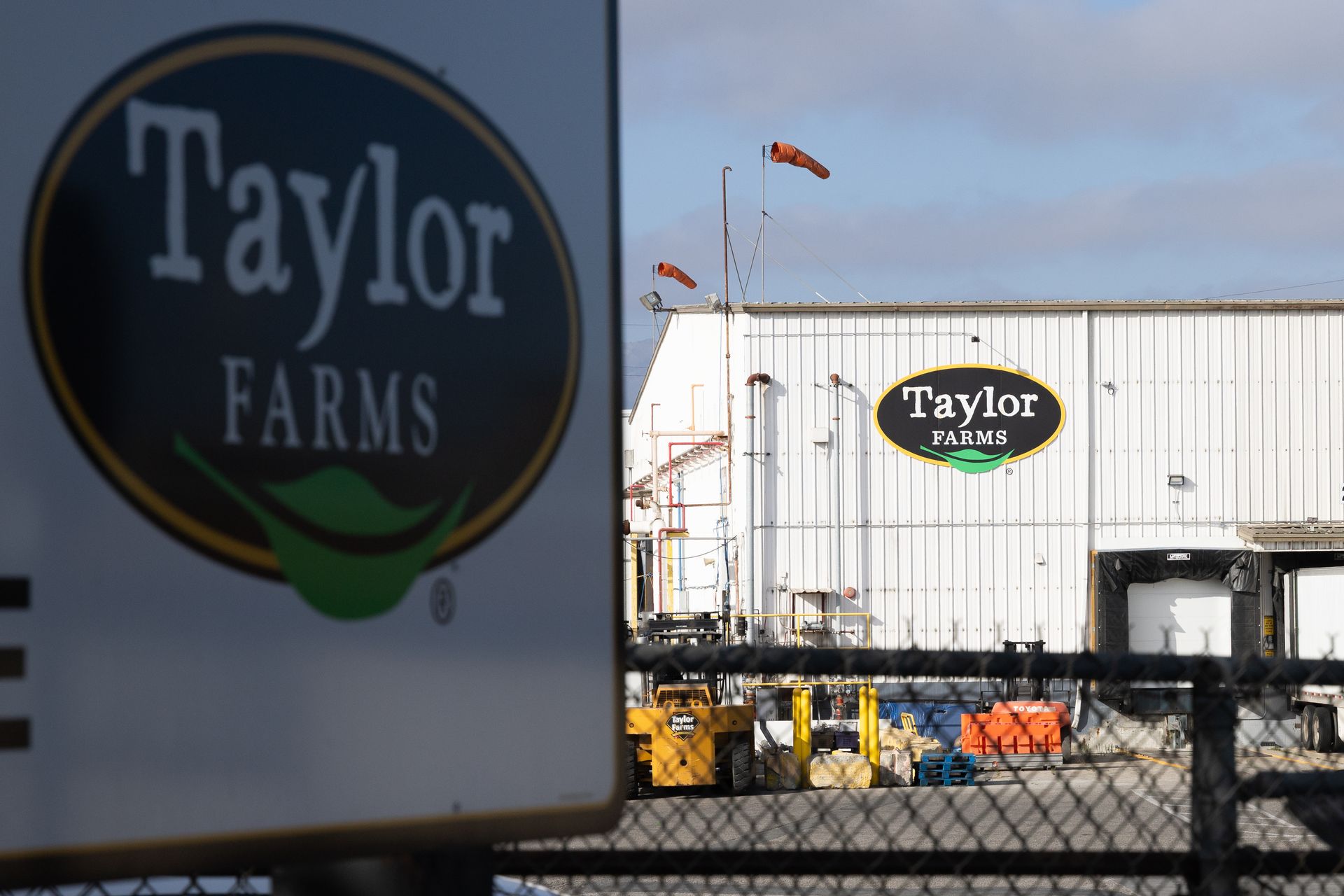
Centralized sourcing and distribution networks can turn a local contamination event into a multistate crisis, food safety experts say
Food industry consolidation is amplifying the scale of the cyclospora outbreak that has sickened thousands across the United States, food safety experts say, as centralized sourcing and distribution networks carry contamination far beyond where it originates.
"Consolidation means that if something goes wrong, it goes wrong big time," Marion Nestle, professor emerita of nutrition, food studies and public health at New York University, told CNBC. "The bigger the supplier, the greater the opportunity for contamination."
The current outbreak has focused investigators on shredded iceberg lettuce processed by Taylor Farms and distributed through its foodservice business to Taco Bell restaurants and other customers across multiple states, according to CNBC. On July 17, Taylor Farms de Mexico recalled all iceberg lettuce sourced from central Mexico, covering products sold in at least 27 states to consumers, restaurants, and retailers.
Dr. David Relman, a professor of microbiology and immunology at Stanford University, said consolidation transforms the downstream consequences of a single contamination event. "It's possible that as food sourcing and distribution becomes consolidated you get pooling and then redistribution of what might have been a very local contamination problem, so that it now becomes a widely distributed contamination problem," David Relman said. He pointed to bagged, chopped lettuce as an example: a single contaminated batch can draw from many heads and then move through far-reaching distribution networks.
Taylor Farms has expanded its footprint considerably over the last decade by buying up other companies, acquiring Earthbound Farm in 2019, Curation Foods in 2021, and Equinox Growers earlier this year. The restaurant supply sector has undergone similar consolidation, with major broadline distributors including Sysco, U.S. Foods, and Performance Food Group now reaching hundreds of thousands of restaurants and institutional kitchens across the country.
Not every expert views consolidation as a liability. Timothy Lytton, a health and safety regulation expert at Georgia State University, argued that scale can actually be an advantage, since larger produce operations tend to have the resources to build out rigorous food safety infrastructure that smaller farms simply cannot match. "It's not entirely clear that larger operations have more food safety problems than smaller operations," Lytton said. Lytton nonetheless conceded that a large distribution network changes the math when something does go wrong, making any resulting recall far more sweeping and difficult to execute.
The outbreak initially centered on Taco Bell restaurants in Indiana, Kentucky, Michigan, Ohio, and West Virginia, where more than 1,644 people were linked to Taylor Farms lettuce and 94 were hospitalized. The recall was later expanded to cover products distributed across 27 states, including retail items sold under the Marketside brand at Walmart $WMT stores. The CDC notes that the true case count is likely higher because many people recover without seeking medical care or testing.
Relman said the outbreak points to a broader vulnerability in how food safety systems are understood. "We often don't appreciate a system like the food inspection system, or the public health system in large until it fails," he said.