

Selena Gomez is now one of the youngest, self-made female billionaires
Selena Gomez is known for being open about her personal struggles. That vulnerability helped make her a billionaire.
By
Selena Gomez is known for being open about her personal struggles. That vulnerability helped make her a billionaire.
Selena Gomez is many things: an actress, a singer, a chef, an Instagram icon, and a best friend to Taylor Swift. And now the “Only Murders in the Building” star can add another feather to her cap: she is one of America’s youngest self-made female billionaires.
Gomez, 32, is worth $1.3 billion, according to the Bloomberg Billionaires Index. The sources of her wealth are as diverse as her many careers. More than 80% of her net worth is derived from her Rare Beauty cosmetics brand but she also pulls in money from her acting and singing careers and her partnerships with brands including Coach, Louis Vuitton, and Puma.
“Selena is not just a pop star,” Stacy Jones, founder and chief executive officer of Hollywood Branded, a Los Angeles-based branding agency, told Bloomberg. “She’s a multifaceted businesswoman with diverse income streams contributing to her impressive net worth.”
Crucially, Gomez is also openly vulnerable about her personal life and her struggles with lupus and bipolar disorder. In 2022, she released the documentary “My Mind and Me” chronicling her experience with mental illness. A year before that, she launched the platform Wondermind which connects people to mental health resources.
“You’ve got a real role model of how a celebrity can use their influence and expertise to both do good and create good business,” Wondermind investor Brent Saunders told Bloomberg. “Selena epitomizes that.”
While many celebrities have their own cosmetics lines, the blockbuster success of Rare Beauty is frequently attributed to Gomez’s ability to be open about her struggles.
“We really tried to absorb as much as we could about what makes her so special and why people love her so much and that’s kind of where the essence started,” Rare Beauty chief digital officer Mehdi Mehdi told Women’s Wear Daily of the company’s branding.
“The more we got into it, her vulnerability was the thing that kept coming up,” Mehdi continued. “She’s been so open and honest about who she is and some of the struggles that she goes through and the challenges, and there was a sense of just everyone could see themselves in her.”
Bloomberg estimates that in addition to Rare Beauty, about seven percent of Gomez’s net worth comes from endorsements, about five percent is from touring, and just under three percent is from Wondermind. The remainder of her net worth is connected to album sales, streaming, acting, and real estate holdings.
Continue reading to learn which celebrities have found the most success in business in 2023, according to a recent study from the packaging company Arka.

Actress and singer Jennifer Lopez is the tenth-most successful celebrity business owner. Her luxury skincare brand, J Lo Beauty, brings in $75 million annually, according to the study.
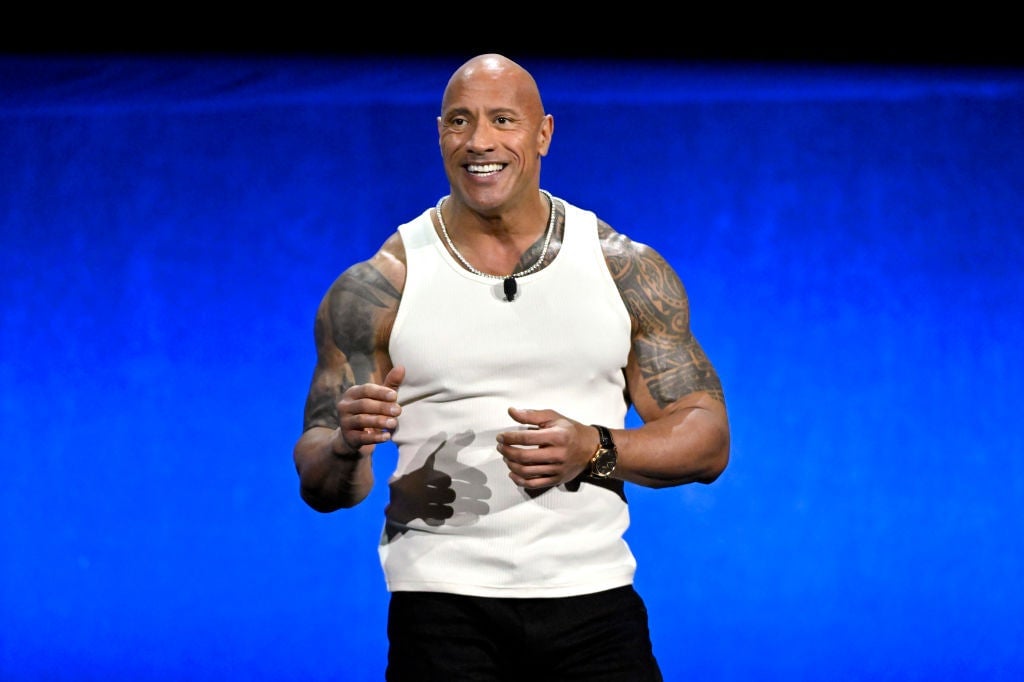
Dwayne Johnson is the ninth-most successful celebrity business owner. Arka’s study said he made a combined $83.3 million through tequila company Teremana, energy drink manufacturer Zoa and the XFL – a professional football league.

Pop star Ariana Grande is the eighth-most successful celebrity business owner. Grande’s r.e.m. beauty cosmetics line and her God Is a Woman perfume have made a combined revenue of $84 million.

Pop star Lady Gaga is the seventh-most successful celebrity business owner. Beauty company Haus Labs by Lady Gaga made $141.7M in revenue last year, per the study.

Actress Scarlett Johansson is the sixth-most successful celebrity business owner. Her skincare company, the Outset, made $153 million in revenue last year, the study said.

Actress Jessica Alba is the fifth-most successful celebrity business owner. Her personal care brand, the Honest Company, reportedly made $344 million in revenue last year.

Pop star Rihanna is the fourth-most successful celebrity business owner. Her makeup company, Fenty Beauty, reportedly made $582 million in revenue last year.

Pop star and actress Selena Gomez is the third-most successful celebrity business owner. Her makeup company, Rare Beauty, made $600 million in revenue last year, the study said.

Socialite and reality star Kim Kardashian is the second-most successful celebrity business owner. Her lingerie company Skims made $750 million in revenue last year, according to the study.
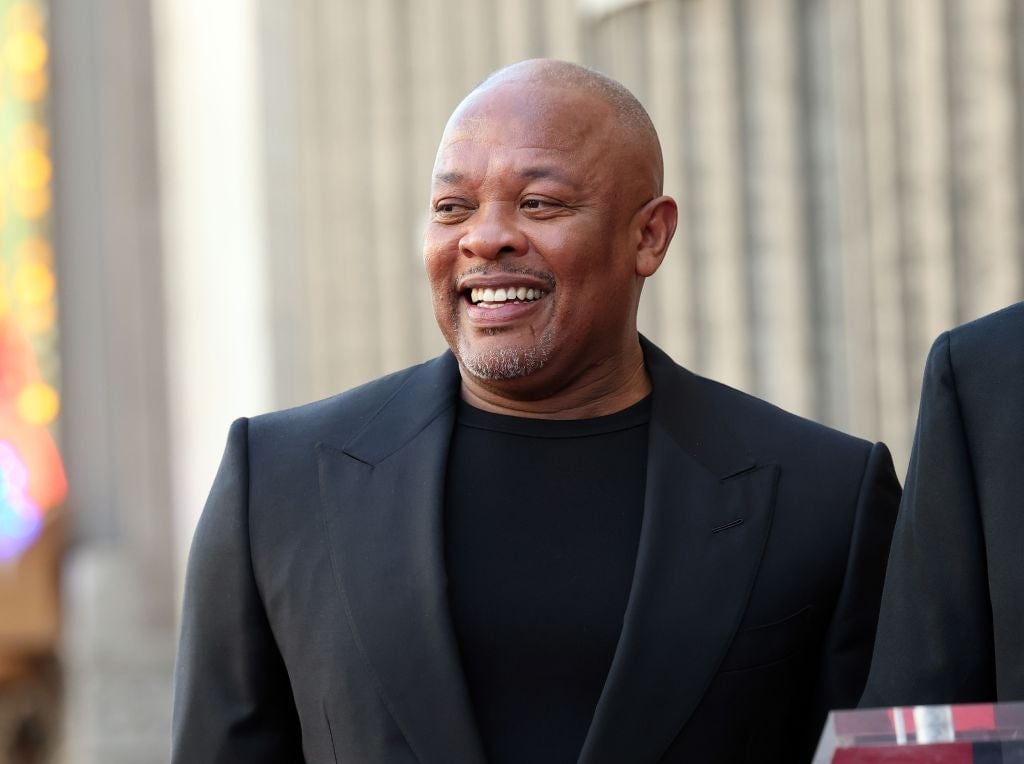
Musician and producer Dr. Dre is responsible for the most successful celebrity brand. Beats by Dre makes $1.5 billion in annual revenue, according to the study. Dr. Dre sold Beats to Apple $AAPL for $3 billion in 2014.
Novo says Lilly's ads for Zepbound and Mounjaro rely on outdated data and omit newer, higher-dose versions of Wegovy and Ozempic
Novo Nordisk announced Friday that it has asked a U.S. court to issue a preliminary injunction halting a series of obesity and diabetes drug advertisements run by Eli Lilly $LLY, marking a new front in the two companies' legal confrontation over weight loss treatments.
Novo announced earlier this week that it had sued Lilly, saying consumers were being misled about how the companies' drugs compare, and that it would pursue a preliminary injunction if Lilly did not remove the disputed ads on its own. Lilly declined to do so, the company said, prompting Novo to move forward with the injunction request.
In a statement, the company said: "Novo Nordisk is seeking a court order on an expedited basis to ensure people can access the accurate, complete picture of the treatments available to them today."
Novo's core complaint centers on ads that pit the highest approved doses of Lilly's Zepbound and Mounjaro against lower doses of Novo's Wegovy and Ozempic, while leaving out data on newer, higher-dose formulations of Novo's drugs, the company said. Novo contends that viewers of the ads would come away believing Lilly's drugs outperform its own. Through the lawsuit, Novo is asking the court for a permanent injunction that would force Lilly to take down the campaigns entirely and issue corrective advertising to consumers.
Lilly denied any wrongdoing when Novo filed suit earlier this week and said it would defend itself. The company did not respond to a request for comment on Friday.
When Novo filed the underlying lawsuit, one Lilly television commercial that has logged more than 700 million impressions since airing around the end of April states that patients on Zepbound lose 50 pounds on average compared to 33 pounds on the 2.4-milligram dose of Wegovy. Novo argues its recently approved 7.2-milligram high-dose Wegovy, which entered the market in March, showed average weight loss of 47 pounds — a result the company describes as comparable to Zepbound's performance in Lilly's own most recent trial. Novo's complaint extends the same argument to Lilly's diabetes advertising, alleging ads comparing Mounjaro with Ozempic similarly omit more recent data on a higher-dose version of Novo's drug.
Novo sent Lilly a cease-and-desist letter in April, and the lawsuit was filed in the U.S. District Court for the District of New Jersey under the Lanham Act alongside federal and state statutes governing unfair competition and false advertising.
The rivalry sits atop what analysts project will become a domestic obesity drug market exceeding $100 billion before the decade closes, according to CNBC, with both companies maneuvering aggressively to lead it. Though Novo entered the market first with Wegovy, Lilly has since taken the commercial lead across the category.
The card company posted second-quarter earnings of $4.53 per share, up 11% from a year ago, as card member spending rose 9%
American Express $AXP reported second-quarter earnings that beat analyst expectations on Friday, and raised its full-year revenue growth guidance to 10%, citing stronger-than-expected performance in the first half of the year.
Earnings per share reached $4.53 in the second quarter, an 11% increase compared with $4.08 in the same period last year. The result topped the $4.40 per share consensus estimate, according to Reuters. The company's full-year earnings per share guidance remains unchanged at $17.30 to $17.90, the company said.
Total revenues net of interest expense climbed 10% to $19.6 billion. Billed business — the company's measure of overall card volume — increased 9% to $455.8 billion.
"Six months into the year, we're seeing stronger momentum than we expected. The investments we made in our value propositions have driven accelerated spend and revenue growth," chairman and chief executive officer Stephen Squeri said in a statement.
American Express's consolidated provisions for credit losses totaled $1.1 billion in the quarter, compared with $1.4 billion in the year-earlier period. The decrease reflected a reserve release during the quarter compared to a reserve build in the prior year, the company said. The net write-off rate held at 2.0%, flat year-over-year.
Consolidated expenses rose 12% to $14.5 billion, driven by higher variable customer engagement costs from increased card member spending, the U.S. Platinum Card refresh, and greater use of card member benefits, as well as higher operating expenses, the company said.
American Express stock was down 1.4% in premarket trading on Friday.
The company said it plans to reinvest its first-half outperformance in growth initiatives. Squeri pointed to the Platinum card portfolio as the fastest-growing in the U.S. consumer business, and noted the company continued to attract new customers, with Millennials and Gen-Z cardholders representing the largest share of new additions.
Among other developments disclosed Friday, American Express announced a proposed acquisition of TheFork, a European restaurant booking platform operating across 11 countries with 50,000 restaurants. The company said closing the deal remains subject to regulatory approvals and completion of a labor consultation process.
The wireless carrier added 184,000 postpaid phone net subscribers in the second quarter, well above analyst forecasts
Verizon $VZ Communications reported second-quarter postpaid phone net additions of 184,000 on Friday, surpassing analyst expectations and prompting the company to raise its full-year financial guidance for the second consecutive quarter.
That result stood in contrast to the year-ago quarter, when Verizon was shedding postpaid phone subscribers rather than adding them, according to MarketWatch. Analyst consensus had forecast 106,000 postpaid phone net additions.
Along with the guidance increase, the company said it expanded its full-year share buyback target to up to $4.5 billion.
Verizon CEO Dan Schulman attributed the results to the company's efforts to reduce customer churn and lower acquisition costs. "We are gaining subscribers and earning long-term retention based on real value rather than subsidized promotions," Schulman said in a statement. "Our second-quarter results provide clear, compelling evidence that this transformation is driving a structural inflection point across our entire business."
Schulman, who also cited the emergence of AI infrastructure revenue as a factor reshaping the company's growth trajectory, pointed to recent product updates including new Simplicity plans, Verizon One converged offerings, and a loyalty program as contributors to subscriber gains.
Verizon stock rose on Friday following the results.
S&P 500 futures added 0.2% Friday morning after the index posted its worst single-day drop since late June
Stock futures edged higher Friday morning, steadying after a broad selloff that sent major U.S. indexes to their worst session in more than a month.
S&P 500 futures were 0.2% to the good, Nasdaq $NDAQ-100 futures ticked up 0.1%, and Dow Jones Industrial Average futures advanced 204 points, equivalent to about 0.4%. That bounce followed a rough Thursday in which the Dow shed more than 500 points, marking its fifth losing day out of the last six, and both the S&P 500 and Nasdaq notched declines of 1.2% and 2.2% — their sharpest in more than a month.
Intel $INTC stock was up roughly 4% before the opening bell after the chipmaker's second-quarter earnings beat what analysts had anticipated, according to CNBC.
Oil's retreat from a recent spike also helped steady sentiment. Brent crude, having crossed $100 a barrel this week for the first time since late May, retreated to the $97–$98 range, shedding about 3%. WTI, the U.S. crude benchmark, was off roughly 2%, holding just above $89 a barrel. According to The Wall Street Journal, the drop in crude helped ease pressure on government bond yields, which had climbed Thursday on concerns that rising energy costs could reignite inflation.
Thursday's session had been hit from multiple directions. Tesla $TSLA shares cratered close to 15%, a magnitude of daily loss not seen since March 10, 2025, after the company's second-quarter results fell short of expectations. Alphabet $GOOGL shed 7% on the day — a drop unseen since May 7, 2025 — after it unveiled a higher full-year spending plan for capital investment.
The surge in oil prices has been tied to escalating tensions in the Middle East. President Donald Trump told Axios on Thursday that he is considering a "massive attack" on Iran — larger than anything carried out so far — saying the country had not "received enough pain yet." U.S. forces have completed 13 consecutive nights of strikes on Iranian targets, according to CNBC.
European equity markets got off to a positive start Friday, with the pan-European Stoxx 600 up 0.5%, Germany's DAX ahead by 0.8%, France's CAC 40 higher by 0.4%, and London's FTSE 100 adding 0.3%. Across Asia, indexes finished lower, with South Korea's Kospi among the hardest hit at minus 5.7% and Japan's Nikkei 225 finishing down 2.7%.
On a weekly basis, the Dow was nursing a loss of around 0.8% and the S&P 500 about 0.7%, with the Nasdaq trailing both at roughly minus 1.5%. Brent crude futures are up about 12% on the week, according to The Wall Street Journal.
The 10-year deal consolidates on-premises Oracle software licenses across the military, intelligence community, and Coast Guard into a single contract
Oracle $ORCL was awarded a 10-year contract by the U.S. Department of War worth up to $6.99 billion to consolidate Oracle software licenses across the military into a single procurement vehicle. Shares climbed roughly 3% in after-hours trading on Thursday.
The agreement, structured as an indefinite-delivery/indefinite-quantity contract under the Department of War's Enterprise Software Initiative, carries a base value of $3.31 billion for an initial five-year ordering period. A five-year option, if exercised, would bring the total to $6.99 billion, the company said. The Naval Information Warfare Center Pacific in San Diego is the contracting activity.
The contract covers on-premises software licenses — both perpetual and subscription-based — along with maintenance, consulting, and software-as-a-service offerings. It extends access to all Defense Department organizations, the U.S. Coast Guard, and the intelligence community, according to CNBC.
Pentagon Chief Information Officer Kirsten Davies said the agreement would generate at least $441 million in taxpayer savings "by fundamentally improving how we procure on-premises Oracle capabilities," according to Reuters.
Kim Lynch, executive vice president of government, defense, and intelligence at Oracle, said in a statement that the ESI structure creates "a more standardized and efficient path to Oracle cloud and AI technology tuned to support mission-critical scenarios."
The deal follows a pattern established by Davies' office. In May, the Pentagon struck a five-year, $9.69 billion contract with Dell $DELL Federal Systems to consolidate Microsoft $MSFT software licenses across the military services, the intelligence community, and the Coast Guard into a single vehicle, with anticipated annual savings of approximately $422 million. Both deals are designed to eliminate years of duplicative, service-by-service software spending across the department.
Oracle has supplied software to the Department of War since the 1990s, the company said. The department is expected to transition to the new ESI contract vehicle during the summer of 2026.
The contract award arrives against a difficult backdrop for Oracle's stock, which has shed 38% of its value this year as investors worry that the rise of AI may erode demand for legacy software vendors. Oracle is also carrying a growing debt load accumulated to fund AI data center construction. The company cut nearly 21,000 jobs in fiscal year 2026 and incurred $1.8 billion in restructuring charges as it deployed AI across its operations. Capital spending reached $55.7 billion in fiscal 2026, with the company targeting approximately $70 billion in net capital expenditures for fiscal 2027.
The policy follows a New York law that took effect last month requiring disclosure of "synthetic performers" in advertising
Amazon $AMZN told third-party sellers this week that they must tag product images and videos containing photorealistic AI-generated people with specific metadata before uploading them to its marketplace, following a New York state law requiring greater transparency around AI-generated figures in advertising.
Amazon notified its seller community Wednesday of the new requirement, CNBC reported. Under the policy, sellers must apply specific metadata tags to product images and to "A+ content" — the videos and enhanced graphics that populate listing pages — prior to uploading them. Amazon's announcement stated that recent legislation obligates disclosure whenever advertisements feature photorealistic AI-generated people.
Enacted last month, the New York law mandates that companies reveal when "synthetic performers" stand in for human actors in ads; it defines that term to cover digitally created media that are indistinguishable from real people. Governor Kathy Hochul called it a "first-in-the-nation" law. Her office added in a statement: "Without notice that the content the public is viewing is not real, AI-generated synthetic performers and manipulated media can undermine one's ability to accurately distill fact from fiction."
Amazon plans to attach a visible marker to qualifying listings so consumers know when AI-generated people appear in the content, though it left unanswered the question of exactly when the marker will be triggered. The new rule carves out exceptions for content depicting TV, video game, or movie characters, and it does not cover real people whose likenesses have been modified with AI tools, the company said.
Third-party sellers drive a large share of Amazon's retail volume, responsible for more than 60% of units sold on the platform, CNBC reported. A growing number of those sellers are turning to AI — including tools that Amazon itself offers — to produce listing copy, images, and other promotional material.
Other platforms have moved to label AI-generated content as well. YouTube announced in May that it would automatically apply AI labels to videos when its systems detect significant photorealistic AI use, adding an enforcement layer on top of existing creator disclosure requirements. Meta $META, TikTok, Pinterest $PINS, and YouTube have all introduced some form of AI-content labeling on their platforms, though both TikTok and Meta have drawn scrutiny over their handling of ads that use AI-generated influencers to promote questionable products.
There is no federal law requiring companies to disclose when advertising content has been created using AI. California also moved this year to mandate that major AI developers encode watermarks into any images or video their systems produce.
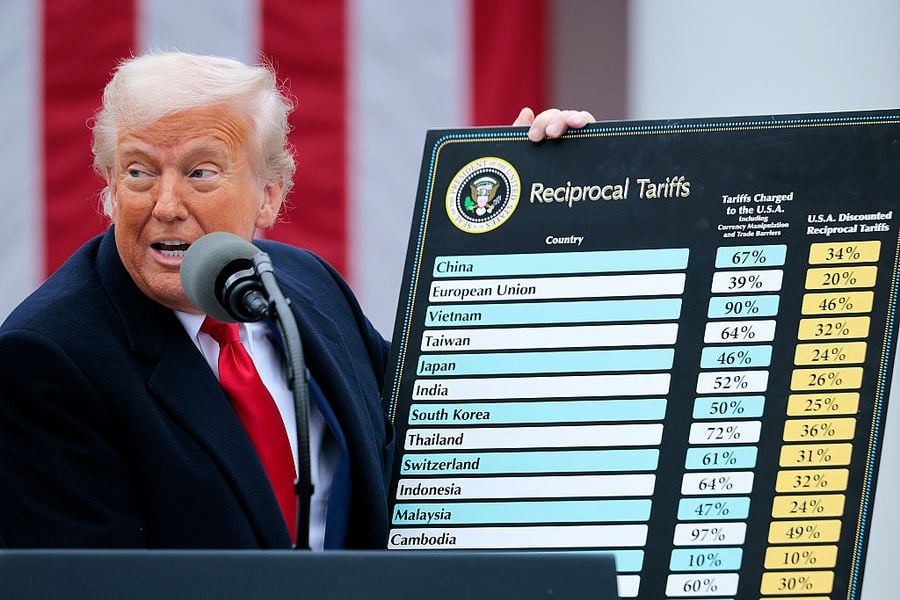
The new duties of 10% to 12.5% took effect Friday at the same moment Trump's temporary 10% worldwide tariff expired
President Donald Trump imposed new tariffs of 10% to 12.5% on 60 trading partners Friday, citing their failure to ban imports produced with forced labor, with the duties taking effect at the same moment his temporary 10% global tariff expired at 12:01 a.m. ET.
The Office of the U.S. Trade Representative said the measures, brought under Section 301 of the Trade Act of 1974, reach 99.4% of U.S. imports. In practice, the action steps in for the temporary 10% worldwide tariff, which had been running for 150 days before lapsing Friday, according to CNBC.
U.S. Trade Representative Jamieson Greer said in a statement that "decades of moral suasion have not eradicated forced labor from global supply chains" and that the action "will begin to correct what is both a human rights abuse and distortive trade practice."
Under the final determination, 17 economies — including Argentina, Bangladesh, Canada, India, Mexico, and the United Kingdom — will face a 10% duty. Those countries have either enacted forced-labor import prohibitions, committed to doing so through trade agreements, or established partial regimes that restrict certain forced-labor goods. For the European Union, Taiwan, Japan, South Korea, and Switzerland, the new rates were calibrated so that when added to existing most-favored-nation tariff rates, the combined burden reaches either 10% or 12.5%. The remaining 38 economies, including China, face a 12.5% rate, according to Reuters.
Certain products are exempt from the new tariffs, including goods already subject to Section 232 steel and aluminum duties, raw materials whose taxation could threaten domestic supply, and products that cannot be produced in sufficient quantities in the United States. Some products of specific countries are also exempted to encourage those governments to adopt or strengthen forced-labor import bans. Goods in transit at the time the tariffs took effect are exempted until 12:01 a.m. ET on July 28, according to Reuters.
The USTR said in a fact sheet that the United States is the only country in the world to both adopt and enforce a ban on imports made with forced labor, and that the tariffs apply to economies covering the top 60 U.S. trade partners. Tariff-rate quotas for textiles and apparel from Bangladesh, Cambodia, Indonesia, and Malaysia will be established by September 1, 2026, under a White House memorandum signed by Trump.
As signaled earlier this week, the administration has been working to replace the temporary Section 122 authority — which carries a statutory 150-day limit — with more durable Section 301 authority. Because Section 301 has a track record of surviving court tests, legal experts consider the new duties less exposed to the kind of judicial reversal that ended Trump's "liberation day" tariffs in February, according to NPR. A separate Section 301 investigation into excess manufacturing capacity by 16 economies has not yet been finalized.
A senior Trump administration official told reporters the action surpasses anything the United States — or any country — has previously done on international labor rights, according to CNBC. The USTR said it received more than 2,100 public comments and heard testimony from over 100 witnesses during the investigation.
AI-driven demand for server chips powered Intel's data center business to 59% growth, lifting total revenue to $16.1 billion
Intel $INTC reported second-quarter revenue of $16.1 billion, a 25% increase from a year earlier that marked the company's strongest quarterly revenue growth in more than 15 years, the company said Thursday.
The results topped analyst expectations. Wall Street had penciled in revenue of $14.42 billion and adjusted earnings of 21 cents per share, according to CNBC. Intel posted adjusted EPS of 42 cents. On a GAAP basis, the company reported a net loss of $11 billion, or $2.16 per share, driven by a $12.5 billion mark-to-market loss on escrowed shares tied to its CHIPS Act agreement with the U.S. government.
The growth was led by Intel's Data Center and AI segment, where revenue climbed 59% year over year to $6.3 billion. The client computing group, which makes chips for PCs, posted a 13% revenue gain to $8.9 billion. Intel Foundry revenue rose 31% to $5.8 billion.
"AI is driving unprecedented demand for compute," CEO Lip-Bu Tan said in a statement. "Our Q2 results represent our strongest revenue growth in more than fifteen years, enabled by greater speed, accountability, and customer focus."
CFO Dave Zinsner said the quarter exceeded financial guidance on the back of higher factory yields and faster production cycles. "AI-driven compute continues to strengthen, and to support expected growth this year and next across products and foundry, we are meaningfully increasing our investments in equipment, clean room space, and substrates," he said in a statement.
Intel said its data center operations cannot keep up with orders, leaving the company unable to fully meet customer demand. The company has signed 10 long-term contracts with server CPU buyers, structured around either fixed pricing commitments or guaranteed purchase volumes.
The company's gross margin recovered to 40.4% on a GAAP basis, up from 27.5% in the year-ago quarter. Intel generated $7 billion in cash from operations during the quarter.
Looking ahead to the third quarter, Intel guided for revenue of $15.8 billion to $16.8 billion, GAAP EPS of 31 cents, and adjusted EPS of 38 cents — comfortably above the consensus calls for $15.1 billion in revenue and 27 cents in adjusted EPS.
Intel stock jumped 11% in after-hours trading following the release.
Databricks will run its own core business operations on Azure and expand its use of Microsoft's Arm-based Cobalt custom processors
Databricks and Microsoft $MSFT announced an expansion of their strategic partnership on Wednesday, extending the arrangement into the 2030s and deepening Databricks' commitment to the Azure cloud platform.
Under the deal, Databricks will use Azure Databricks to run its own core business operations and analytics — the same platform it sells to enterprise customers. The company will also expand its use of Azure Cobalt, Microsoft's Arm-based custom processors, for data-intensive and agentic AI workloads. Databricks currently uses the Cobalt 100 chip and plans to adopt the Cobalt 200, which the companies said delivers up to 50% better performance and includes memory encryption enabled by default.
Microsoft will continue integrating Databricks' AI capabilities across its products, including Genie, Databricks' conversational analytics tool, and Unity AI Gateway, which governs models, agents, and costs. Those tools will be woven into the Microsoft ecosystem across products including Microsoft 365, Teams, Copilot, Power BI, and Microsoft Foundry, the companies said.
"With Databricks deepening its investment in Azure Databricks and Azure Cobalt-powered infrastructure, customers will benefit from greater performance, efficiency and scale for their most demanding workloads," said Judson Althoff, CEO of Microsoft's Commercial Business, in a statement. "Databricks' decision to run its own core business operations on Azure Databricks also gives customers confidence in a platform proven at enterprise scale."
Ali Ghodsi, co-founder and CEO of Databricks, said in a statement that the integration of Genie and Unity AI Gateway across Microsoft's products would help enterprises "unify their data and ground AI in business knowledge."
Thousands of organizations already use Azure Databricks, including Banco Bradesco, Electrolux, SMBC, and Unilever, the companies said. Databricks' platform is used by more than 20,000 organizations globally, including 70% of the Fortune 500.
The announcement is the latest in a series of cloud and AI infrastructure deals Microsoft has struck this week. Microsoft agreed to deploy AMD $AMD's Helios rack-scale AI system on Azure on Monday, and on Tuesday expanded its partnership with French AI startup Mistral, pledging billions to fund Mistral's data center growth in Europe and integrating Mistral models into Microsoft Foundry and Copilot Studio.
A funding round valuing Databricks at $188 billion was finalized last week and is expected to close before summer ends, according to Reuters.
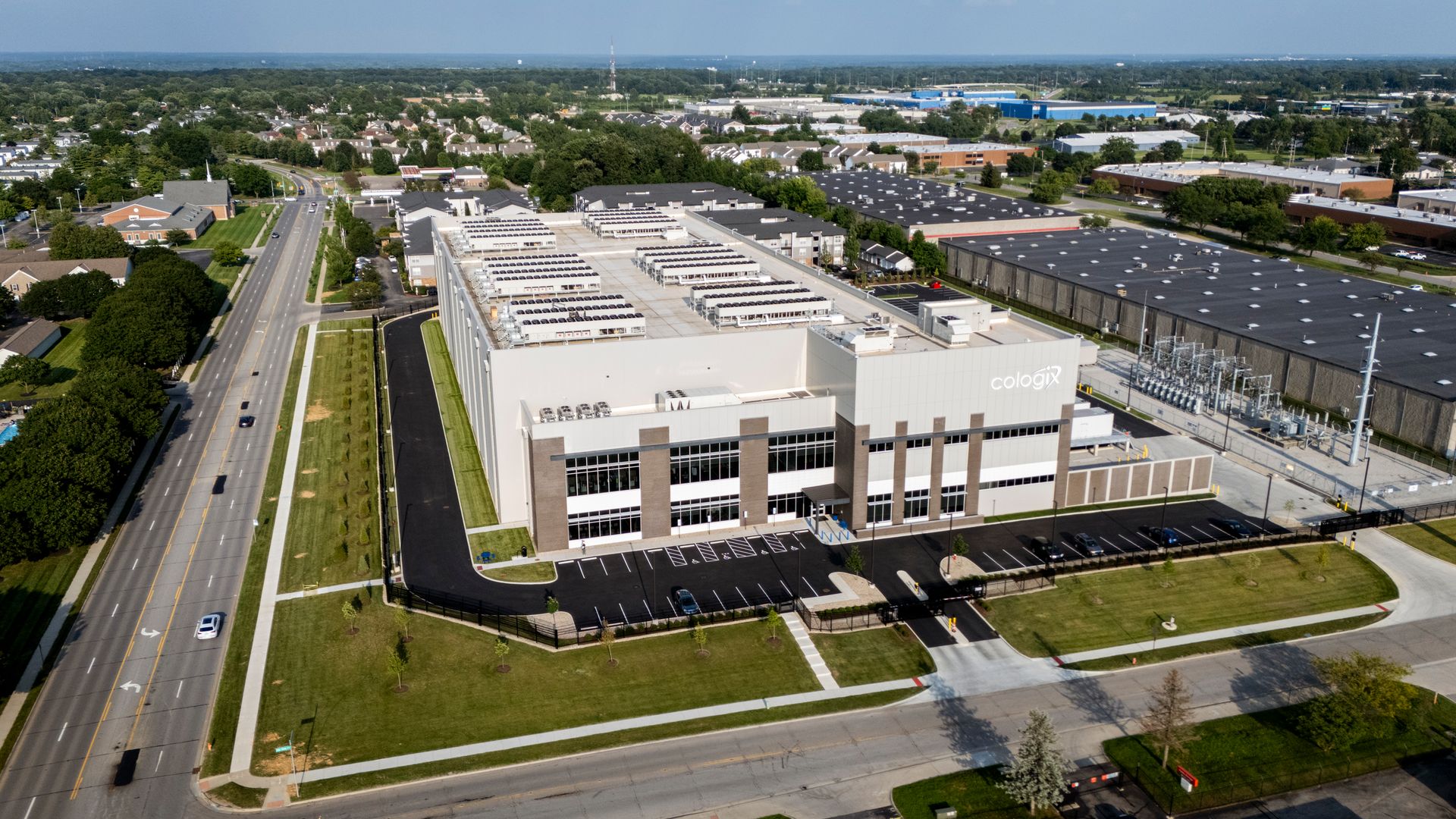
Nearly 200 additional utilities, developers, and governors have signed on, bringing the pledge to cover 80% of U.S. power delivery
President Donald Trump announced Thursday that nearly 200 additional entities — including major utilities, data center developers, electricity co-ops, and state governors — have joined his administration's "Ratepayer Protection Pledge," expanding a voluntary commitment that consumers will not bear the cost of the AI data center build-out.
The expanded pledge now covers 80% of power delivered to U.S. homes and businesses, the White House said. Trump made the announcement at the Environmental Protection Agency, joined by Energy Secretary Chris Wright, EPA Administrator Lee Zeldin, and four Republican governors: Louisiana's Jeff Landry, Georgia's Brian Kemp, Nebraska's Jim Pillen, and Idaho's Brad Little.
"President Trump is expanding the Ratepayer Protection Pledge to governors, legislators, developers, and power providers to ensure everyone involved in building and powering data centers covers their own costs instead of passing them on to American families," White House spokeswoman Taylor Rogers said in a statement.
Major utilities including NextEra $NEE and Duke $DUK Energy are among those joining the pledge, according to The Hill. Google $GOOGL, Microsoft $MSFT, Meta $META, Oracle $ORCL, xAI, OpenAI, and Amazon $AMZN had already signed the original pledge when Trump first announced it in March.
When Trump first issued the pledge as a proclamation in March, it specified that AI companies "will build, bring, or buy the new generation resources and electricity needed to satisfy their energy demands, and pay for all new power delivery infrastructure upgrades to service their data centers," The Hill reported. The pledge is nonbinding.
The expansion comes as opposition to data centers has grown into a bipartisan concern. Electricity prices were up 4% year-over-year in June, and increased demand from data centers could push monthly utility bills up 15% to 40% by 2030, according to a recent analysis by consulting firm ICF. Twenty-three Republican governors have signed the pledge, including Texas Gov. Greg Abbott $ABT, whose state has seen rising frustration over data center growth.
The issue has also drawn legislative attention in Congress. The House Energy and Commerce Committee's energy subcommittee voted last month on the bipartisan Ratepayer Protection Act, which would require state utility regulators to consider making data center builders pay for grid upgrades rather than passing those costs to residential and small-business ratepayers. The bill would also codify the principles behind Trump's pledge, its sponsors said. The measure still faces votes in the full House and Senate before it could reach the president.
Some states have moved on their own. New York Gov. Kathy Hochul put in place a yearlong pause on the construction of large new data centers in the state. Oregon's utility regulator approved rules under which Portland General Electric $GE began charging data centers an average of 29% more for electricity while cutting rates for residential and other customers.