A California-based IT company has come under fire for misusing H-1B visas, underlining the small but worrying phenomenon of hiring foreign talent as cheap white collar labour.
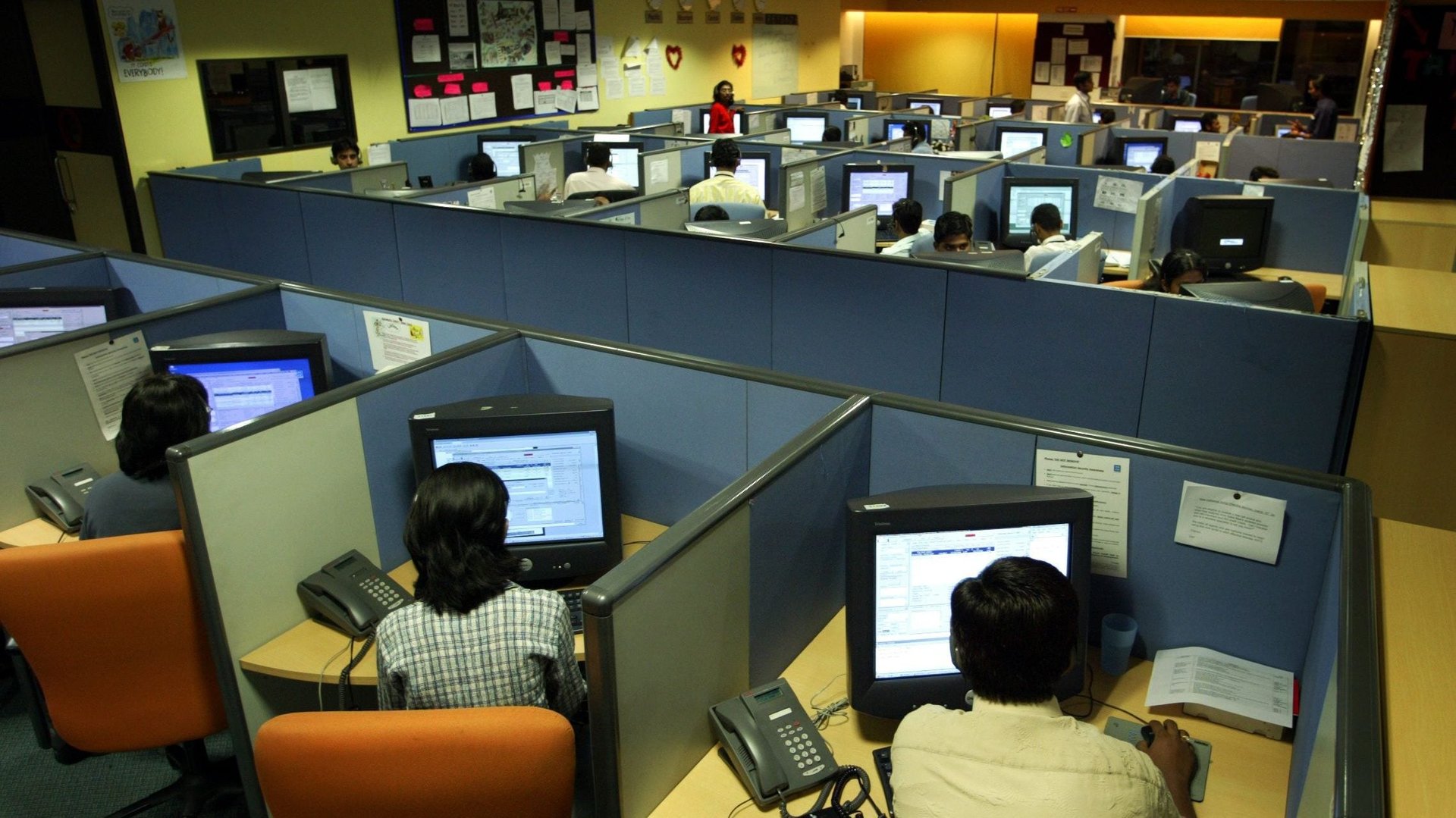
A California-based IT company has come under fire for misusing H-1B visas, underlining the small but worrying phenomenon of hiring foreign talent as cheap white collar labour.
On May 02, the US Department of Labor said it had found Cloudwick Technologies, a California-based IT services company, guilty of severely underpaying its workers hired on the long-term H-1B visas. The verdict was announced after a month-long investigation by the labour department’s Wage and Hour Division (WHD).
Join 500,000+ readers who start their day with Quartz.
By subscribing, you agree to our Terms of Service and Privacy Policy.
“WHD investigators found that the company paid impacted employees well below the wage levels required under the H-1B program based on job skill level, and also made illegal deductions from workers’ salaries,” the labour department said in a press release. “…some of the H-1B employees that Cloudwick brought from India with promised salaries of up to $8,300 (Rs5.5 lakhs) per month instead received as little as $800 net per month.”
Cloudwick Technologies, which provides IT technology modernisation services, among other things, is owned by Indian-American Mani Chhabra and serves clients including Apple $AAPL, Comcast $CMCSA, Verizon $VZ, and Visa $V.
The US government has now ordered the company to pay $173,044 in back wages to a dozen employees. Cloudwick will also have to hire an independent third-party monitor to help ensure future compliance.
Such H-1B violations aren’t unheard of, but the instances are few and far in between.
Last year, India’s second-largest IT company, Infosys, paid $1 million to settle an investigation into its visa violations. Even American entities have been accused of abusing the system. In 2011, a local public school district in Maryland was found to have been a “willful violator” of the H-1B program and ordered to pay massive $5.9 million in back wages and fines by the Obama administration. The next year, a New Jersey-based consulting company had to dole out $300,000 to workers for similar violations.
“Until recently, there was very little oversight of the program, and so only the most egregious offenders were found out. This gave many employers who used the program (the) confidence that less blatant violations would go unnoticed by federal officials,” said Eric Ruark, director of research at NumbersUSA, an organisation that advocates for lowering immigration to the US.
“With the Trump administration pledging to closely scrutinise the program, employers will be less likely to get away with misclassifying the skill level of an H-1B worker in order to pay a lower salary, or to employ an H-1B worker in a job other than what was listed on the H-1B petition,” he added.
The H-1B visa program, a non-immigrant visa that allows US companies to employ foreign workers in specialty occupations, has been a boon for America’s tech industry.
Indian IT services firms such as Infosys, Tata Consultancy Services (TCS), and Wipro have historically been the biggest beneficiaries of the H-1B visa. However, lately, several Silicon Valley giants like Amazon $AMZN and Microsoft $MSFT have also been seeking foreign talent from countries like India and China to overcome the acute talent crunch (pdf) in the US. In 2015, there were nearly 10 times more computing jobs open in the US than there were students equipped with the right degrees.
Though many US-based immigration lawyers Quartz spoke with acknowledged that visa abuse does occur, none of them reported any first-hand experience of such cases among their clientele.
“While instances of H-1B misuse like Cloudwick do occur, they’re not the norm,” Richard Burke, CEO of global immigration platform Envoy, told Quartz, citing the fact that the visa intended to source highly-skilled, long-term employees in the STEM fields undergoes much scrutiny.
The Trump administration has been adding layers upon layers of scrutiny in the H-1B filing process. Among other things, the government has started targeted on-site visits to discover visa fraud and abuse, which could track down any more violators like Cloudwick.
