In 1985, the American chip designer Texas Instruments (TI) set up a research and development centre (pdf) in Bengaluru—then mostly a pensioners’ paradise, far from becoming the technology hub it is today.
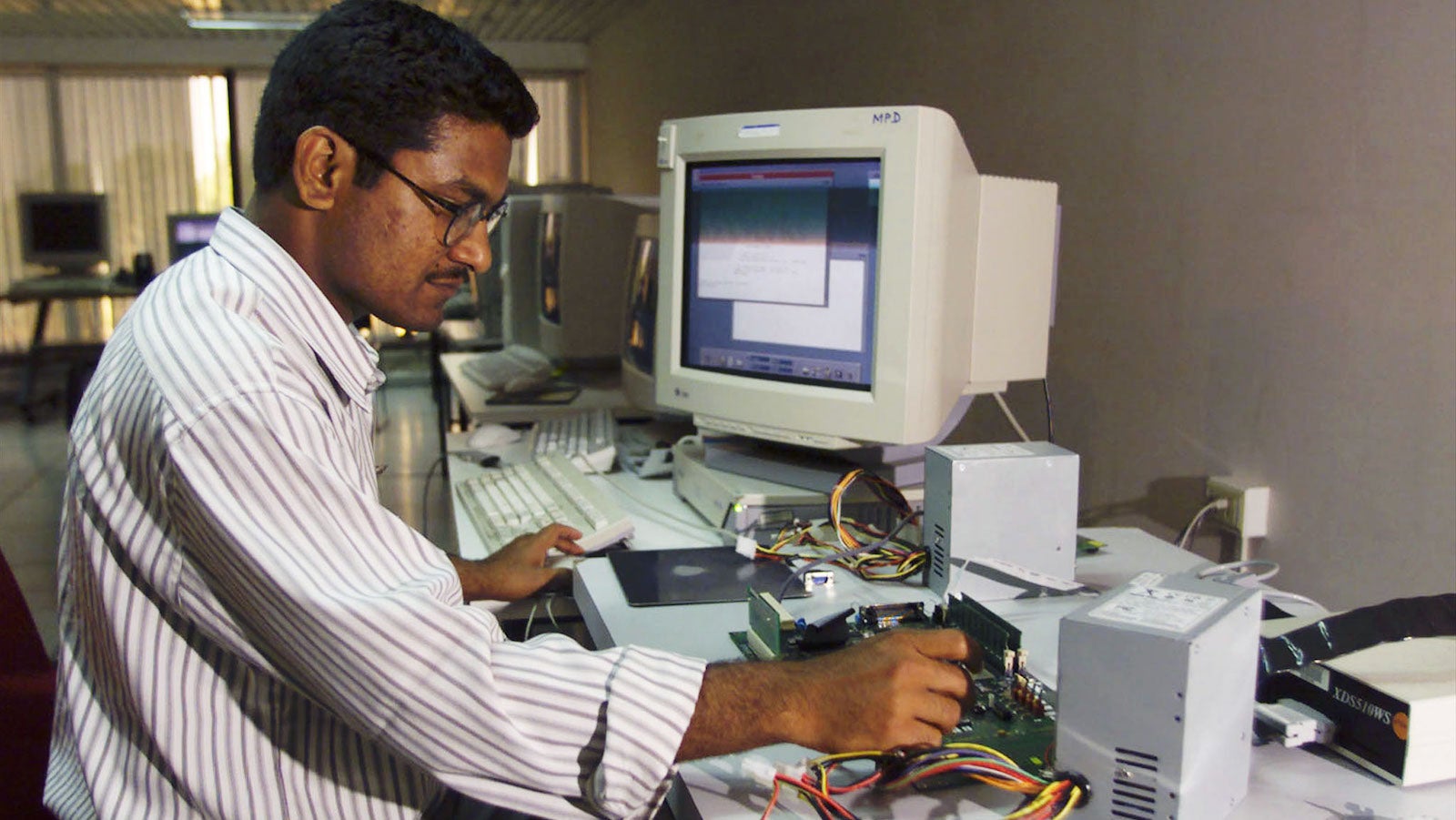
In 1985, the American chip designer Texas Instruments $TXN (TI) set up a research and development centre (pdf) in Bengaluru—then mostly a pensioners’ paradise, far from becoming the technology hub it is today.
Over the years, the company hired the best talent from India’s finest engineering colleges to strengthen its operations. And these graduates were attracted by TI because, among other things, its salaries typically bested other options at that time.
Join 500,000+ readers who start their day with Quartz.
By subscribing, you agree to our Terms of Service and Privacy Policy.
The Fortune 500 company started out as a small oil and gas company in 1930. In 1958, TI entered the semiconductor business. So far, the Texas-based chipmaker, with a market capitalisation of $56 billion, has more than 40,000 patents to its name. According to its website, TI was the first global technology company to “establish its presence in India.”
Three decades later, the Indian technology startup ecosystem has a lot to thank TI for.
Here are 10 ”ex-TIers,” as they call themselves, who are at the forefront of India’s red-hot startup scene:
The two key things that these entrepreneurs say TI taught them was innovation and thinking ahead of the curve.
“There was a big culture of innovation and a lot of technical grounding at the company,” Shingal of Mettl told Quartz. “In 2002-03, my colleagues and I used to discuss about devices on which people could read—like the tablets of today.”
The company also encouraged entrepreneurship by allowing engineers to do independent research along with their day-to-day duties. “Independent opinions and thinking were highly encouraged at the company,” Ramabadran of Zentron Labs said. “It is not easy to find that kind of atmosphere to work in India.”
“It was a very entrepreneurial atmosphere at the development centre,” Sama of redBus remembered. “One thing I learned at the company was how to be result-oriented. Also, the quality of talent at TI was fantastic. I got to know many brilliant minds.”
Several other entrepreneurs believe that the work they did at TI was far superior to what their peers were then doing at other companies.
When Bhatia of Edureka joined TI, he was made to work in a division that researched and experimented with new technologies. “It did not matter whether you succeeded or failed, it was only about the joy of innovation. I got immense exposure to solving new problems during that time,” Bhatia, who did not wish to disclose what these technologies were, said. ”My peers at the development centres of other MNCs were mostly doing low-end work, while we were making new things.”
Although TI has not responded to our our emailed queries, this is what they have to say on their website about innovation in India: ”The number of patents filed in the US by our engineers in India is perhaps the highest from any technology company in the country.”
