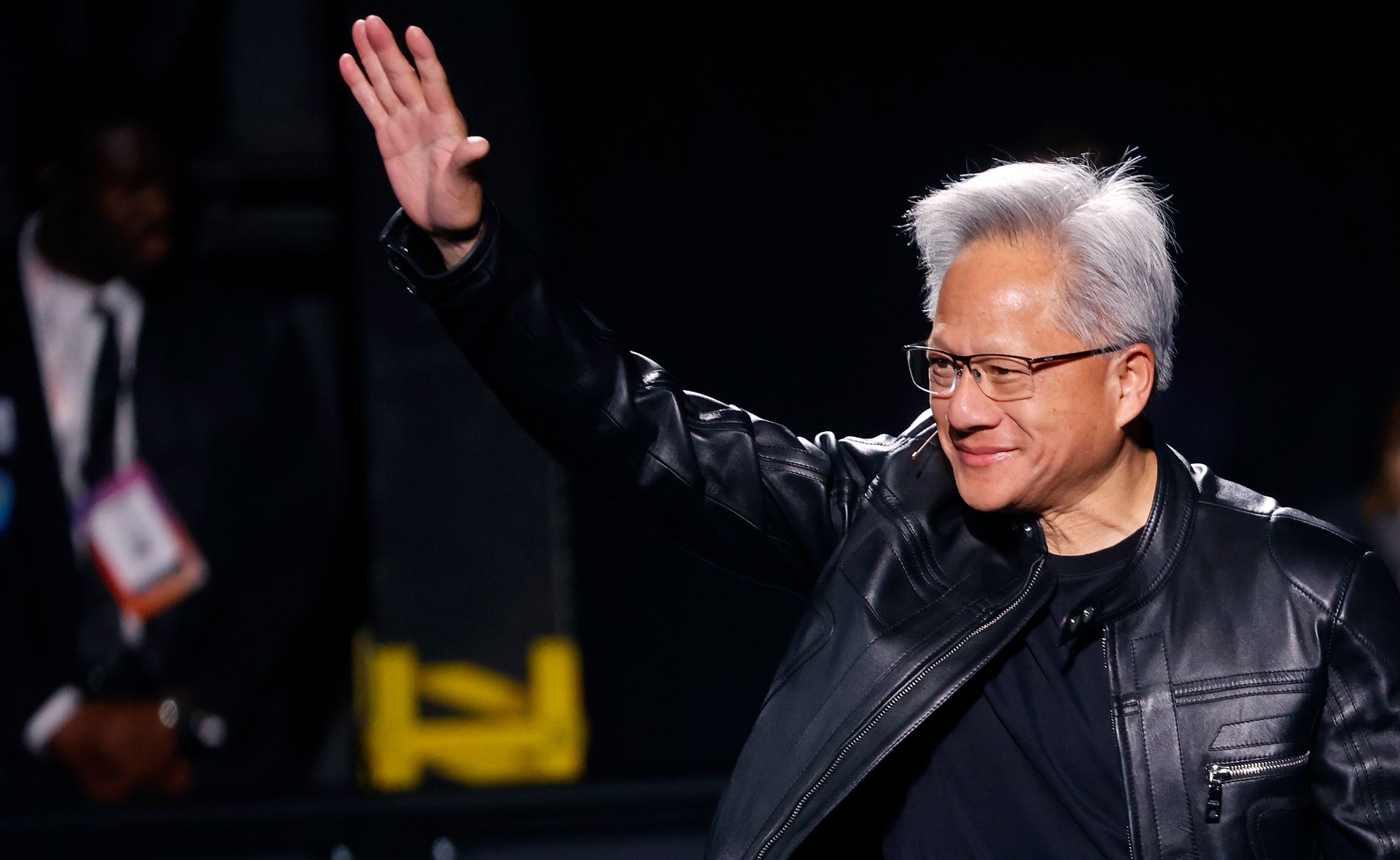
Nvidia $NVDA became the first U.S. company to close at a $4 trillion market cap on Thursday — and CEO Jensen Huang’s fortune skyrocketed alongside his company's. Now, with an estimated $145.4 billion net worth, Huang has a higher net worth than Warren Buffett ($142 billion).

While Buffett’s wealth has inched upward this year, bolstered by Berkshire Hathaway $BRK.B’s ever-stable performance, Huang’s trajectory has been rocket-fueled. His estimated fortune has jumped nearly $28 billion in 2025 alone, thanks to a 20% year-to-date rise in Nvidia’s stock price. On Thursday, Huang’s net worth climbed $2.5 billion, according to Forbes.
The company’s GPUs have become the essential infrastructure for artificial intelligence development, making it one of the most valuable — and essential — firms in the global tech stack. And Huang is cashing in — slowly. According to SEC filings, he began selling shares this summer under a pre-arranged 10b5-1 trading plan filed in March. So far, he’s sold just over $40 million worth of Nvidia stock in June, but filings suggest he could sell up to six million shares by the end of the year — potentially generating more than $850 million at current prices.
Even after that, Huang will retain the vast majority of his stake, commanding almost 75.7 million shares directly and hundreds of millions more through trusts and partnerships. Meanwhile, Nvidia insiders — including board members and executives — have collectively cashed in over $1 billion worth of stock in the past year.
Huang’s ascent is a staggering one for a CEO who, just a few years ago, was better known in certain Silicon Valley circles than in the global billionaire class. Huang founded Nvidia in 1993, building it from a scrappy graphics card company into the backbone of the AI economy. Today, its chips power everything from OpenAI’s large language models to Meta $META’s data centers.
Huang now ranks as the seventh-richest person in the world, according to Forbes’ real-time billionaires list, ahead of Buffett, Steve Ballmer, and Sergey Brin. He trails Larry Page (No. 6) and sits within striking distance of French luxury titan Bernard Arnault and his family (No. 5). At the top of the list sit Elon Musk, Larry Ellison, Mark Zuckerberg, and Jeff Bezos. But don't count Huang out: He’s built the infrastructure of AI’s present — and possibly its future. Now, he has a fortune to match.
Buffett’s net worth, meanwhile, has only budged a few billion this year, rooted in Berkshire Hathaway’s diversified holdings and his well‑known tradition of charitable distributions. In June, he donated $6 billion in Berkshire B shares to five foundations, part of a long-standing philanthropic pledge to eventually give away over 99% of his wealth.
Huang’s rise is neither luck nor hype. Nvidia’s AI edge is deeply structural. The company’s H100 and Blackwell chips are the gold standard in AI training, and Huang has successfully positioned Nvidia as more than just a chipmaker — he sees it as a full-stack AI platform, complete with software, networking, and even datacenter blueprints. Analysts see room for further growth, with some (such as Wedbush’s Dan Ives) projecting a $5 trillion or even $6 trillion valuation within the next 12-18 months.
For years, Buffett was the gold standard of American wealth, but Huang’s ascent underscores a new era: one where fortunes aren’t built over decades of compound interest but instead in the blink of an AI.
