
GLP-1 drugs like Ozempic could potentially be used to treat and slow the progression of Alzheimer’s disease, according to a new study presented Tuesday at the Alzheimer’s Association International Conference in Philadelphia.
Researchers found that people with Alzheimer's who took liraglutide had an 18% slower decline in cognitive function compared with patients that took a placebo
GLP-1 drugs like Ozempic could potentially be used to treat and slow the progression of Alzheimer’s disease, according to a new study presented Tuesday at the Alzheimer’s Association International Conference in Philadelphia.
Researchers from the Imperial College London observed 204 Alzheimer’s patients in the United Kingdom. Over the course of a year, half of the group was given the daily injectable GLP-1 medication liraglutide and the other half a placebo.
The group who received liraglutide had an 18% slower decline in cognitive function compared to patients that received a placebo. Additionally, patients taking liraglutide had a 50% lower loss of brain volume in areas that control memory and decision making, compared to the placebo group.
“The slower loss of brain volume suggests liraglutide protects the brain, much like statins protect the heart,” said the study’s leader Paul Edison in a press release. “While further research is needed, liraglutide may work through various mechanisms, such as reducing inflammation in the brain, lowering insulin resistance and the toxic effects of Alzheimer’s biomarkers amyloid-beta and tau, and improving how the brain’s nerve cells communicate.”
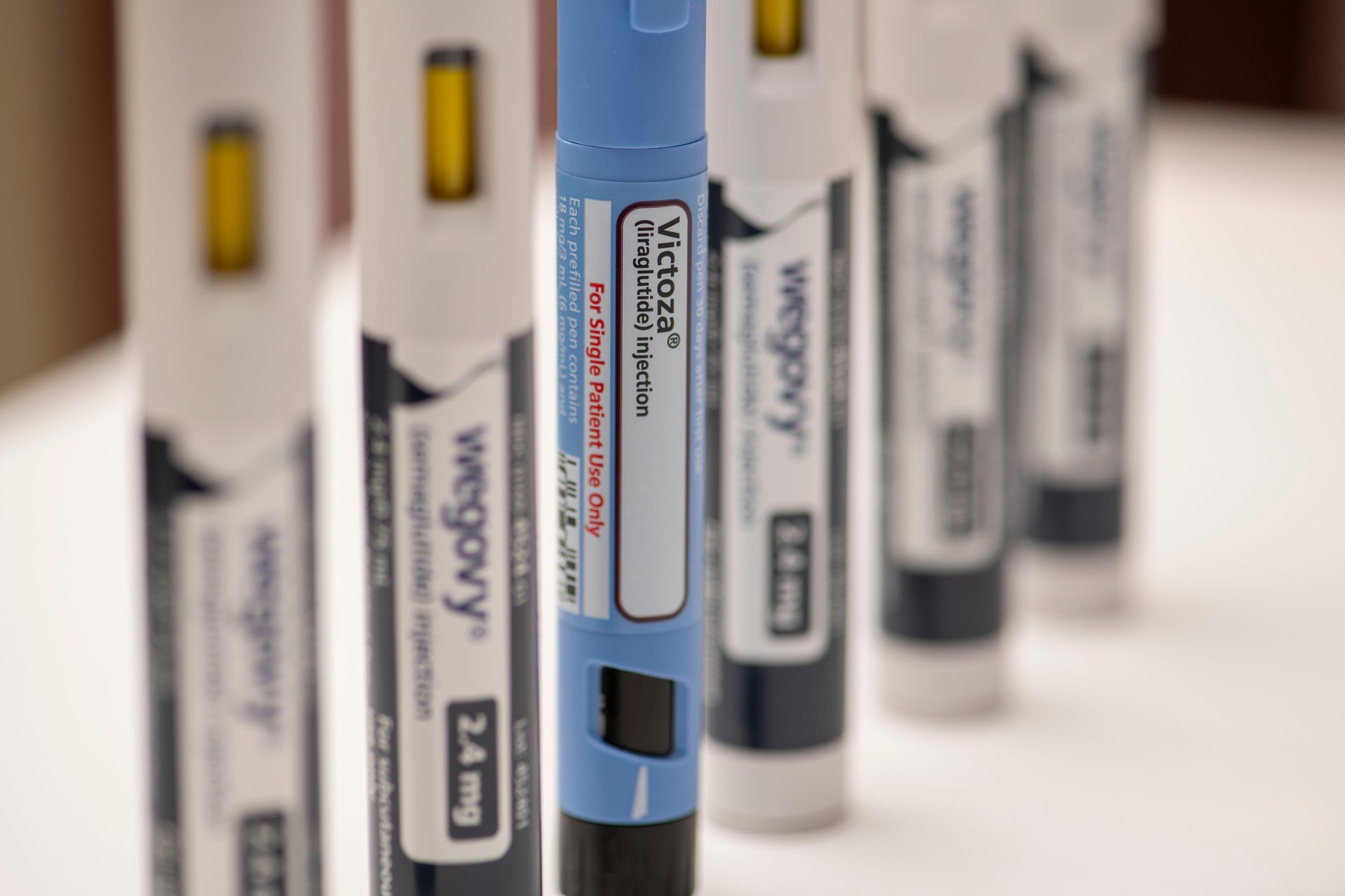
GLP-1 treatments are a class of drugs used to treat diabetes and obesity by mimicking a hormone that regulates blood sugar levels and suppresses appetite. Liraglutide is the active ingredient of Novo Nordisk’s Victoza and Saxenda. Sales of these older drugs have declined in recent years, while sales of Novo Nordisk’s weekly GLP-1 drugs Ozempic and Wegovy have surged.
Novo Nordisk and its rival Eli Lilly $LLY, the maker of GLP-1 drugs Zepbound and Mounjaro, have both been studying the potential use of these drugs for other ailments including heart attacks and sleep apnea.
Novo Nordisk is currently running a larger clinical trial of semaglutide, the active ingredient in Ozempic, on nearly 2,000 Alzheimer’s patients.
Join 500,000+ readers who start their day with Quartz.
By subscribing, you agree to our Terms of Service and Privacy Policy.