
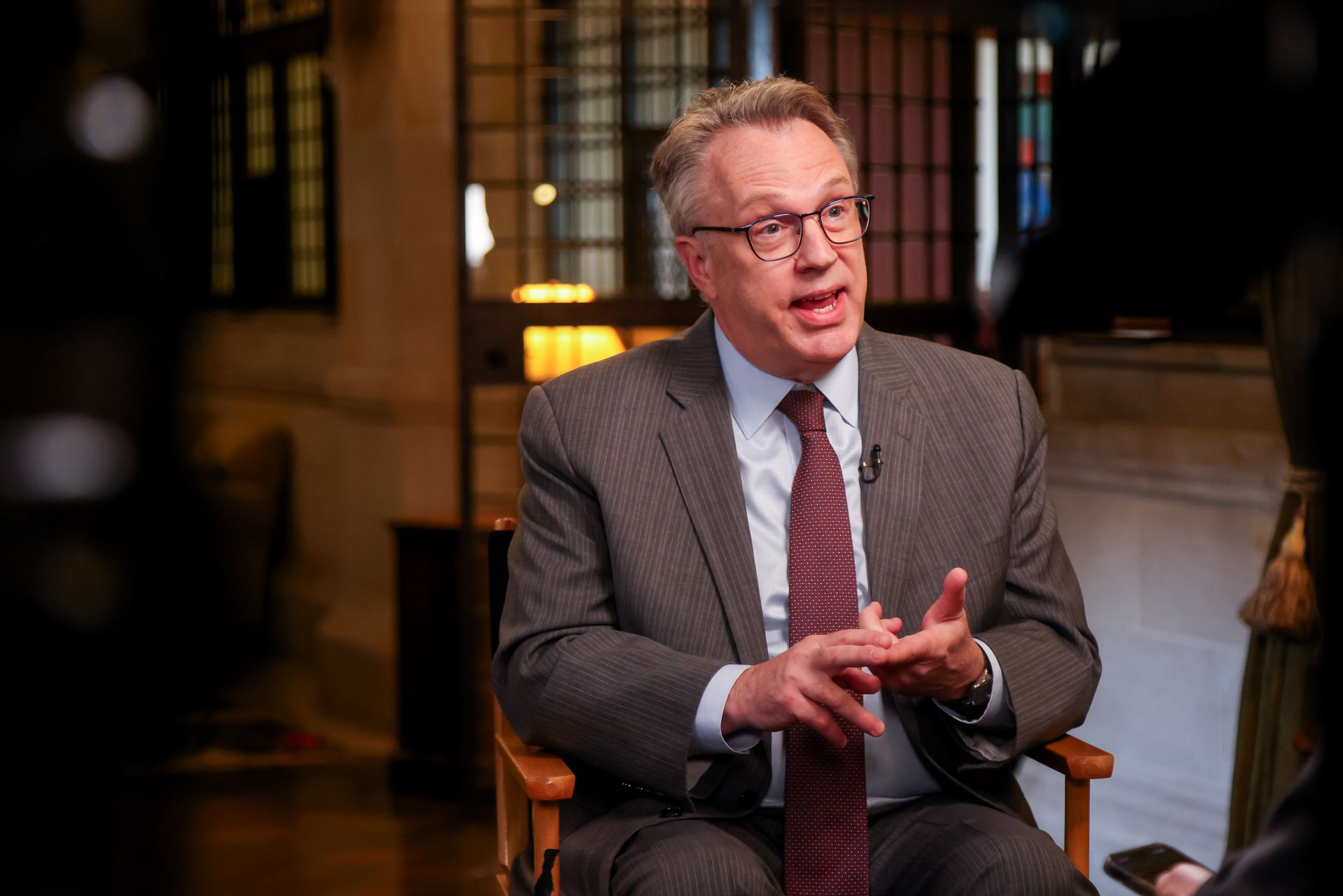
New York Federal Reserve President John Williams said Wednesday that inflation has peaked and should decline in coming quarters, backing the case for holding interest rates steady even as markets anticipate a hike.
"There are encouraging reasons to expect that inflation has peaked and should edge down in coming quarters," Williams said in a speech to business leaders in New York. He expects overall inflation to fall to around 3.25% by year-end, then continue toward the Fed's 2% target in 2027 and reach it in 2028.
Williams cited five reasons for his outlook. He said the direct price effects of existing tariffs have largely played out and that any new duties should replace expiring ones rather than add fresh pressure. He also pointed to modest market rent increases that should keep shelter inflation on a downward path, and said oil prices appear to have peaked and should retreat toward pre-conflict levels. He added that supply-demand imbalances tied to artificial intelligence investment should ease as more supply comes online, and that the labor market is not adding to inflationary pressures. Longer-term inflation expectations, he said, remain well anchored.
Williams described the current stance of monetary policy as "well positioned" to bring inflation down. The Federal Open Market Committee held its target interest rate steady at 3.5% to 3.75% at its June meeting.
Williams' remarks have done little to shift market pricing, with traders continuing to bet on a Fed rate increase by September, according to CNBC. A slim majority of Williams' FOMC colleagues also projected one additional quarter-point rate increase before the year is out.
Williams' remarks came a day after the Bureau of Labor Statistics released its June consumer price index report, which showed a 0.4% monthly drop that pulled the year-over-year rate to 3.5% — a one-month decline not seen since April 2020. Fed Chairman Kevin Warsh, appearing before the House Financial Services Committee on Tuesday, cautioned against treating the favorable reading as a "mission accomplished" moment.
Williams' view puts him at odds with some of his colleagues. Cleveland Federal Reserve President Beth Hammack has warned that AI infrastructure demand is contributing to inflation and that rate increases could be necessary if price pressures persist. Minneapolis Federal Reserve President Neel Kashkari has similarly shifted toward expecting a rate hike by year-end, pointing to AI data center construction, tariff-driven goods inflation, and supply disruptions tied to the Middle East conflict as factors pushing prices higher.
Williams projected real GDP growth of around 2% to 2.25% this year and over the next two years, with the unemployment rate edging down to 4% by 2028.