
A version of this article originally appeared in Quartz’s Leadership newsletter. Sign up here to get the latest leadership news and insights straight to your inbox.
Wider reach doesn't guarantee stronger returns. One coffee brand cut to five markets and posted the highest EBITDA in its history
Jeffrey Greenberg / Universal Images Group via Getty Images
A version of this article originally appeared in Quartz’s Leadership newsletter. Sign up here to get the latest leadership news and insights straight to your inbox.
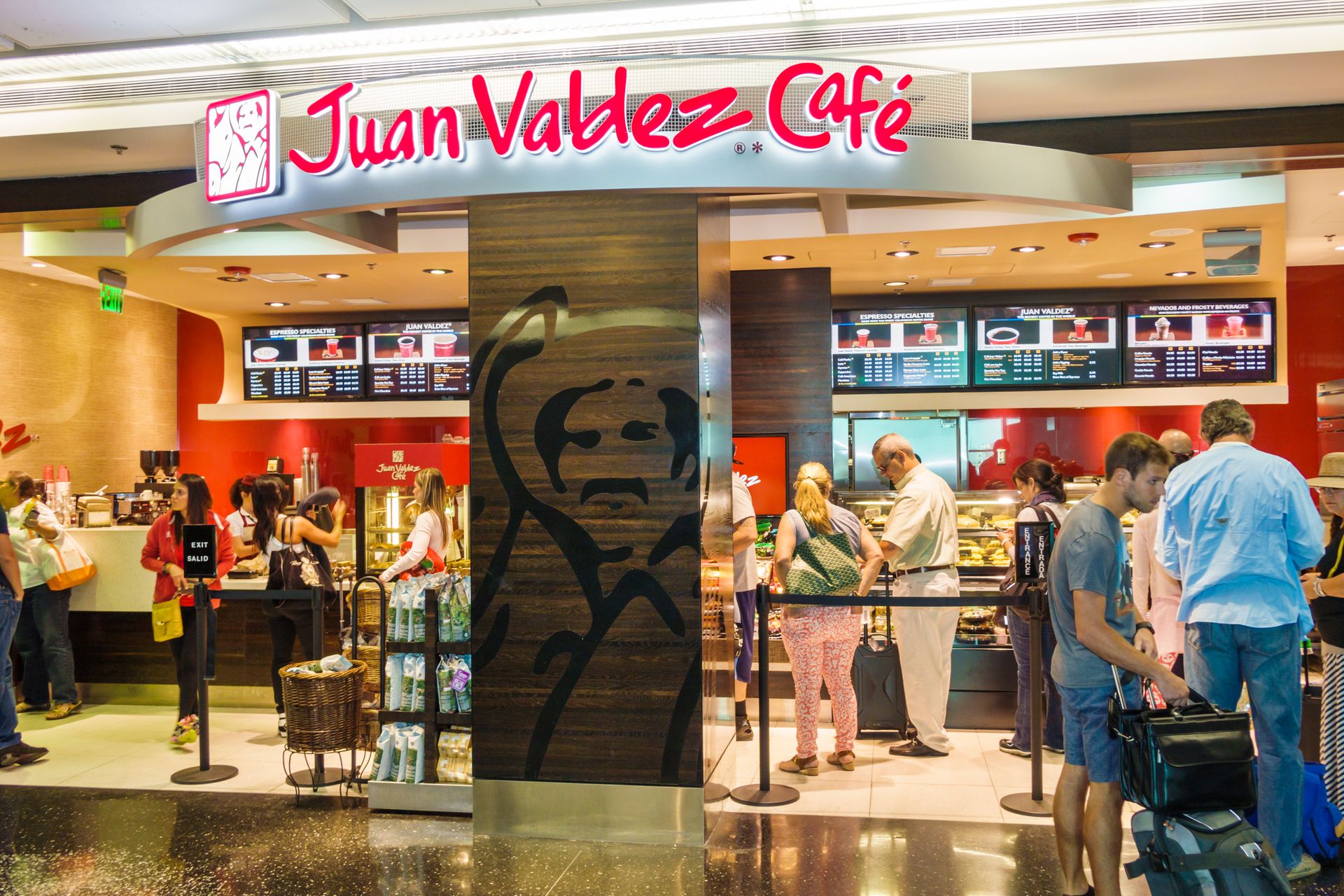
Camila Escobar joined Procafecol as CEO in 2018 to find a company with a strong home base and a scattered global presence. Juan Valdez, the Colombian coffee brand that Procafecol is tasked with commercializing, had expanded into nearly 40 markets, from Aruba to Australia. The footprint looked impressive. The results weren't. More than 80% of revenue still came from Colombia.
The COVID-19 pandemic forced a reckoning. With locations shuttered and revenue shrinking, Escobar's team ran the numbers on every market. A target list of 10 countries shrank to five: Brazil, Mexico, Spain, the United Arab Emirates, and the United States. The goal was to increase international sales from 20% to 40% of total revenue. Four years later, the company is outperforming its targets in each market, logging double-digit growth, and recorded its highest EBITDA in history in 2025.
The lesson isn't that Juan Valdez found the right five markets. It's that the discipline of choosing five forced a quality of execution that 40 never could.
That discipline runs against how most companies think about global growth. The instinct is to enter every accessible market, treat breadth as a hedge, and figure out the details later. The problem is that markets aren't converging. Joshua Conrad Jackson, a professor at the University of Chicago's Booth School of Business, fielded responses from roughly 500,000 people in 76 countries in a 2024 Harvard Business Review analysis and found that the cultural gap between nations has widened over the past four decades, not narrowed. Companies that ignore that gap tend to pay for it.
Walmart $WMT learned this the hard way. The multinational retail chain opened its first international store in Mexico City in 1991 and by 1998 had expanded to Germany and South Korea, betting its "always the low price" approach would outcompete local vendors. By 2006, it had retreated from both countries, absorbing losses exceeding $2 billion. German employees refused to follow the company's requirement to smile at customers and open each day with an enthusiastic cheer. In South Korea, the large showroom format was alien to shoppers used to buying from small stores. Walmart had assumed its model was universal. It wasn't.
Escobar made the opposite assumption. She and her team selected markets based on a matrix of criteria: how large the market was, what consumers earned, how much coffee they drank, what they would pay, and how complex local operations would be. Some choices were counterintuitive. Most of the priority markets were already competitive coffee environments. But Escobar reasoned that if major players had avoided a market, that absence was likely deliberate — and that Juan Valdez didn't need to dominate a category. It only had to be the most relevant premium Colombian coffee brand within it.
Brazil is the sharpest example. The world's largest coffee producer might not appear to have a place for a Colombian brand. Escobar thought otherwise. After Juan Valdez was invited to a coffee expo there in 2022, the response was telling: as the team closed up their stand, people asked to buy the beans they had left. Brazilian consumers saw the Colombian selection as premium, milder alternatives to local varieties. Procafecol opened its first Brazilian café last year. Within three months it had achieved the returns the company had projected for 12.
The market selection was only the first decision. Every priority market required a different entry structure. Escobar's preference was joint ventures that kept brand control and strategic direction with Procafecol. Working with a local partner that had a strong regional presence, the company opened its first three locations in Spain in 2021. That number will exceed 20 by the end of 2026, and they are already collectively profitable. In the United States, the approach evolved from flagship cafés in Seattle and New York — which built awareness but couldn't scale — to a more targeted expansion starting in Florida, proving the model there before pushing into other markets.
The joint venture model carries its own risks. McKinsey research on complex business partnerships found that the top reasons such arrangements fail are disagreements on central objectives, poor communication, and an inability to adapt when circumstances change. The top factor present in successful partnerships, cited by 47% of respondents, was shared objectives between parent companies and the venture itself.
Escobar addressed this at the selection stage. Her screening process was simple and deliberate: potential partners either shared Procafecol's values or they didn't. The criteria were service mindset, ethical standards, openness to different perspectives, and what Escobar calls Colombianidad: the Colombian spirit of warmth, innovation, and resilience.
The organizational changes were as significant as the strategic ones. Procafecol restructured its executive team around three regional clusters: North America, Latin America including Colombia, and Eurasia. The company appointed a global chief marketing officer to protect brand consistency across markets. Employees who had spent their careers on the domestic business began moving to international locations voluntarily, carrying Procafecol's operational knowledge into the new ventures.
None of this resolved every problem. Mexico remains a work in progress. The brand is well-known there, but Escobar has struggled to find the right partner. Before she arrived, the company had 15 Mexican locations under a single franchisee. That arrangement failed. There are now two franchise operations, and Procafecol is waiting for their success to attract the kind of national investor that could support a joint venture at scale.
The Juan Valdez story isn't a template. The specific combination of market selection criteria, partnership structure, and brand values that worked for a Colombian coffee company won't transfer wholesale to another industry or another brand. What transfers is the underlying logic: that a wide footprint and a strong one aren't the same thing, and that the discipline required to choose fewer markets is also what makes deep performance in those markets possible.
Join 500,000+ readers who start their day with Quartz.
By subscribing, you agree to our Terms of Service and Privacy Policy.