The sneakily brilliant new thriller Searching found $7.6 million at the US box office and another $6.5 million abroad over the long Labor Day weekend. That makes it a smash hit for Sony, which picked up the Audience Award-winning film at Sundance for a cool $5 million, and an even bigger triumph for first-time director Aneesh Chaganty, producer Sev Ohanian, and star John Cho, given its tiny budget (reportedly about $1 million) and low-key advance promotion.
The sneakily brilliant new thriller Searching found $7.6 million at the US box office and another $6.5 million abroad over the long Labor Day weekend. That makes it a smash hit for Sony $SONY, which picked up the Audience Award-winning film at Sundance for a cool $5 million, and an even bigger triumph for first-time director Aneesh Chaganty, producer Sev Ohanian, and star John Cho, given its tiny budget (reportedly about $1 million) and low-key advance promotion.
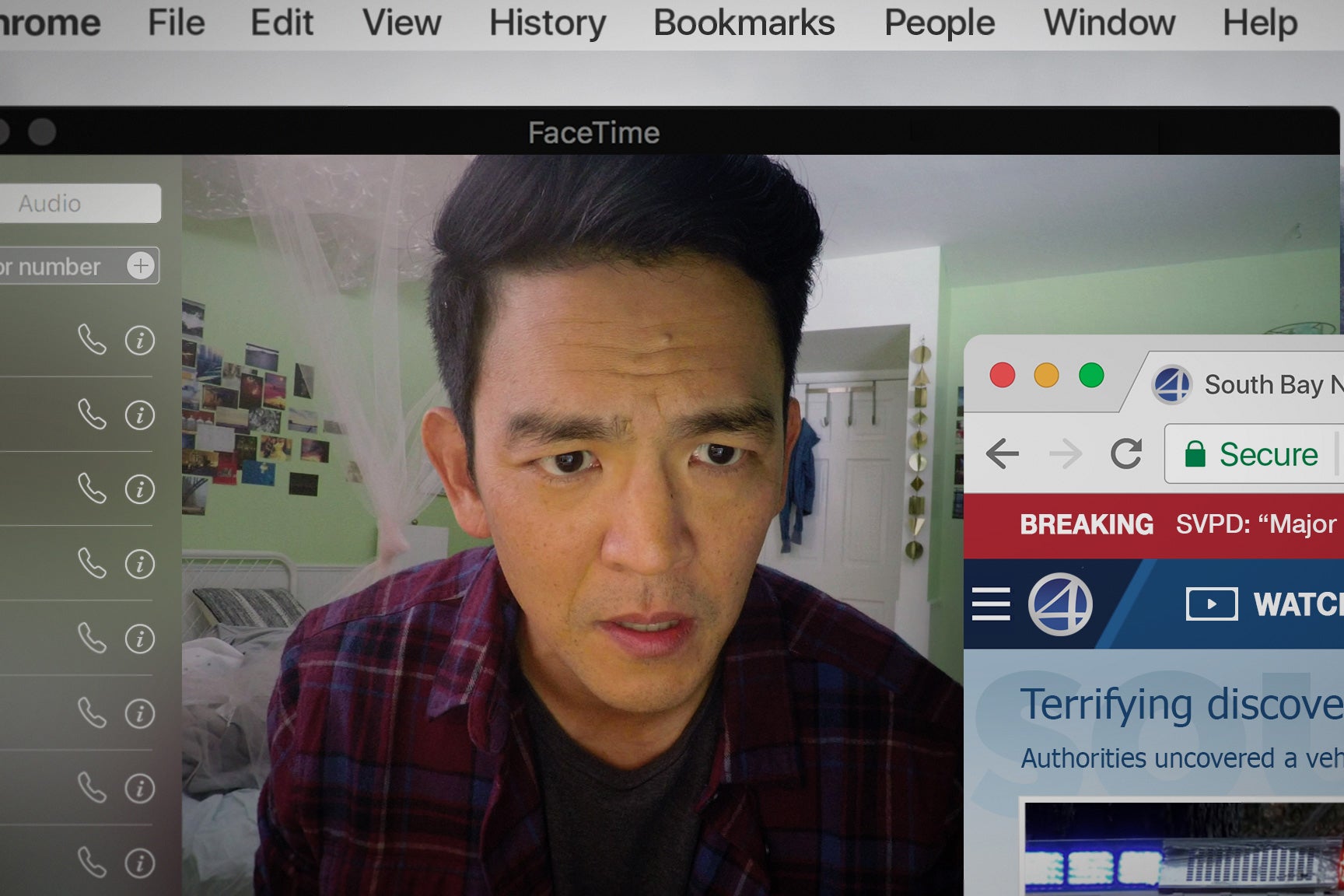
Searching looks to have an even brighter box-office future ahead, because the internet is just beginning to discover the hidden Easter eggs made possible by its unique conceit: The film takes place entirely on computer screens. The format—like 2015’s horror hit Unfriended, by the same Russian production company, Bazelevs—was called a “meticulously constructed storytelling device” by the New York Times. It has all the action of the film taking place through Cho’s protagonist, David Kim interacting with screens of computers, smartphones, streaming media devices, and via webcams.
Join 500,000+ readers who start their day with Quartz.
By subscribing, you agree to our Terms of Service and Privacy Policy.
The story focuses on Kim’s desperate search for his missing daughter Margot via her enigmatic, multilayered social media trail, which sets the scene for Searching’s found-footage-by-way-of-Black Mirror format. To avoid the hilariously bad shots of unrealistic computer screens that movies often resort to, the film’s creators had to build a believable online universe for the film to take place in—and that meant they had to create a huge amount of content to fill each screen’s background windows.
“It just hit us like a train when we realized it: Even these windows that David wasn’t looking at, the ones that weren’t focused on the primary story, had to have specific content,” Chaganty told me with a laugh. “So it was a massive amount of work. It’s a little hard to quantify, but I think we ended up writing about 25 times more text than we had in the original screenplay.”
Rather than making that additional content meaningless chatter, Chaganty and Ohanian, who cowrote the script, decided to load it with side stories focused on off-screen characters and even a gigantic, unseen conspiracy, elevating Searching from a basic whodunit to a fully realized cinematic universe.
“That was completely intentional on our part,” says Chaganty. “We could have taken the easy way out, but we felt that every story demands to be told a certain way, and this one was asking for this level of detail.”
Chaganty and Ohanian ended up creating 26 different Google $GOOGL Docs labeled “A” to “Z,” one for every four or five-minute chunk of the film. The docs each contained 20 or so pages of background content—images, email text, subject headers, news articles and headlines, text messages, and so on—much of which is woven together into parallel storylines, to be discovered by only the keenest-eyed viewers. (There are also a wide array of more traditional Easter eggs, like in-jokey references to friends, family, cast, and crew—many of them beginning as pranks that Chaganty or Ohanian never thought would end up making it into the final cut.)
All of this makes Searching a film that demands multiple viewings. Enjoy it the first time for its devious plot and its career-defining performance by Cho (an actor with an adoring following, who has a long history of being the best thing in just-OK movies and TV series). But a second and third viewing will allow you to join the growing number of online sleuths discovering the strange and hilarious plot lines at the picture’s digital margins.
“There’s no prize for you if you figure out everything, but I have a feeling Reddit $RDDT will be on top of it anyway,” says Chaganty. “We never did this to incentivize people; we always wanted these to be just something you might accidentally discover as you went through the film. So at the end of the day, if occasionally look to the sides of the screen while you’re watching for the second or third time, you’ll always find something new to talk about on the way home.”
Listing all the Easter eggs here would ruin the fun, but Chaganty was kind enough to provide a list of clues and places to look. Here they are, categorized by type:
