
Robinhood launched two products on Wednesday that allow customers to connect third-party AI agents to the platform to trade stocks and make credit card purchases on their behalf.
The retail brokerage is opening its platform to third-party AI agents through a new Model Context Protocol server for equities and spending
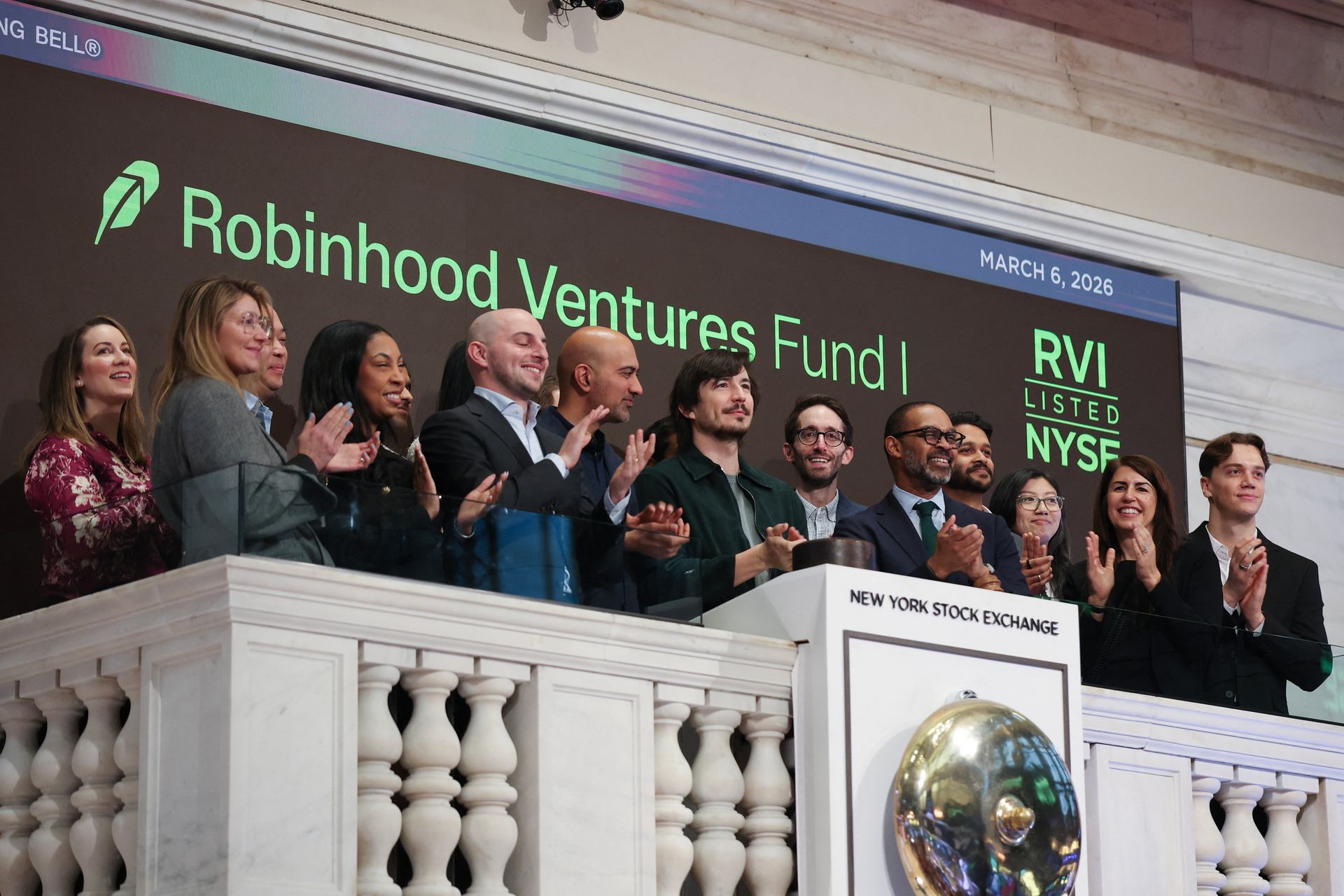
TIMOTHY A. CLARY / Getty Images
Robinhood launched two products on Wednesday that allow customers to connect third-party AI agents to the platform to trade stocks and make credit card purchases on their behalf.
Both products give customers a way to isolate agentic activity from their main Robinhood holdings, with AI tools operating out of dedicated accounts rather than the user's primary portfolio. Customers connect agents through Robinhood's Model Context Protocol servers, which are available at agent.robinhood.com, the company said.
Through the Agentic Trading feature, connected agents are authorized to scan analyst notes for potential opportunities, assess how a portfolio is distributed across sectors and individual holdings, and place trades without requiring a manual trigger. Stock trading is the only asset class supported at launch, though Robinhood said it intends to expand the beta to cover options, crypto, event contracts, and futures down the line. Every transaction an agent executes triggers a push notification to the account holder, and a dedicated section of the Robinhood app surfaces activity logs and profit-and-loss data. They can disconnect an agent at any time.
The Agentic Credit Card allows agents to make purchases using a dedicated virtual card linked to Robinhood Banking's MCP server. Users set a spending limit that only they control and can choose whether each purchase requires manual approval. Robinhood said the virtual card is fully siloed — it neither exposes the underlying Gold Card number nor provides any pathway to the rest of a user's Robinhood account. Purchases earn 3% cash back. Eligibility at launch is limited to Gold Card customers; Robinhood said the Platinum Card, set to debut later this year, will also gain access to the agentic virtual card.
Use cases the company cited include an agent that buys a specific sneaker release whenever it drops below a set price, or one that books a restaurant reservation as soon as a preferred time slot opens.
On the security side, Robinhood said its support staff can pull up the full history of what instructions a user gave an agent alongside every action the agent took, giving the team what it needs to adjudicate complaints. Agents will also preview certain trade orders for customers before execution.
"Our mission has always been to democratize finance for all, and now, that mission extends to AI agents," CEO Vlad Tenev said in a statement.
The decision to open the platform to outside agents was driven by users asking to plug their own tools and language models directly into Robinhood, Abhishek Fatehpuria, the company's vice president of product, told TechCrunch. He told Reuters that the current target audience is early adopters of agent technology.
The broader race to build agentic payment infrastructure extends well beyond Robinhood; TechCrunch reports that Stripe, Amazon $AMZN, Google $GOOGL, and a crop of startups are all working on ways to let AI systems spend money autonomously on a user's behalf.
Join 500,000+ readers who start their day with Quartz.
By subscribing, you agree to our Terms of Service and Privacy Policy.