
Investment in the global space economy is growing at a breakneck space — and, according to a series of new reports, this year could be one of the most important yet in developing the overall industry.
A series of new reports reveal just how quickly the space industry is growing
Investment in the global space economy is growing at a breakneck space — and, according to a series of new reports, this year could be one of the most important yet in developing the overall industry.
The global space economy is projected to reach $944 billion by 2033, according to the latest report from consulting firm Novaspace. In 2024, the space economy was worth around $596 billion. The firm says that value largely is driven by the downstream applications of the industry’s advancements.
“Satellite-enabled services, such as navigation, Earth observation, and communications, are becoming increasingly integral across diverse industries, including agriculture, logistics, and urban planning,” Novaspace senior consultant Lucas Pleney said in a statement.
Meanwhile, total investment in the space economy grew by almost one-third year-over-year, according to Space Capital, a venture capital firm that invests exclusively in space-related technology. Last quarter alone, $9.5 billion was invested across 99 companies. That pushed the total investment in the space economy to almost $339 billion since 2009.
“The last couple of years have been pretty difficult, but things appear to be turning around,” said Chad Anderson, a managing partner at Space Capital.
According to Anderson, the space economy doesn’t just revolve around the flashy rocket launches and satellites in orbit. The real indicator of its strength is how companies leverage infrastructure to provide solutions for problems back on Earth.
Major companies that benefit from space-based assets include companies like Google $GOOGL-backed self-driving firm Waymo (GOOGL), which relies on GPS for its vehicles, and Niantic, which depends on images of the ground taken by satellites for mobile games like Pokemon Go. Other major companies that use data gathered in space include autonomous defense company Anduril and artificial intelligence firm Scale AI, the report notes.
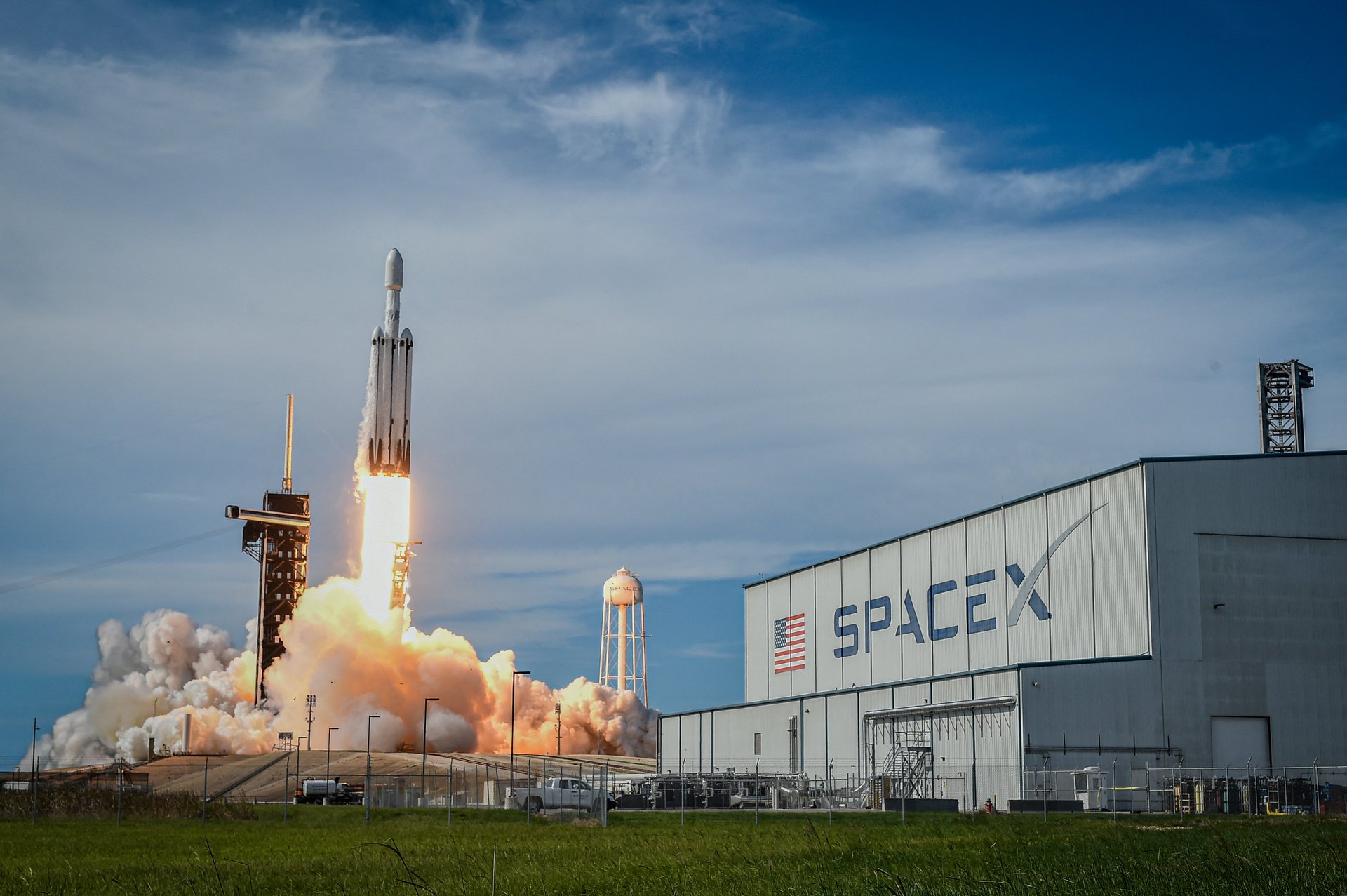
Beyond the growth of the overall space economy, one company is posed to benefit — Elon Musk’s SpaceX, which has become dominant in both rocket launches and satellite internet. Part of that is due to Musk’s status as “First Buddy” to President-elect Donald Trump, who has tapped the CEO to lead his own advisory group.
“I think there is no doubt that SpaceX is going to be the biggest beneficiary of this new administration,” Anderson said. “SpaceX has the market-leading solution. It’s hard to argue that SpaceX shouldn’t be winning contracts” when its competition isn’t yet up to speed.
SpaceX’s Starlink service has grown in popularity, with the company inking deals with everyone from major airlines and cruise operators to T-Mobile $TMUS (TMUS) and Ukraine’s biggest mobile operator. Starlink’s traffic tripled in 2024, according to Business Insider.
The Starship reusable mega-rocket, the largest ever sent into orbit, is due for its seventh trial run later this week. Once it’s ready for commercial use, Starship will be able to “enable entirely new markets,” Anderson said, hypothesizing its use as a space station as well as a transit vehicle to Mars and the Moon, as Musk has forecast.
“SpaceX is moving the goal posts,” Anderson said, even as rivals try to get their vehicles online.
Jeff Bezos’ Blue Origin is getting ready to launch its New Glenn mega-rocket for the first time after delaying a planned Monday debut to compete with Starship. Rocket Lab’s (RKLB) Neutron, designed to compete with SpaceX’s Falcon-9 rocket, is pushing for a mid-2025 debut.
While relative newcomers flourish, established rivals in the industry, such as Boeing $BA (BA) and Airbus (AIR), are falling behind. Boeing is looking to sell its space business following a debacle involving its Starliner vehicle. And after the company issued layoffs and restructured its space segment, Airbus CEO Guillaume Faury told investors consolidation was possible.
“SpaceX went from underdog to apex player in 10 years,” Anderson said. “So I think that these incumbents were blindsided, and they’ve been overtaken, and they don’t really have a strategy or plan for how to gain back that market share.”
Join 500,000+ readers who start their day with Quartz.
By subscribing, you agree to our Terms of Service and Privacy Policy.