
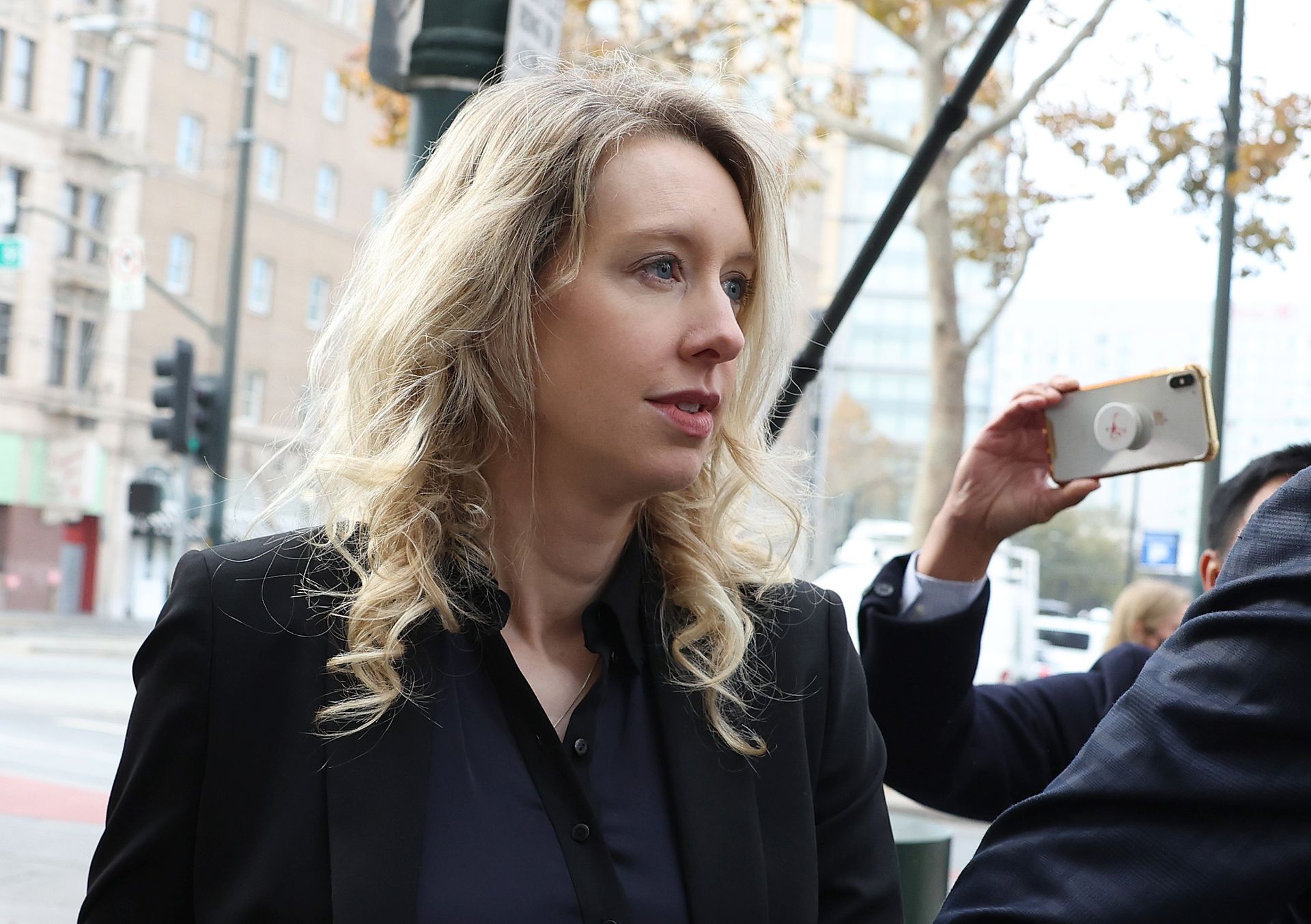
After being found guilty of defrauding investors in 2022, Theranos founder Elizabeth Holmes was sentenced to more than 11 years in prison. These days it's closer to eight. And it very well may be reduced further.
Her projected release date is now Dec. 30, 2031. But there's a very good chance that will be moved up before that time
After being found guilty of defrauding investors in 2022, Theranos founder Elizabeth Holmes was sentenced to more than 11 years in prison. These days it's closer to eight. And it very well may be reduced further.
Holmes's projected release date, according to the Federal Bureau of Prisons website has been moved to Dec. 30, 2031. Some of that reduction occurred quite some time ago. In July 2023, her sentence was reduced by nearly two years after just 1.5 months in captivity. All federal prisoners automatically get a 15% reduction in their sentence for good conduct
Federal prisoners can earn good conduct time via several acts, ranging from taking part in programs and performing “productive activities.”
Prisoners can also be released up to 12 months early if they complete the bureau’s Residential Drug Abuse Program. There’s no indication which, if any, of the other options Holmes has availed herself of. The Bureau of Prisons does not provide specific details on release planning or release plans, citing “privacy, safety, and security reasons” for inmates.
Inmates can also receive credit for time served for any incarceration prior to their sentencing date, but since Holmes was out on bail following her indictment, that seemingly rules out any reduction on that front.
Another way she could potentially reduce her sentence is by accruing Earned Time Credits (ETC). That revolves around a classification meeting (that takes place within the first 28 days of a prison sentence) for the First Step Act. That's a criminal justice reform bill that was signed into law in 2018 with the goal of reducing the federal prison population.
Through ETCs, prisoners can earn 10 days for every month they are in the program (cutting the sentence by up to 120 days). In year two, that earning can go up to 15 days for every month. All totaled, ETCs can cut roughly one year off of a sentence.
At the backend of her sentence, Holmes may be eligible to enter a halfway house, where she can leave for work, medical appointments, and typically a brief social pass each week. And, assuming she is a model prisoner, she could spend the last six months of her sentence in home confinement.
Holmes seems to have settled into prison life. Earlier this year, she told People magazine she wakes up daily at around 5:00 a.m., eats a breakfast of fruit, then does 40 minutes of exercise. At 8:00 a.m., she begins her job as a reentry clerk at the facility’s education building, earning 31 cents per hour. There, she helps women write resumes and apply for tax credits. She also works as a law clerk and teaches a French class, the magazine says.
Once a week she attends cognitive and behavioral therapy for PTSD overseen by a psychiatrist. And in her spare time, she reads, everything from I Ching to the Harry Potter novels. Twice a day she calls her family, often waiting an hour or more for a phone to open up.
Holmes was convicted of defrauding investors after Theranos’ “fingerprick” blood-testing technology was exposed as a fraud. The company’s former president (and Holmes boyfriend) Ramesh "Sunny" Balwani, was convicted separately, receiving a sentence of nearly 13 years, which has since been reduced by more than two years. She continues to argue that her imprisonment is unfair.
“I refused to plead guilty to crimes I did not commit,” she said. “Theranos failed. But failure is not fraud.”
Join 500,000+ readers who start their day with Quartz.
By subscribing, you agree to our Terms of Service and Privacy Policy.