
President Donald Trump launched a new wave of attacks against Federal Reserve Chair Jerome Powell on Tuesday, and threatened a lawsuit over an ongoing renovation of the Fed's headquarters that has attracted conservative scrutiny.
The president's latest barrage against Federal Reserve Chair Jerome Powell included legal threats over a renovation of the Fed's headquarters
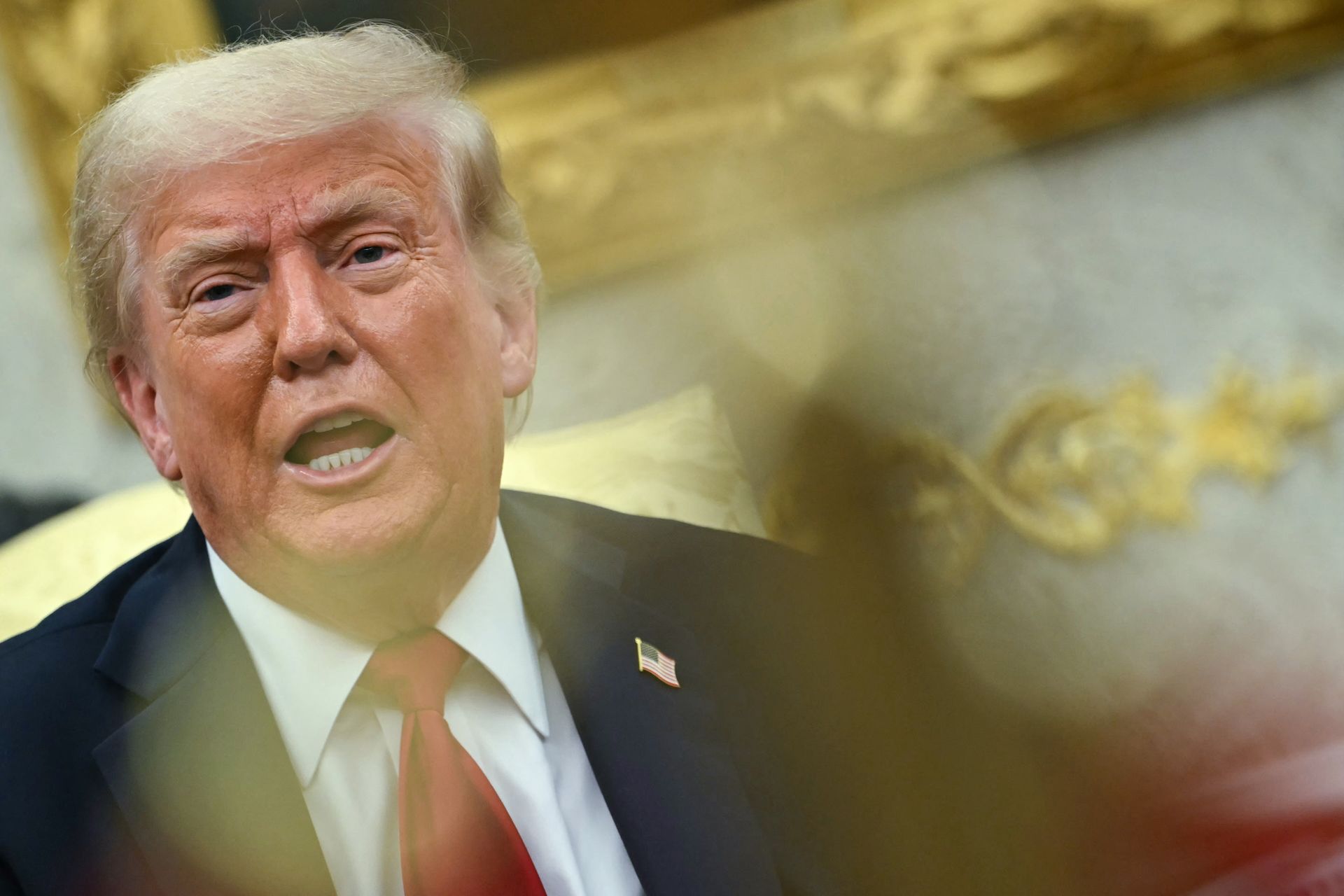
US President Donald Trump speaks in the Oval Office of the White House in Washington, DC on July 14, 2025. (Andrew Caballero-Reynolds/AFP via Getty Images)
President Donald Trump launched a new wave of attacks against Federal Reserve Chair Jerome Powell on Tuesday, and threatened a lawsuit over an ongoing renovation of the Fed's headquarters that has attracted conservative scrutiny.
The president lambasted Powell once again for not lowering interest rates, arguing he's single-handedly hampering U.S. economic growth. Trump has demanded the Fed lower interest rates by three percentage points and mused about firing Powell. It keeps up a scorched-earth campaign that he's waged against the central bank since early summer.
"I am, though, considering allowing a major lawsuit against Powell to proceed because of the horrible, and grossly incompetent, job he has done in managing the construction of the Fed Buildings," Trump wrote in a social media post. "Three Billion Dollars for a job that should have been a $50 Million Dollar fix up. Not good!"
Later in the day, White House Press Secretary Karoline Leavitt didn't elaborate further on the possible lawsuit. "He’s considering a lawsuit," Leavitt told reporters at a daily White House news conference. "I won’t speak on it any further, I will allow the president to do that himself."
Lawsuits brought by private individuals or politicians against the Fed aren't anything new. The U.S. central bank was a party in a dozen cases involving lawsuits or appeals at the end of 2023, according to the Fed. Over a decade ago, a high-profile lawsuit was filed by the former American International Group chief executive contending the Fed exceeded its authority in bailing out the insurance company he once oversaw. He eventually won the suit but received no damages.
"It's not unusual for the Fed to be sued a bunch," Dr. Gary Richardson, a professor at the University of California, Irvine and Fed history expert, said. "But it's rare to have a lawsuit over monetary policy. It's been rare to have a lawsuit over the rules about the leadership, I think, because the law there is very clear. The law leaves kind of little wiggle room for the president."
Senior White House officials and other Trump allies, though, have latched onto the Fed renovation to try to demonstrate that Powell bungled a key project which should lead to his firing. Last month, Trump went to the Fed in what turned into a televised spectacle with Powell correcting the president on the renovation's price tag. Still, the visit ended with Trump displaying a cordial attitude towards Powell that was short-lived.
The four-year renovation of two century-old buildings within the Fed's headquarters has swelled past its original $1.9 billion cost to $2.5 billion due to a variety of factors. Groundwater needed to be drained from the construction site, asbestos and other toxins had to be removed from the soil, and Fed officials had to comply with a raft of federal guidelines governing the upgrade of historic buildings in Washington D.C. The president has cited a $3 billion figure that incorporates the past renovation of another Fed building that was completed in 2021.
Trump recently appointed Stephen Miran, a White House economic advisor and fellow Fed critic, to fill a key seat on the Board of Governors. Though it requires Senate confirmation, the earlier-than-expected opening provides Trump an opportunity leave his stamp on the Fed.
A new inflation report on Tuesday showed consumer prices in June had climbed 2.7% from a year earlier. The data reflected the ongoing pressure on prices from Trump's fusillade of global tariffs, though businesses have absorbed much of the cost up to now. Companies had stockpiled products ahead of the tariff deadlines to avert paying more for imported goods.
Analysts are increasingly expecting the central bank to cut interest rates for the first time this year in September, especially in light of major federal data revisions showing much weaker job growth that's been blamed on corporate uncertainty stemming from Trump's import taxes.
Join 500,000+ readers who start their day with Quartz.
By subscribing, you agree to our Terms of Service and Privacy Policy.