
President Donald Trump said on Monday that he's scheduled to meet with Chinese leader Xi Jinping next year in the latest sign of gradual progress towards a sweeping trade agreement between Washington and Beijing.
Discussions between the U.S. and China have been punctured by trade embargoes, tariff threats, agricultural boycotts, and antagonistic statements
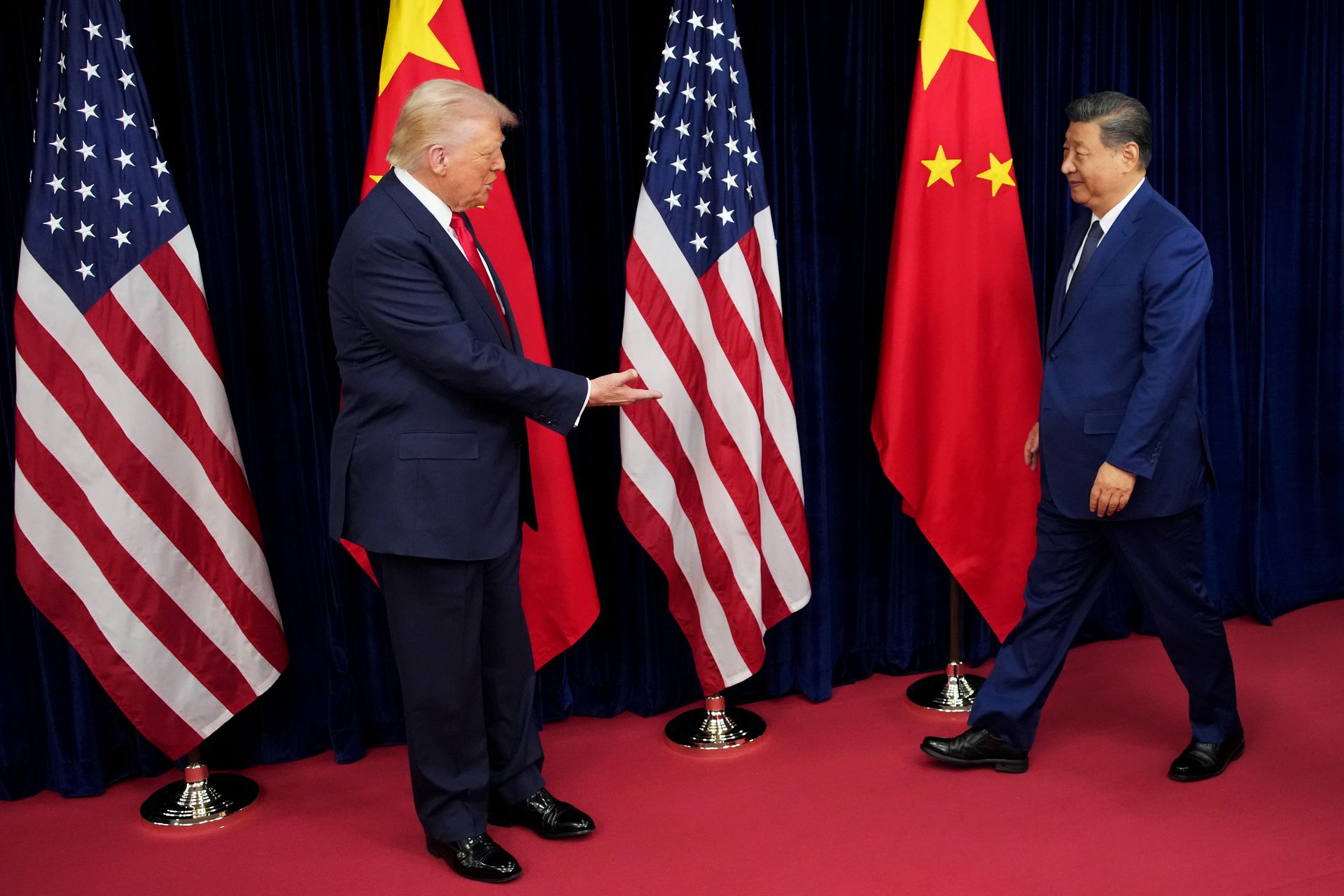
U.S. President Donald Trump greets Chinese President Xi Jinping ahead of a bilateral meeting at Gimhae Air Base on October 30, 2025 in Busan, South Korea. (Photo by Andrew Harnik/Getty Images)
President Donald Trump said on Monday that he's scheduled to meet with Chinese leader Xi Jinping next year in the latest sign of gradual progress towards a sweeping trade agreement between Washington and Beijing.
"There has been significant progress on both sides in keeping our agreements current and accurate. Now we can set our sights on the big picture," Trump wrote in a social media post following a Monday phone call between the two leaders. "To that end, President Xi invited me to visit Beijing in April, which I accepted."
The president said that soybean sales, fentanyl, and the war in Ukraine were discussed during the call. Trump added that he reciprocated Xi's gesture and invited him to visit the U.S. later in the year. He hasn't visited China yet in his second term.
The call comes less than a month after the first in-person meeting between Trump and Xi during an economic summit in South Korea. They struck a preliminary agreement that reduced fentanyl-based tariffs on China to 10% and secured a one-year pause in Chinese rare earth export controls, among other measures. The deal amounted to a year-long truce that attempts to keep trade tensions from escalating anytime soon.
Discussions between the U.S. and Chinese governments for most of this year have been punctured by trade embargoes, tariff threats, agricultural boycotts, and antagonistic statements. In April, Trump kicked off a trade war that targeted Beijing with triple-digit tariffs, until he dialed it down to 30% on most of their U.S.-bound exports. China responded in kind and maintains a 10% tariff on U.S. products.
Beijing said in a readout of the conversation that it initiated the call with Trump to keep up momentum following the summit in South Korea. The Chinese government has ordered almost 2 million metric tons of soybeans in the past month, ending an agricultural boycott. Still, the amount is nowhere close to the 12 million metric tons by year's end that both countries had agreed to last month.
Join 500,000+ readers who start their day with Quartz.
By subscribing, you agree to our Terms of Service and Privacy Policy.