
Quartz
Subscribe
Quartz
Subscribe
Edition
Business News
A.I.
Technology
Money & Markets
Leadership
Lifestyle
Latest

Get Quartz in your inbox

Free daily briefing on global business news.

Business News
AirlinesAutomobilesFoodPharmaceuticalsPolitics & GovernmentRetail & EcommerceSpace & AerospaceEarnings
Technology
A.I.ComputingConsumer TechSpace & AerospaceEarnings
Money & Markets
Economic IndicatorsMarketsPersonal FinanceEarnings
Lifestyle
Cars & BikesCollectingEntertainmentFood & Fine DiningHealth and FitnessReal EstateTravel
Quartz

Global business news for a smarter world

Topics

  • Business News
  • Money & Markets
  • Tech & Innovation
  • Generation A.I.
  • Lifestyle
  • Leadership

Products

  • Daily Brief
  • Weekly Digest
  • Member Benefits
  • Quartz Pro

Legal

  • Sitemap
  • About
  • Accessibility
  • Privacy
  • Terms of Service
  • Advertising

© 2026 Quartz Media, Inc. All rights reserved.

Markets

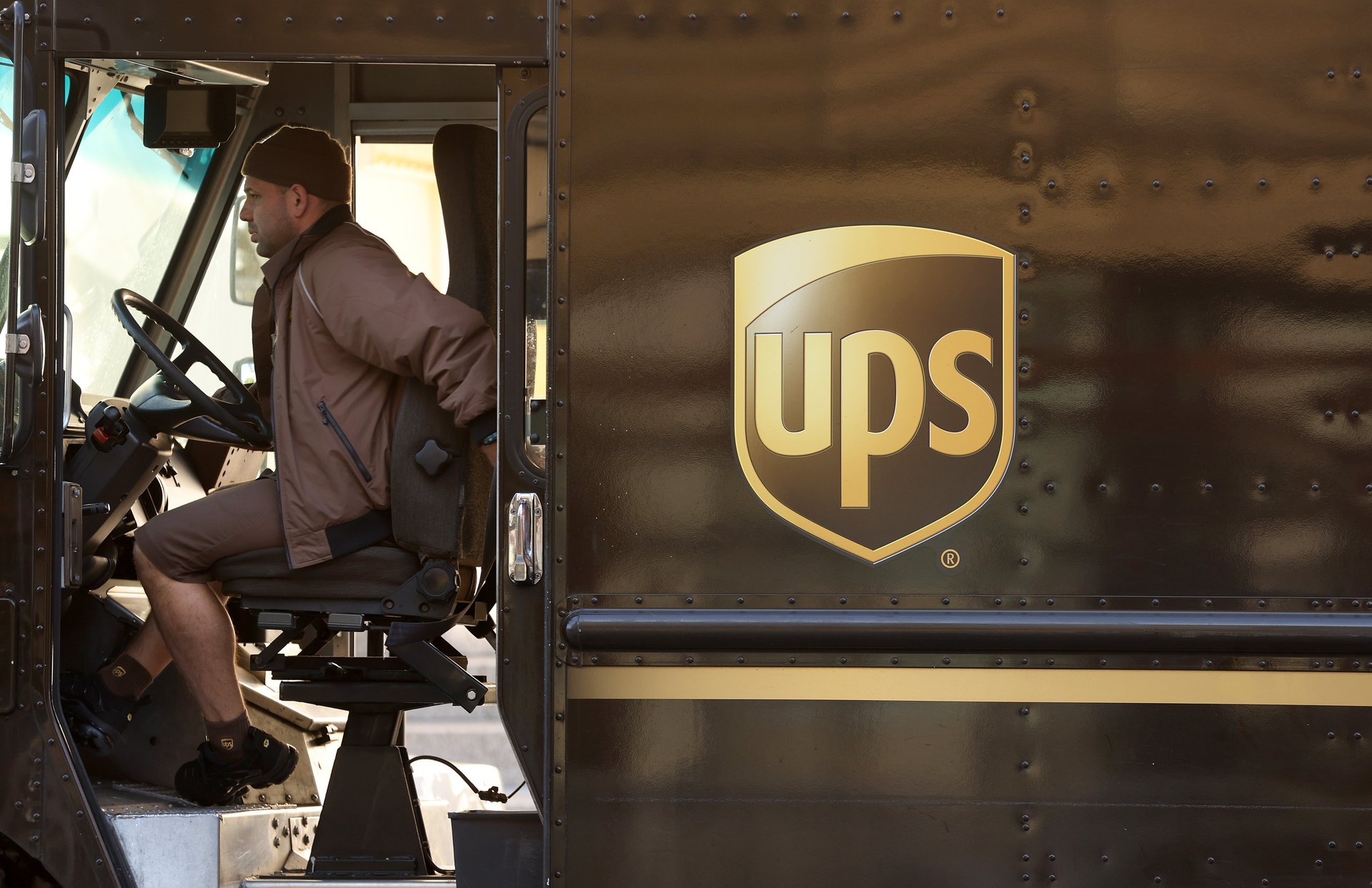
UPS stock plummets 15% because it's about to do a lot less Amazon business

UPS faces a major setback, but analysts see a path forward

By Francisco Velasquez·3 min read·Updated January 30, 2025
Add QZ to Google

Shares of United Parcel Service $UPS (UPS) dropped 15% on Thursday, marking its worst day ever, after the company announced a significant reduction in its business with Amazon $AMZN (AMZN), its largest customer. The move, which will see UPS lower its Amazon-related revenue by more than 50% by the second half of 2026, has rattled Wall Street.

While the loss of Amazon’s business might appear to be a major blow, UPS justified the decision as part of a broader strategy to prioritize more profitable deliveries.

“Amazon is our largest customer, but it’s not our most profitable customer,” UPS CEO Carol Tomé said during the company’s Jan. 30 earnings call. “Its margin is very dilutive to the U.S. domestic business.”

Amazon accounted for 11.8% of UPS’s total revenue – roughly $10.7 billion – but its low profit margins have been a drag on the company’s overall profitability. UPS is now focusing on higher-margin opportunities despite the short-term financial hit.

UPS and Amazon have been partners for nearly 30 years, and Tomé stressed that UPS “holds the company [Amazon] in high regard” but that “it was time to step back and reassess our relationship.” The announcement, which left investors unsettled, was coupled with a warning of lower-than-expected 2025 revenue.

Bernstein (AB) analyst David Vernon defended the company’s strategy, arguing the market’s negative reaction was an overreaction. In a research note, Vernon said UPS “didn’t pull the football, but definitely moved the goal posts,” adding that the shift toward higher-margin operations would ultimately strengthen UPS’s financial health. He maintained a “Buy” rating on UPS with a price target of $179 per share, though he revised his 2025 revenue estimates down by 4-5%.

UBS (UBS) analyst Stephen Ju also weighed in, suggesting that Amazon may be entering a phase of “lower capital intensity” in its e-commerce business, which could signal further changes in its relationships with delivery companies.

Evercore ISI (EVR) analyst Jonathan Chappell noted that while UPS’s fourth-quarter results showed positive signs, including stronger-than-expected profits and improved margins in its domestic business, the decision to cut Amazon’s volumes by over 50% was a “surprise.” Chappell added that the move accelerated the decline of a business segment that had long been seen as a “tail risk” for UPS.

UPS’s big Amazon reduction isn’t all that’s changing. The company also made changes to its UPS SurePost service. Effective Jan. 1, 2025, UPS moved all of SurePost operations in-house, ending its reliance on the U.S. Postal Service for last-minute delivery. UPS explained that the changes to the USPS operating model, which would increase delivery times and raise costs, made the partnership less viable. “The value proposition of an increased cost as well as deteriorating service didn’t work for us,” Tomé said.

UPS expects to justify the change by focusing more on higher-margin, complex services like its healthcare sector. To offset declining volume, the company closed 11 facilities in 2024, which is expected to save $1 billion.

Daily Brief

The essential business news, delivered fresh every morning.

Join 500,000+ readers who start their day with Quartz.

By subscribing, you agree to our Terms of Service and Privacy Policy.

Related

FoodMaple Leaf Foods is recalling 12,036 pounds of Canadian bacon that skipped U.S. inspection
FoodRecalled eggs from Texas have been linked to a salmonella outbreak across 17 states
MarketsApple stock surges past Nvidia to reclaim most valuable company title
SpaceAmazon asked the FCC to approve 5,105 satellites for direct-to-phone connectivity
Business NewsCracker Barrel is replacing its CEO with a former Bloomin' Brands executive