
Home sales are slowing again, and the culprit is no mystery — insert an “in this economy” joke here.
A tight market is becoming a full-blown affordability crisis as existing home sales stall, prices climb, and mortgage rates top 7%
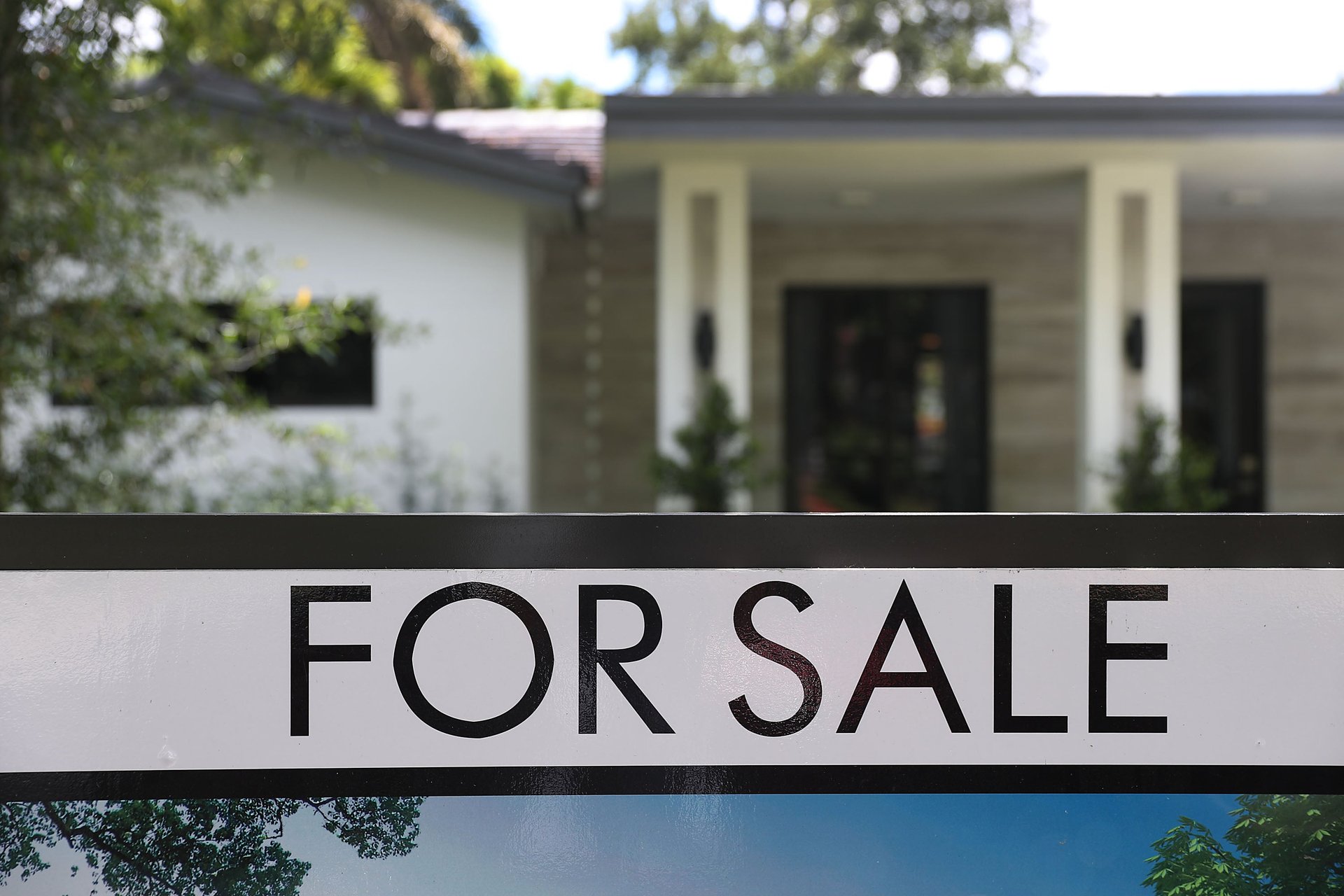
Home sales are slowing again, and the culprit is no mystery — insert an “in this economy” joke here.
On Thursday, the National Association of Realtors reported that existing-home sales fell to a seasonally adjusted annual rate of four million in April, down 0.5% from March and 2.4% from a year earlier. In tandem, the median price rose to $414,000 from $403,700.
Bond yields are surging to decade highs after the House passed a Trump-backed tax bill projected to balloon the federal deficit by hundreds of billions. That, along with a poorly received 20-year Treasury auction on Wednesday, has sent financial markets reeling and mortgage rates climbing.
According to Mortgage News Daily, the average 30-year fixed mortgage just surged to 7.08%, the highest in over three months. That translates to roughly $2,750 a month in principal and interest on a $414,000 home, not including taxes, homeowners or private-mortgage insurance, or maintenance. That’s assuming you’ve got the $80,000+ down payment on hand to even get that mortgage, of course.
First-time buyers are increasingly priced out, and existing homeowners remain locked in by ultra-low, pandemic-era rates, keeping inventory tight. Who’d give up a 3% rate to take on a 7%?
NAR Chief Economist Lawrence Yun called out the deeper consequences: “Residential housing mobility, currently at historic lows, signals the troublesome possibility of less economic mobility for society.”
Adding to the uncertainty, President Donald Trump said late Wednesday he’s considering re-privatizing Fannie Mae (FNMA) and Freddie Mac (FMCC). The move would likely strip them of their quasi-sovereign status and prompt a credit downgrade, applying even greater pressure on mortgage markets at the worst possible time.
This isn’t just a housing story anymore. It’s a full-blown affordability crisis, made worse by Washington’s own math.
Join 500,000+ readers who start their day with Quartz.
By subscribing, you agree to our Terms of Service and Privacy Policy.