Five members of Amnesty International’s leadership team are on their way out, following a damning report about what’s been described as the human-rights organization’s “toxic” culture.
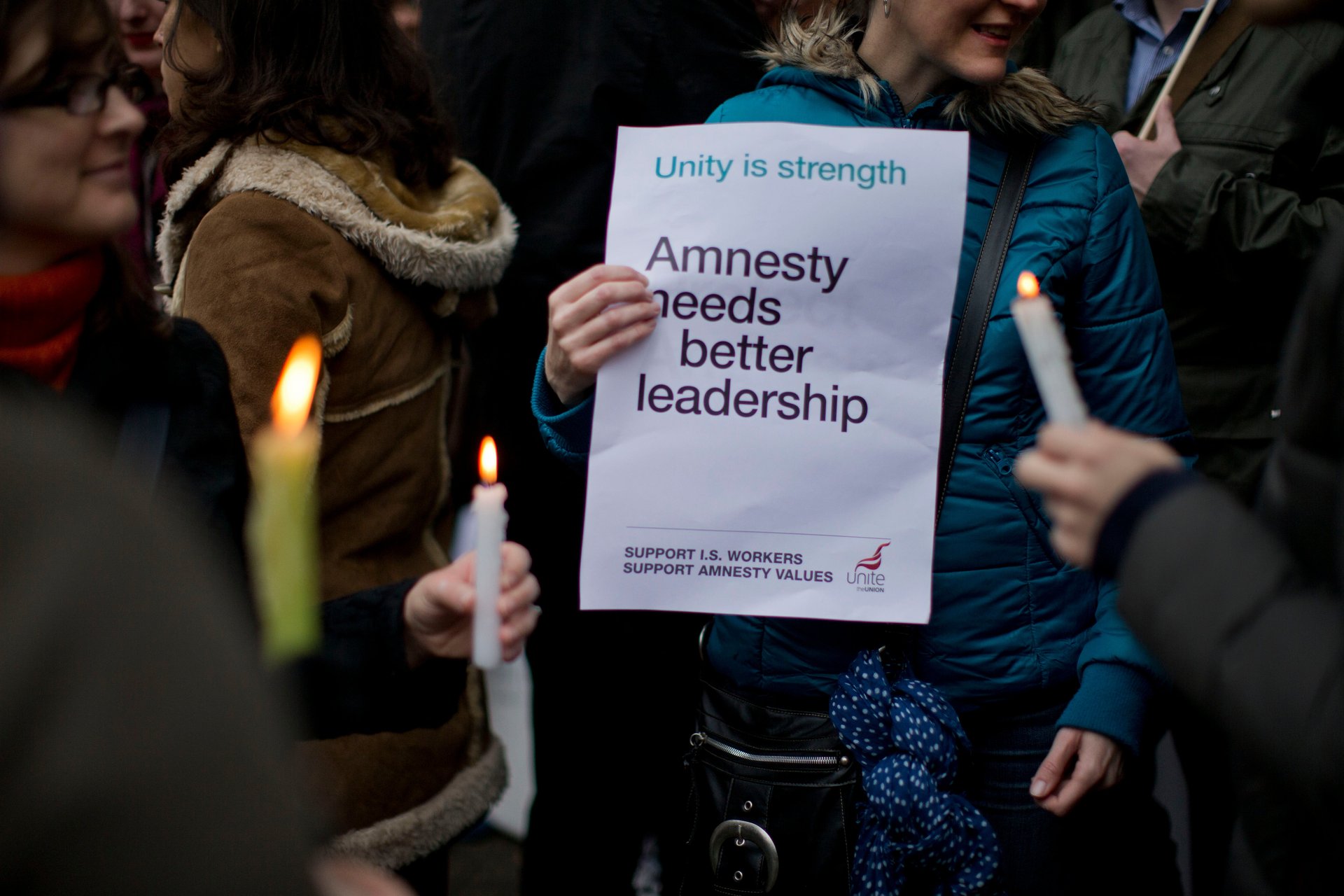
Five members of Amnesty International’s leadership team are on their way out, following a damning report about what’s been described as the human-rights organization’s “toxic” culture.
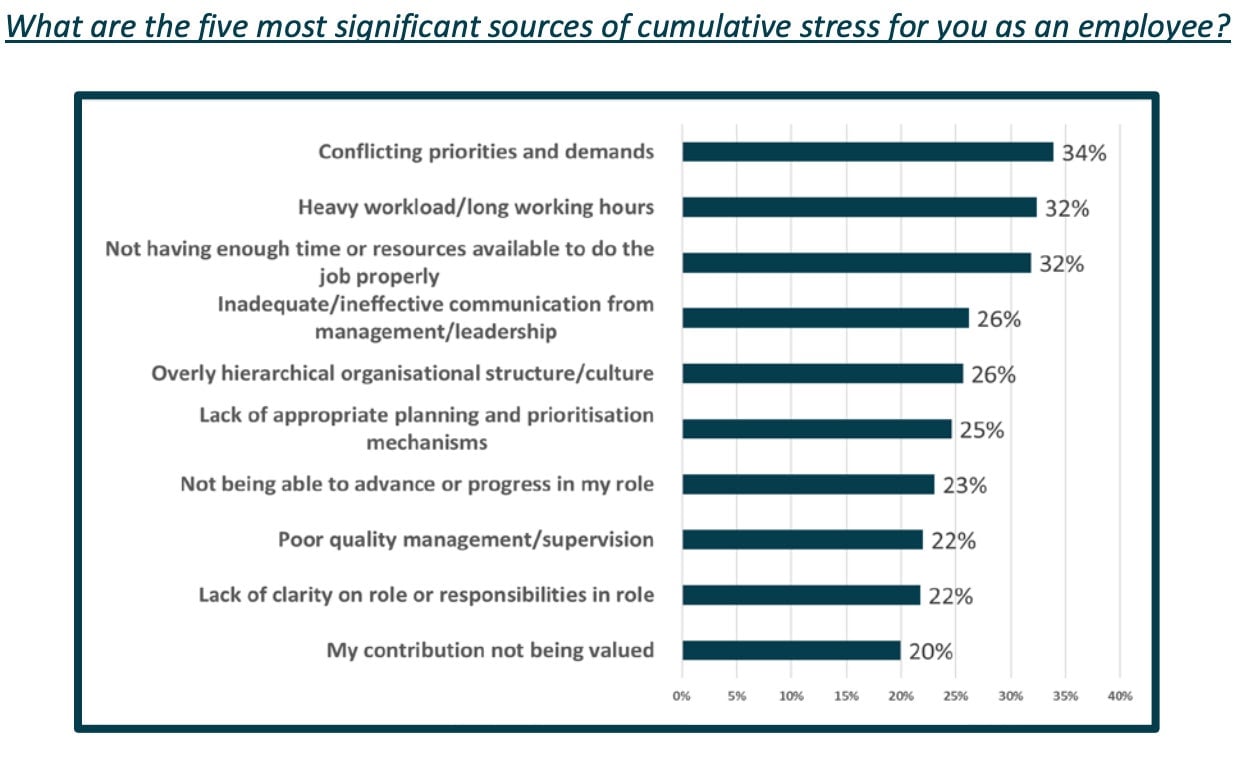
After two employees died by suicide last year, Amnesty launched a wide-ranging examination of its workplace culture, conducted by three different parties who worked independently from one another. The KonTerra Group, a private consulting firm that performed one of the reviews, relied on hundreds of interviews, surveys, and shared documents to tell the tale of what an Amnesty staffer quoted in the report described as “a toxic culture of secrecy and mistrust,” in which 39% of staff said they had developed mental or physical health issues as the direct result of working there.
Join 500,000+ readers who start their day with Quartz.
By subscribing, you agree to our Terms of Service and Privacy Policy.
Some 475 employees were surveyed for the review, with a total of more than 100 hours of interviews. The review, published in February, noted that staff were mainly miserable not because of the global human rights abuses they confronted professionally each day, but because of the climate in which they were working.
Senior management has now taken responsibility, with all seven senior leaders offering to resign. As the BBC reports, five have already gone or are in the process of leaving, having taken severance payments some described as “generous.” (Around 100 other staff members are also set to lose their jobs due to financial difficulties.)
In a statement, Amnesty’s secretary general, Kumi Naidoo, called the report a “difficult read,” and made a commitment to “accelerate and widen our efforts to establish credible and effective wellbeing measures and find better ways to recognize the tremendous dedication of staff to our mission.” There was, he wrote, “a deep deficit in our duty of care and support to staff,” which could not simply be explained away by the organization’s “complexities.” With staff wellbeing now an absolute priority, he would be commissioning Deloitte to help management deliver on the recommendations of the review.
Working for Amnesty International might be expected to be stressful—the organization has an ambitious human rights mission that involves tracking trauma and abuse around the world. There is often more to cover than even the most talented staff could hope to achieve, across issues including the climate crisis, torture, and international justice.
In May 2018, a longtime Amnesty staff member, Gaëtan Mootoo, died by suicide in his office at Amnesty’s Paris bureau. According to KonTerra’s report, he left a note that “among other things, made it clear that work pressures played a major part in his decision to end his life.” Six weeks later, an Amnesty intern, Rosalind McGregor, died by suicide at her family’s home in London. Though there is no evidence that her work played a role in what happened, both of these sudden deaths served as the impetus to dig deeper into what staff were experiencing.
In fact, as the review notes, staff had been experiencing stress for decades. As early as the 1990s, Amnesty’s work culture was being described as “adversarial” and “toxic,” with a climate characterized by a “lack of trust” and bullying.”
Circumstances seem to have gone from bad to worse when Amnesty launched its Global Transition Program (GTP) in 2013. This colossal restructuring led staff members to be directly exposed to “civil unrest and conflict” on the ground, during a period of organizational turmoil. As one staff member told the interviewers, the restructuring made it harder to do work in the field: “A lot of staff left. One result was that we had to hire new local staff members. They generally were unskilled, unexperienced, insufficiently trained, and not ready to face the difficulties of the job.”
The few attempts by managers to step in to support staff were “one-off, reactive, unsystematic and insufficient.” The report concludes: “It seems that Amnesty has largely been operating in a ‘state of emergency’ since the inception of the GTP.”
KonTerra made six recommendations, to be rolled out over a year.
