Update: On June 24, 2022 the US Supreme Court voted to overturn Roe v. Wade, writing that “the Constitution does not confer a right to abortion.”
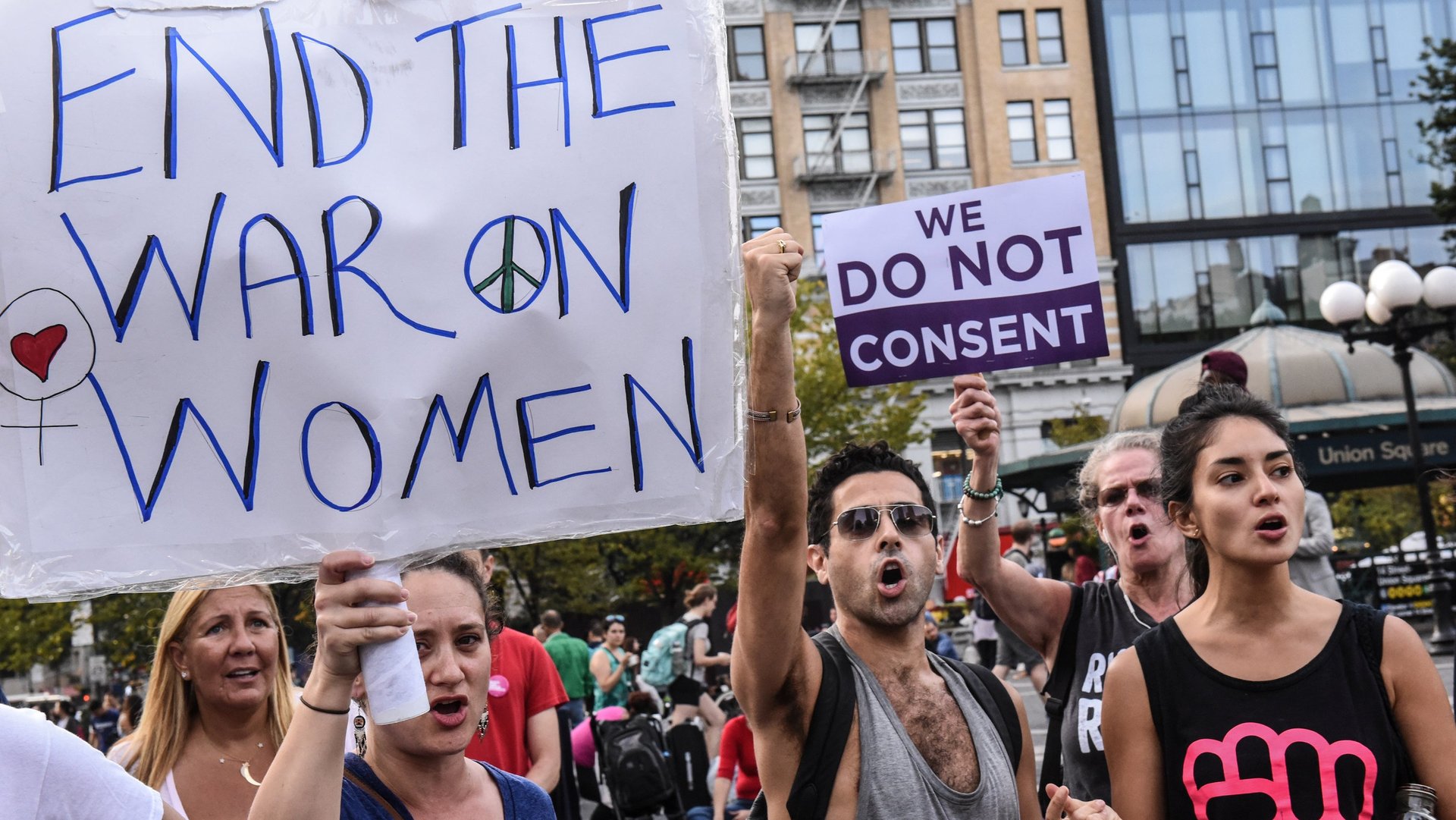
Update: On June 24, 2022 the US Supreme Court voted to overturn Roe v. Wade, writing that “the Constitution does not confer a right to abortion.”
The conservative-majority US Supreme Court plans to end Roe v. Wade, according to a leaked opinion reportedly written by justice Samuel Alito and obtained by Politico.
Join 500,000+ readers who start their day with Quartz.
By subscribing, you agree to our Terms of Service and Privacy Policy.
The Supreme Court has not yet released the results of its vote to the public, which means the draft opinion is not final. If justices do decide to overturn the historic 1973 Roe v. Wade decision, whether women are able to access legal abortions would be determined state by state.
Companies that otherwise tout progressive stances on American social issues have been largely silent on reproductive rights. So women’s health advocates are trying to encourage business leaders to speak up based on the relatively new premise that abortion rights are a workplace issue.
“We’re not asking companies to weigh in on ‘when does life begin,’ values, morality,” says Jen Stark, director of corporate strategy at Tara Health Foundation, a philanthropic organization focused on improving the health and wellbeing of women and girls. “What we’re asking them to say is that access to reproductive health connects to their gender and racial equity commitments. It also impacts their workforce, let alone consumers and their expectations and communities where they live and work.”
Abortion rights are inherently bound up with gender and racial equality—causes that many companies say they’re committed to advancing. As just one example, “abortion access is very closely tied to women’s economic security,” says Shaina Goodman, director for reproductive health and rights at the nonprofit advocacy group National Partnership for Women & Families.
Having access to abortions can allow women to “stay in the workforce, or stay in education so that they can have the degree and the skills that they need to then be able to do the kind of work that they want to do, or to support the economic security of their family,” Goodman explains. In a study of nearly 1,000 American women who sought abortions, 40% cited financial reasons as a factor in their decision. And because many women’s ability to prioritize financial stability and pursue careers is indelibly tied up with their having a choice about when and whether to have children, abortion access has a direct impact on their role in the workplace.
On a practical level, as Stark points out, limiting abortion access also has a disproportionate impact on lower-income workers—a category in which Black and Hispanic women are overrepresented.
In places where abortion access is restricted, the time and money involved in crossing state lines for medical services may make getting an abortion next to impossible. Laws like those of Mississippi and Texas Stark says, “really speak to the lack of understanding the value and monetization of women’s time at work.”
Another reason why reproductive rights are a workplace issue: Employees may not be willing to stay in or move to states that restrict abortion access, which is bad news for companies looking to hire and retain talent.
Two-thirds of college-educated workers in the US say the Texas abortion ban, known as SB8, would discourage them from taking a job in the state, according to a recent poll of 1,804 adults with college degrees who either hold full-time jobs or are looking for full-time work. The online poll was commissioned by Tara Health Foundation and conducted by public opinion research firm PerryUndem. About half of the respondents they’d consider moving out of state if their own lawmakers passed a ban similar to SB8.
Workers are also concerned about what abortion restrictions indicate about a state’s other policies. Two-thirds of respondents said they presume that states that protect abortion rights are “more likely to have good health care, good-paying jobs, and a higher-quality of life versus those that ban or restrict abortion access,” according to the poll.
This should give employers another clear way to speak out about how state abortion laws directly affect their companies. “Employers can talk about the negative effect that these types of laws are having on their ability to recruit and retain really talented high caliber employees and bring business into state,” says Goodman.
The push to frame reproductive rights as a workplace issue is an outgrowth of the growing understanding of how corporations can help to move the needle on matters of social justice.
“All movements learn from each other,” says Stark. “We know in the LGBTQ space, when they engaged conservative voices and business voices, that represented a sea change as far as the case for LGBTQ inclusion. So I think similarly, on issues related to gender equity, we’re at a precipice. Women alone can’t create equitable environments in the workplace. We need allies and we need internal policies and practices at work, let alone a public policy environment at the state and federal level.”
Business leaders ready to act as allies can help bolster reproductive rights in several ways.
This story was updated May 2 to include news of a leaked Supreme Court draft opinion that would overturn Roe v. Wade.
