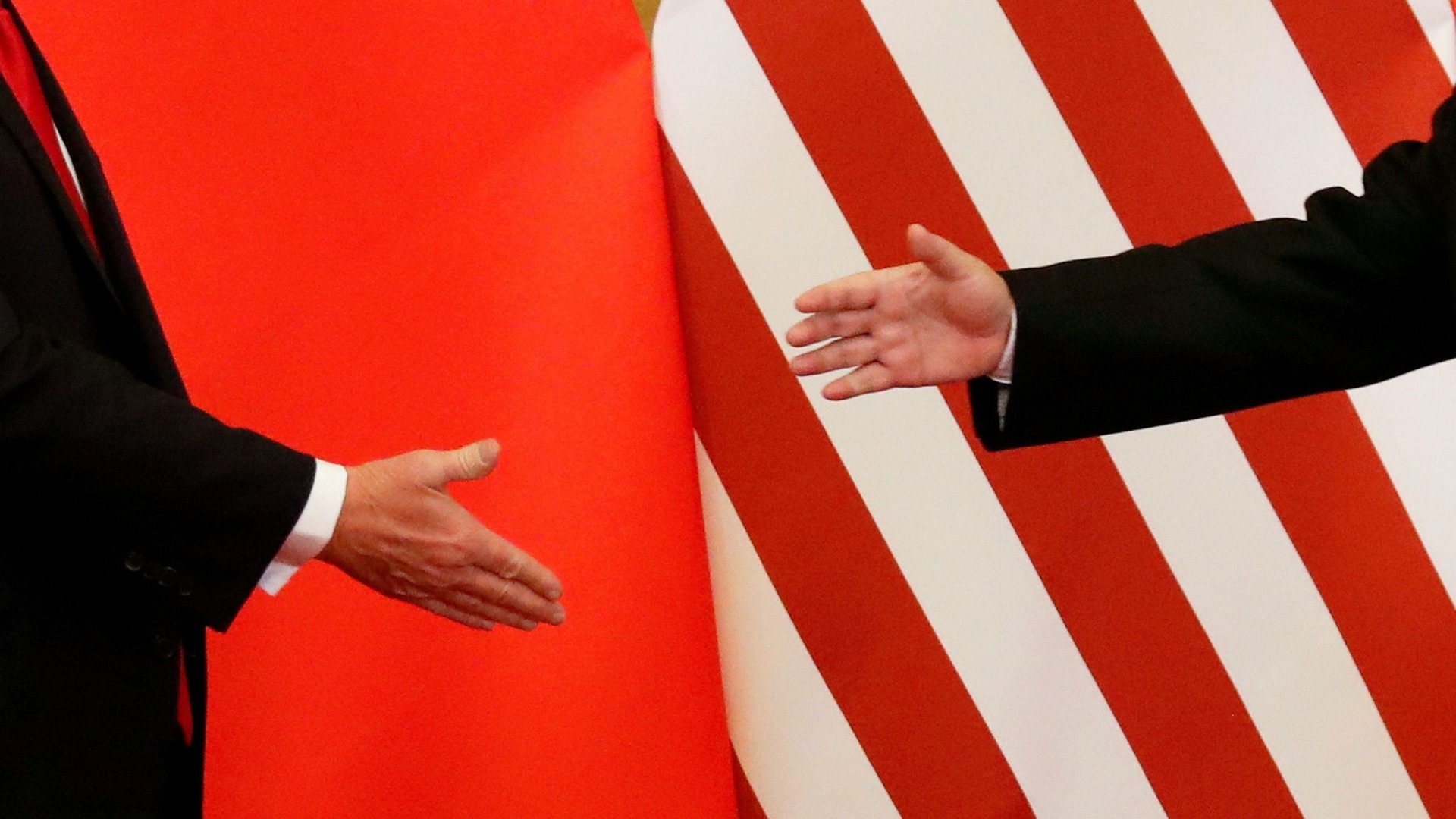
China isn’t wasting any time striking back at US trade barriers.
Today (April 4) the Chinese government unveiled a list of about $50 billion of US imports it’s threatening to subject to a 25% tariff, just hours after the Trump administration said that it would impose a 25% tariff on 1,300 Chinese products. China’s list includes soybeans, aircrafts, automobiles, and beef, among other things (pdf). The commerce ministry said it would publish a final list and details about the timing of the implementation later.
“As the Chinese saying goes, it is only polite to reciprocate,” said a statement from the Chinese embassy in Washington, DC. The remark alludes to the word recently embraced by the Trump administration and US businesses—”reciprocity.” Trump and his allies want China to treat US companies operating in the country the same way Chinese businesses are treated in the US—or else face restrictions.
Things seem to be heading in a negative direction. China’s move matched in value the list of Chinese goods that the US plans to slap a 25% duty on, which the Trump administration announced Tuesday evening. Those tariffs will take effect after a 60-day commenting period.
For those having trouble keeping all this “reciprocating” straight. Here’s a quick review:
It’s important to put these amounts in perspective. In 2017, the US and China traded $657 billion in goods alone.
That said, the values, and volumes, of products affected by trade restrictions are rapidly adding up. This latest rejoinder from China brings the value of goods affected to around $106 billion.
It’s unclear at what stage tit-for-tat exchanges officially become a trade war. But reciprocation is happening awfully fast. And though Trump may have claimed that trade wars are “good, and easy to win,” a much bigger share of US exports stands to be affected than vice versa.
