Ever since the annexation of Crimea in March, the US and others have urged Europe to get tough on Moscow, particularly since the downing of a Malaysia Airlines plane packed with Europeans over eastern Ukraine.
Today Europe got tough—at least, a good bit tougher than the travel bans and asset freezes it had previously imposed on a small number of Russian and Ukrainian people and firms. It announced new sanctions targeting the Russian finance, energy, technology, and defense industries, which will take effect almost immediately.
They apply only to new contracts with Russian buyers, which means France can, controversially, still deliver two warships to Russia under a 2011 deal. But there is plenty in the new measures (pdf) that will squeeze the already teetering Russian economy, given that the EU is Russia’s largest trading partner by far.
True to the glorious tradition of European bureaucracy (or for that matter any bureaucracy), the list of banned military and dual-use goods is enormous and insanely detailed. Here are just a few of the things that are now banned.
This is the simplest but possibly most painful of the new measures. It bans European companies from dealing in stocks and long-term bonds issued by state-controlled Russian banks, which captures just about all of the country’s most important lenders.
The list of energy equipment subject to sanctions is not yet available, but it’s likely to hew closely to an early draft report obtained by the Financial Times (pdf), which includes a variety of pipes, drills, and derricks. Export licenses will be rejected specifically for products intended for “deep water oil exploration and production, arctic oil exploration or production and shale oil projects in Russia,” according to the European Council.
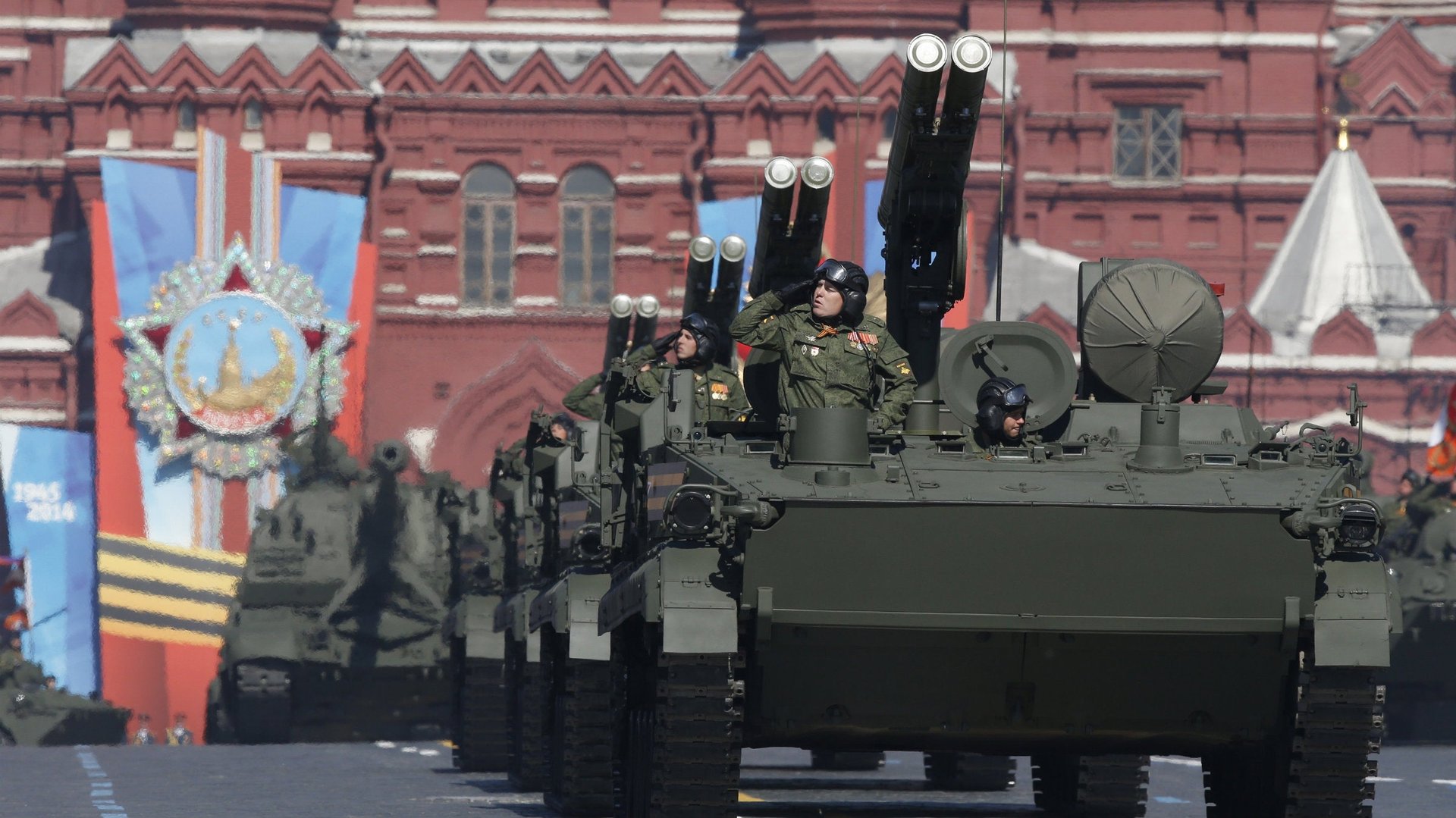
Notwithstanding French-made helicopter carriers, the EU’s arms embargo on Russia includes all of the items on the bloc’s “common military list” (pdf). A small selection:
This is where it gets really interesting. A tank is obviously intended for the military, but a wide range of goods and technologies serve both civilian and military uses. The EU’s 270-page list of dual-use items (pdf) now prohibited to sell to Russia for military means includes plenty of mysterious and arcane items, and more than a few items that you might not believe are traded at all, with anyone. Here’s a taste:
