Access to digital information and communications technologies has increased dramatically over the past decade across Africa. In Tanzania, 87% of urban residents report using a mobile phone every day. In addition, 34% of the population access the internet. The vast majority use their mobile phones to do so.
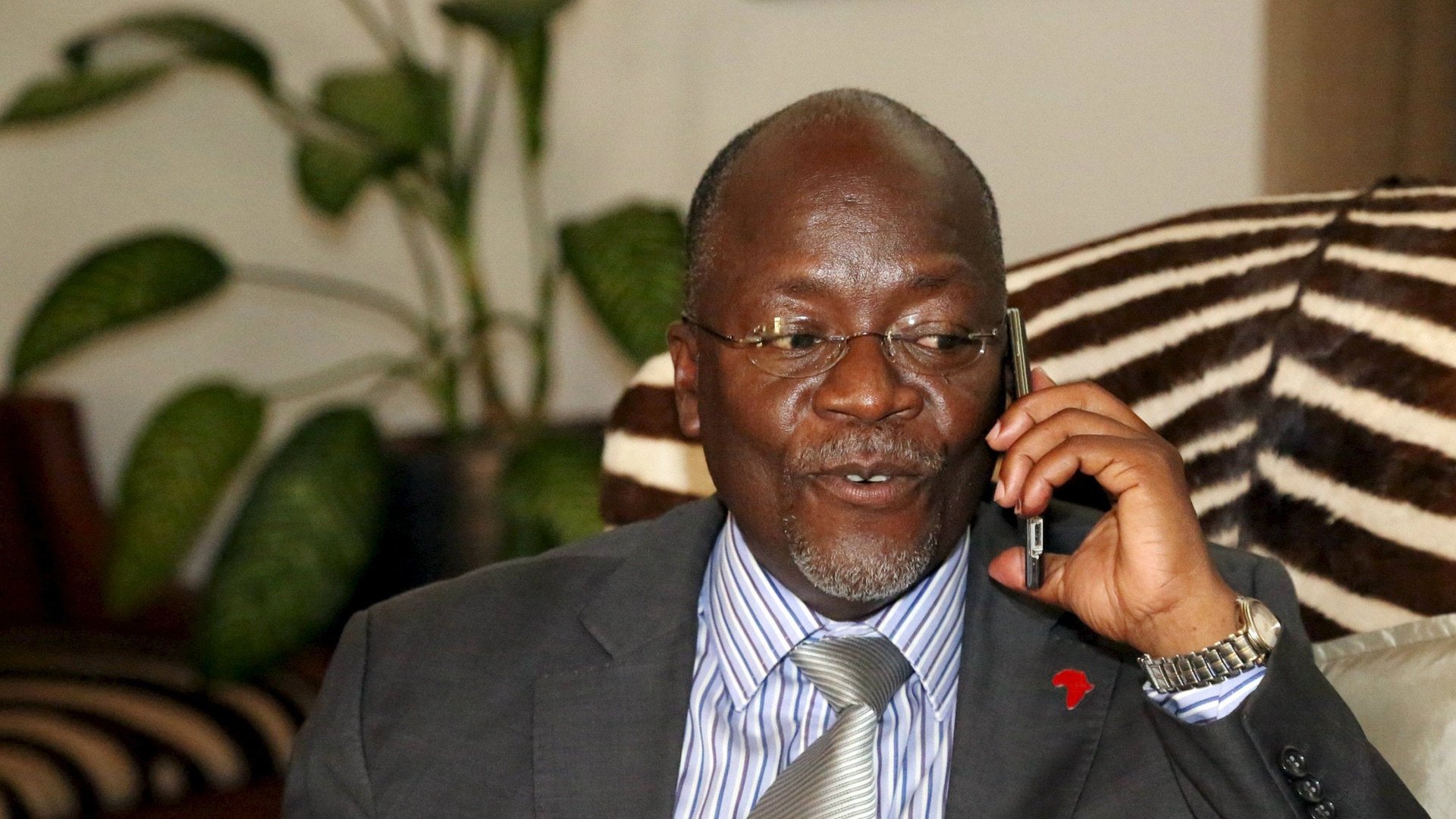
Access to digital information and communications technologies has increased dramatically over the past decade across Africa. In Tanzania, 87% of urban residents report using a mobile phone every day. In addition, 34% of the population access the internet. The vast majority use their mobile phones to do so.
Prepaid bundles offered by service providers have made data more affordable. They sometimes include free access to social media platforms for subscribers.
Join 500,000+ readers who start their day with Quartz.
By subscribing, you agree to our Terms of Service and Privacy Policy.
Africa’s “mobile revolution” has generated much debate about the potential for new technologies to contribute to economic development, improve service delivery and foster political change. The World Bank’s 2016 World Development Report, for example, explores the relationship between “digital dividends” and development.
However, widening access to technological innovations can also expose people to risks. Governments across the region are debating how to respond to new challenges. These include online fraud and the dissemination of hate speech through SMS or social media.
Until recently few African countries had legislation related to cybercrime. Police may need further training to deal with digital offences. Citizens will require reliable information about how to stay safe online.
In Tanzania the response to these threats has been influenced by political calculations. Expressions of political dissent have been cast as “cybercrime”. Thus, for many the most pressing threat to their cyber security may not be fraud or identity theft, but the risk of being arrested for content shared online.
My recent field work in the Tanzanian city of Mwanza suggests that “misuse” of digital platforms is a concern in densely populated low-income areas. Here “cybercrime” is often used to refer to insults and obscene language used over the phone or on social media.
In the words of one research participant, people need to “know how to use social media well”. Establishing what this means will entail discussing the boundaries of acceptable behaviour online.
This debate is also being played out at the national level, with some worrying implications. Social media has assumed greater importance in political campaigning and in the creation and dissemination of news. Information that is critical of the government can be shared rapidly with large numbers of people. This appears to have worried ruling elites who are seeking to restrict online political debate.
A controversial Cybercrimes Act was introduced in 2015. The Act addresses some important concerns, including child pornography and cyber bullying. However, it also contains vague clauses that could be used to restrict freedom of speech. This includes prohibiting publication of “false” and “misleading” information. The law gives the police wide-ranging powers to seize communications devices.
Prosecutions under the Act to date include eight volunteers for opposition party Chadema. The volunteers’ alleged offence was sharing election results data over Whatsapp deemed by the government to be inaccurate. By my count, 11 individuals are alleged to have “insulted” President John Magufuli in social media posts.
Most recently, the musician Mwana Cotide was charged over a video posted on YouTube entitled Udikteta Uchwara (Petty Dictatorship). The prosecution claimed the material was intended to humiliate the president.
Magufuli’s distaste for social media is clear. He describes it as an impediment to concentrating on bringing about development in Tanzania. Indeed, he has also cast political opposition more broadly as a distraction and unnecessary until the next election in 2020.
A ban on all political meetings, which has since been partially rescinded, the frequent arrest of opposition politicians and the closure of media outlets have raised concerns that democracy may be a casualty of Magufuli’s pursuit of development.
Politicized policing is nothing new in Tanzania. But the government’s interpretation of cybercrime has facilitated its extension into online spaces. Tanzania is certainly not unique. Across eastern Africa governments have cracked down on social media ostensibly in the interests of national security. Most recently in Ethiopia ongoing protests led to the shutdown of the entire mobile internet network. Posting Facebook $META updates on the situation has been declared a crime under a state of emergency.
Charlotte Cross, Lecturer in International Development, The Open University
This article was originally published on The Conversation. Read the original article.
