Donald Trump has long denied colluding with the Russian government during the 2016 US election. But it’s going to be tough for the president to deny this week’s news.

Donald Trump has long denied colluding with the Russian government during the 2016 US election. But it’s going to be tough for the president to deny this week’s news.

I was born and raised in Portland’s Hollywood District, a relatively unremarkable neighborhood nestled into the city’s northeast quadrant. It’s where I wandered to the library, watched local parades, ordered comics and coffees and, when I got old enough, craft brews. Aside from the sparkling marquee of the Hollywood Theatre, there’s little to separate the area from the other parts of residential Portland—and there’s little of the Portlandia-style quirk that has inundated other parts of the city over the past few years.

With Donald Trump reaching the 100-day mark of his presidency, his tenure thus far can be separated into two distinct chunks. At the beginning, the White House seemed energized yet consumed by chaos. Courts blocked Trump’s executive orders. The president’s claims that former US president Barack Obama had wire-tapped then-candidate Trump fell flat. The president even insulted the Australian prime minister.

Buried beneath last week’s faltering health-care vote and revelations about the FBI’s investigation into the Trump campaign was a development that, for another administration, would have dominated news cycles. Documents unearthed in Ukraine by a journalist-turned-MP revealed that Paul Manafort, US president Donald Trump’s former campaign manager, was allegedly involved in an offshoring scheme involving hundreds of thousands of dollars, tied to at least one shell company and one post-Soviet bank.

One month into his tenure as the one of the most disliked US presidents in modern history, Donald Trump has created far more headlines than actual policy. Aside from his incendiary rhetoric—painting the media as an “enemy,” implying the courts may be culpable for some future attack—Trump’s legislative feats, so far, are scant.

It’s no secret that Donald Trump is a voluminous liar. But beyond exhausting fact-checkers and infuriating the Twitter accounts of dictionaries, what have Trump’s range of lies accomplished? And, perhaps more ominously, what does his shameless mendacity suggest about future governing decisions?

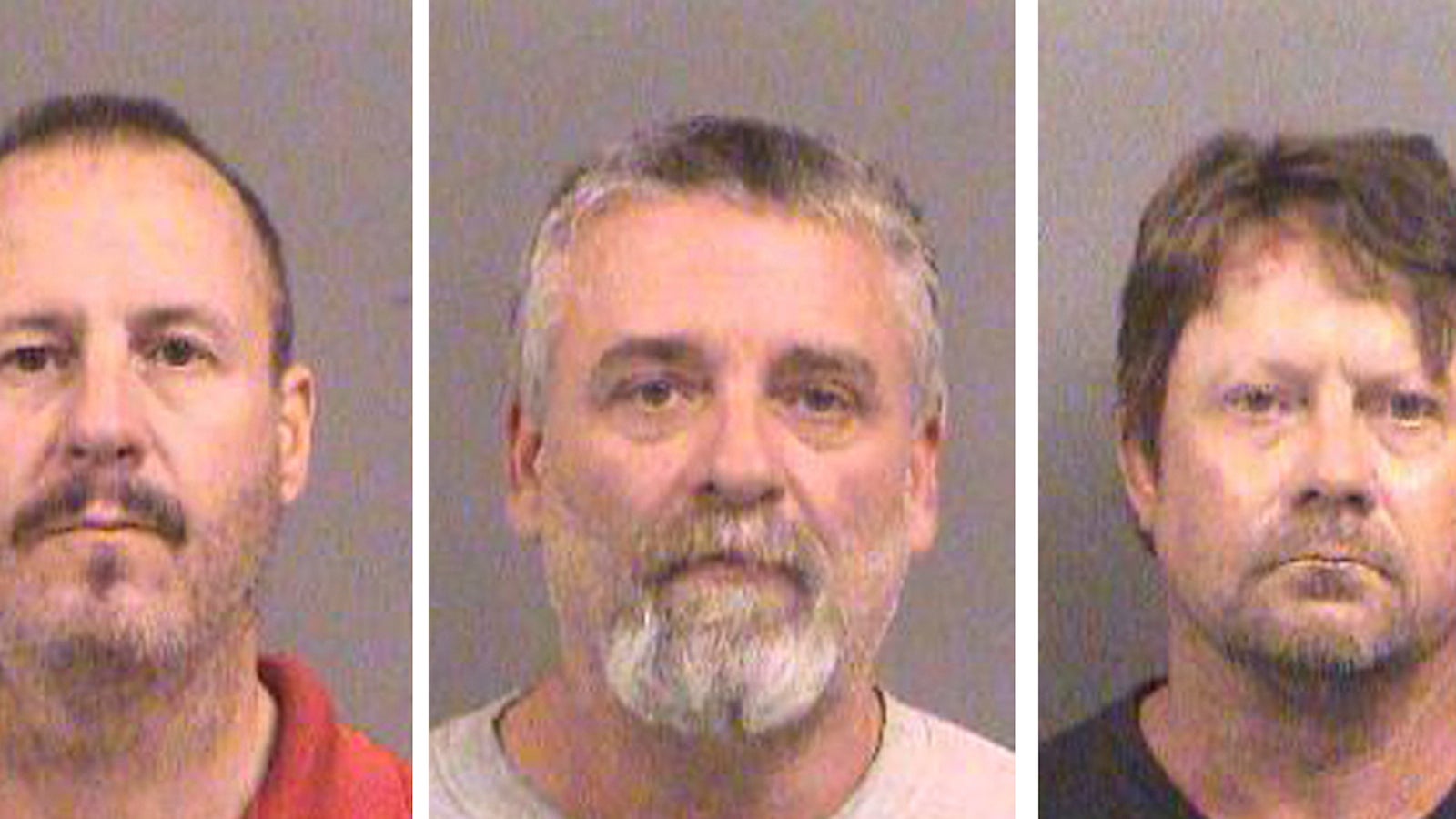
In November 2015, a pair of white supremacists—one in an Under Armor balaclava, the other in a gray keffiyeh—filmed themselves driving toward a Black Lives Matter protest near downtown Minneapolis. Identifying themselves as “SaigaMarine” and “Black Powder Ranger,” the pair brandished a gun and pledged “reverse cultural enriching” while exhorting their viewers to “stay white!”

For Moscow, the stakes during the US presidential election were crystal-clear. Faced with a candidate who painted the Kremlin as an adversary and obstacle to the spread of liberal democracy, the higher-ups in Moscow decided to do what they could to tilt the vote towards a more welcoming option. As such, over a year before Americans went to the polls, the Kremlin unleashed its efforts. Orders went out to penetrate the staffs of opposing campaigns. Calls went to agents abroad, assessing the possibility of infiltrating the US and spreading rumors about the favored candidate.

“When fascism comes to America, it will be wrapped in the flag and carrying a cross,” goes the aphorism commonly attributed (perhaps mistakenly) to Sinclair Lewis. The election of soon-to-be president Donald Trump suggests the prediction may turn out to have been only half-true.

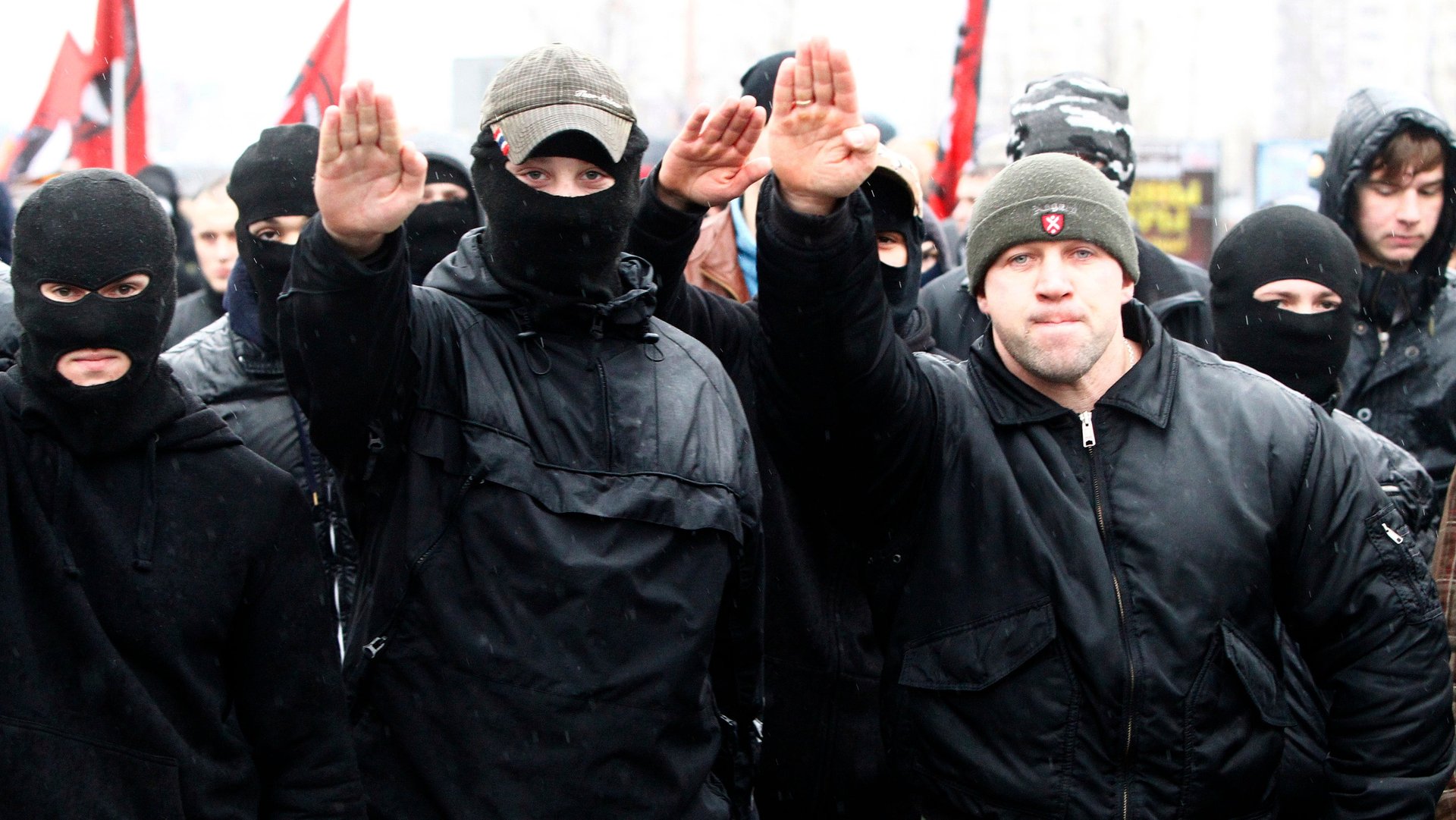
For America’s white nationalists, there is only one nation—and one leader—worth emulating. And it has nothing to do with lederhosen or Wagner.

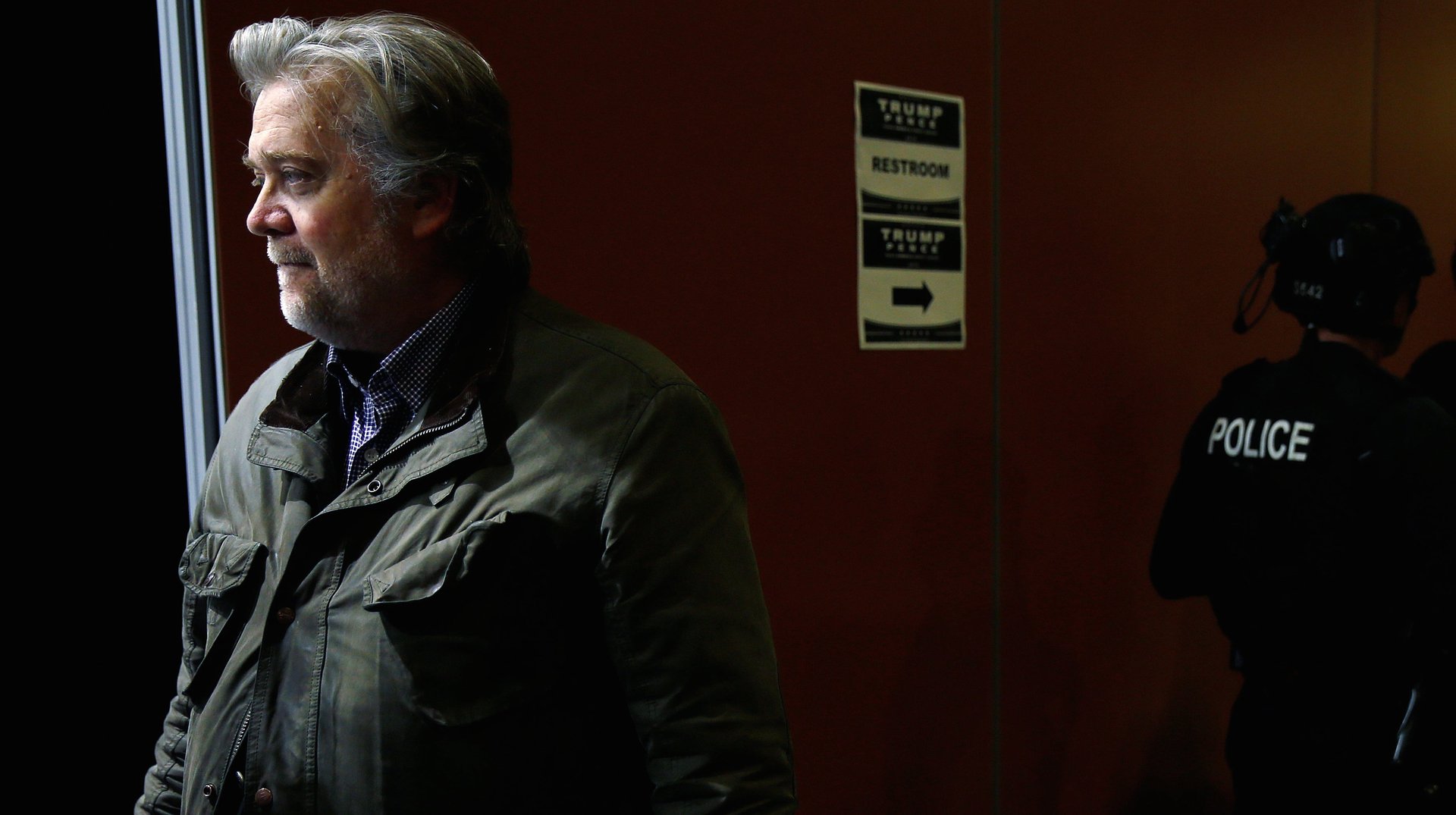
In just over two months’ time, US president-elect Donald Trump will settle into the Oval Office, bringing with him a cadre of advisors so far rumored to include neo-conservatives, former lobbyists, and outspoken conspiracy theorists. Just down the hall will sit the man who, perhaps more than anyone else, helped steer Trump toward the White House: Steve Bannon, erstwhile executive chairman of the conservative news site Breitbart and Trump campaign CEO, tapped earlier this week as Trump’s chief strategist.

As the presidential vote nears, concerns about Election Day violence—a phenomenon the US hasn’t experienced in decades—grow commensurately. With Donald Trump exhorting his followers to police ballot boxes, and with the Republican nominee’s claims of potential “rigging” drowning his policy recommendations, the likelihood of a peaceful Nov. 8 is fading alongside the democratic norms Trump has been undermining over the past few months.

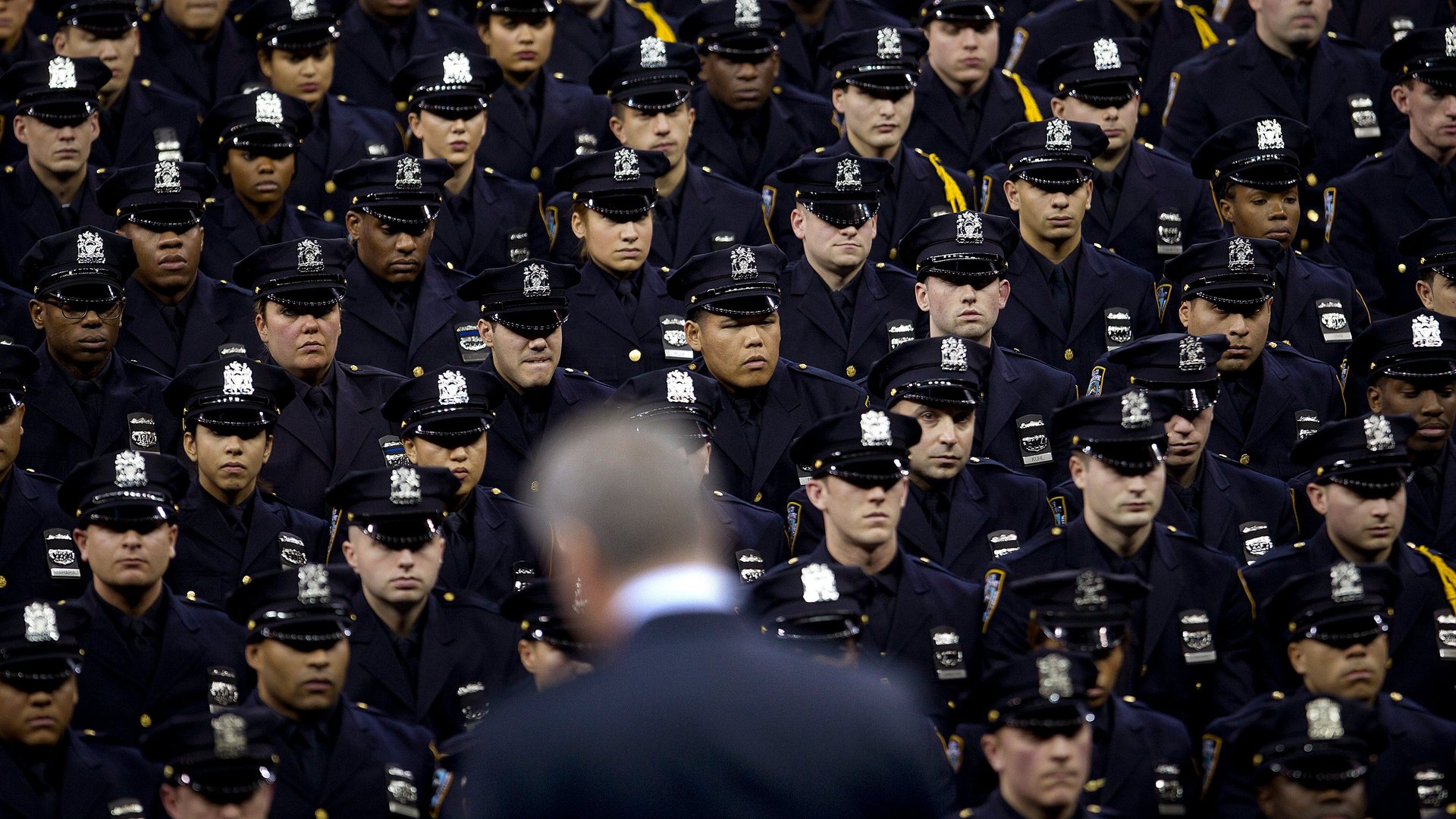
After the events in Dallas and Baton Rouge over the past few weeks, some people have become convinced that an unadulterated aggression has been unleashed on law enforcement officers in the US. Outlets such as conservative news website Breitbart, as well as some of the far-right’s favorite demagogues, have declared that there is a “war on cops.” This conversation has also dominated much of the rhetoric throughout the Republican National Convention this week. Unsurprisingly, those speechifying on the need to protect law enforcement officers often place the blame squarely on the shoulders of the White House.

The barbaric June 12 attack on a gay club in Orlando represents both the deadliest mass shooting in modern American history and the largest terrorist attack on American soil since 9/11. As it stands, the assault is also the most significant hate crime in contemporary American history.