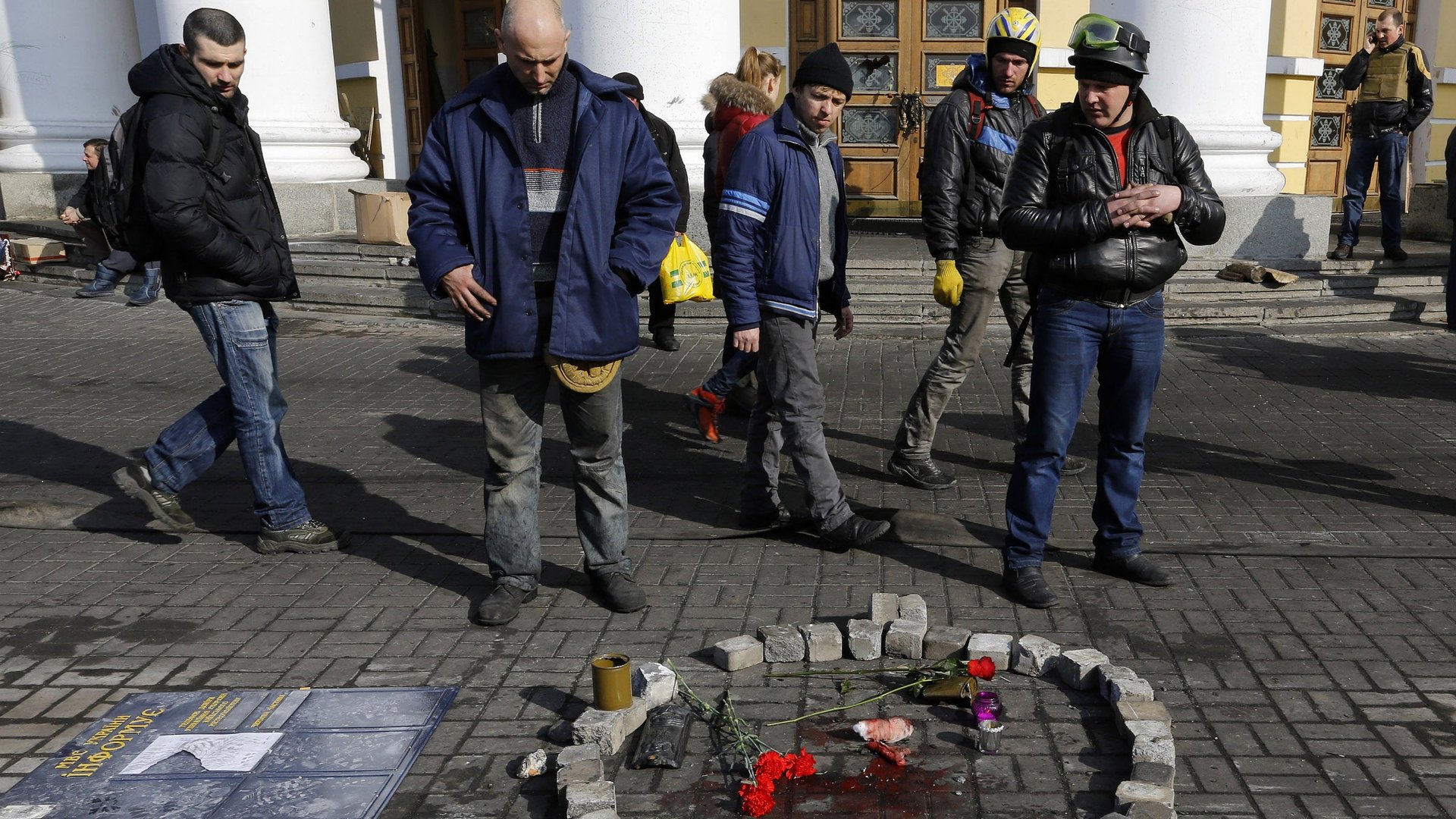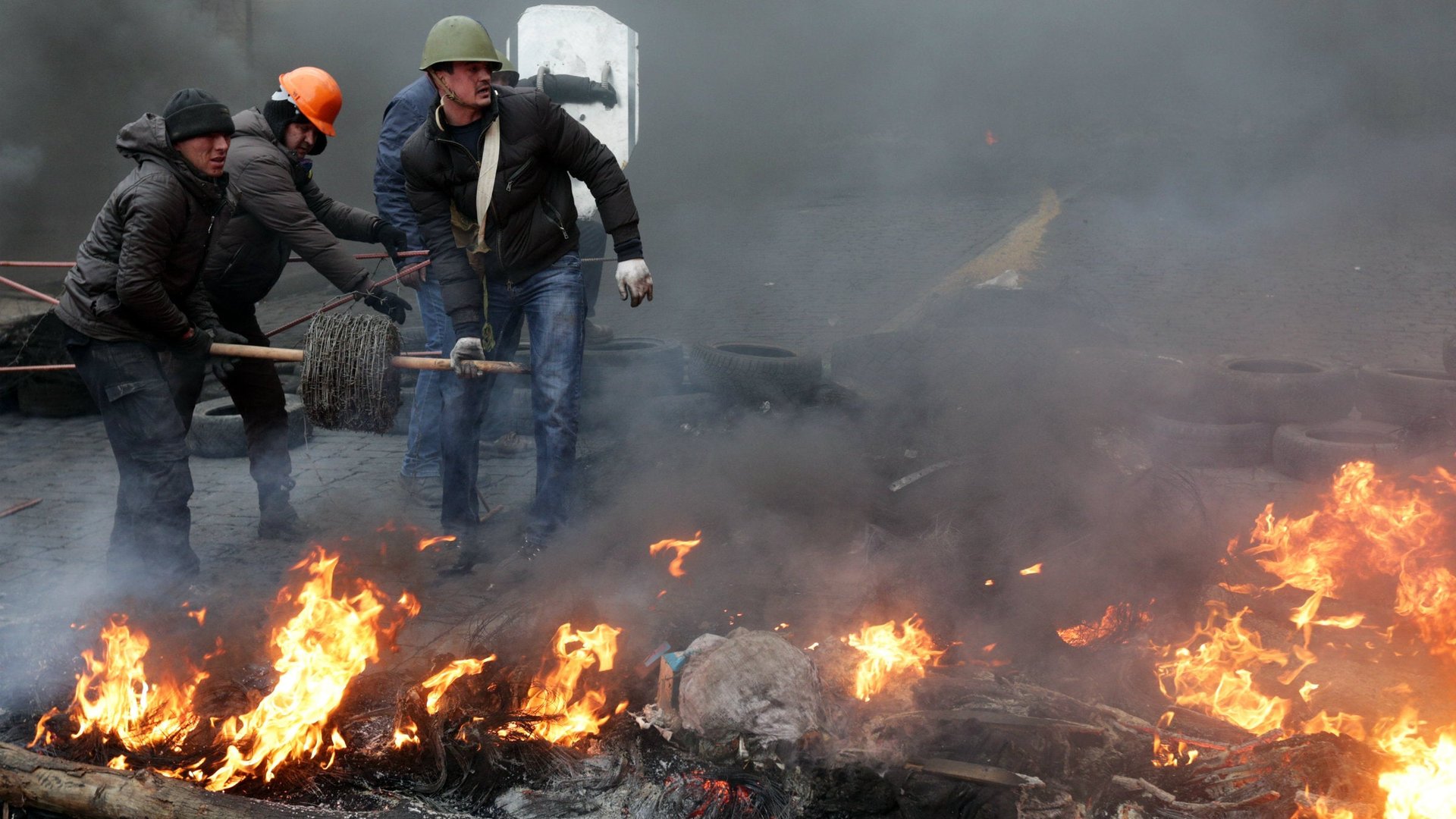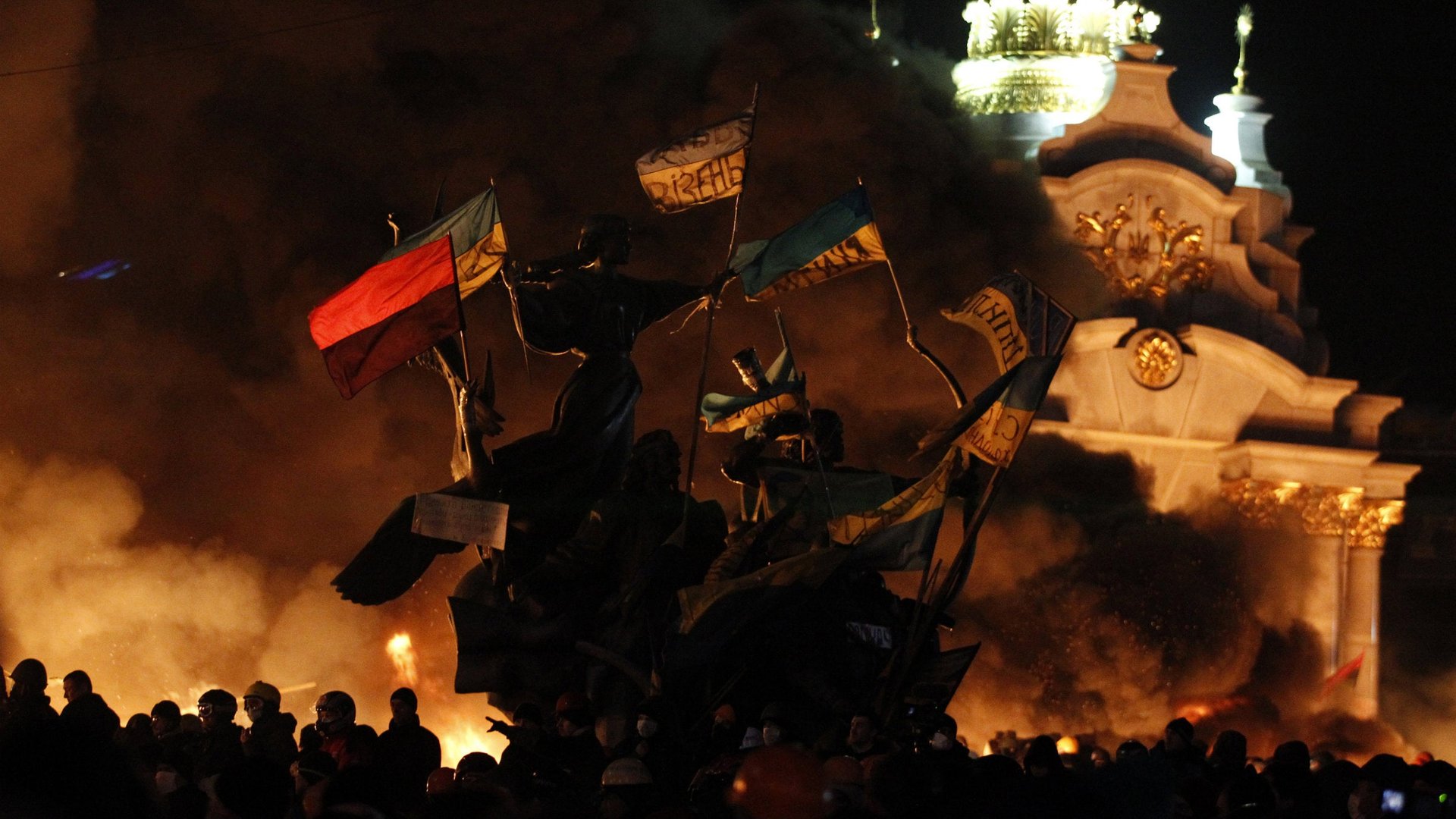
Reportedly blocked trying to fly to Moscow, Viktor Yanukovych is finished as Ukrainian president. After three months of protests, the final turning point leading to his demise appears to have been a grisly chunk of minutes at dawn on Feb. 20.

Reportedly blocked trying to fly to Moscow, Viktor Yanukovych is finished as Ukrainian president. After three months of protests, the final turning point leading to his demise appears to have been a grisly chunk of minutes at dawn on Feb. 20.

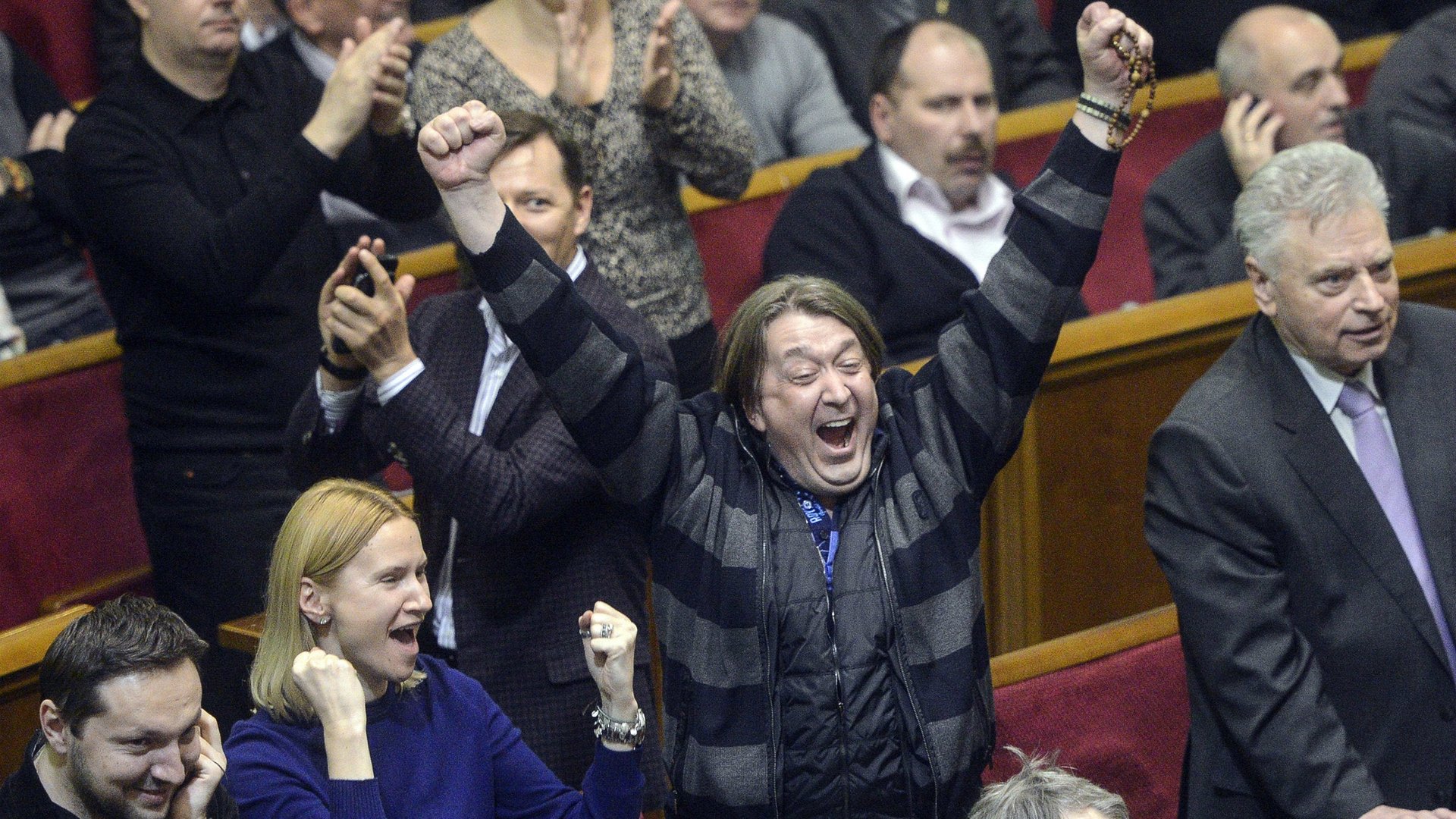
Ukrainian President Viktor Yanukovych blinked today by agreeing to early elections. The parliament followed up by diluting the president’s powers. The question now is how the street will react.

With a tentative agreement for new Ukraine elections, the West has a $19-billion question: If it is serious about pulling the country into a non-Russian trade and political relationship, that is the minimum sum the US and Europe may have to offer as an economic lifeline.

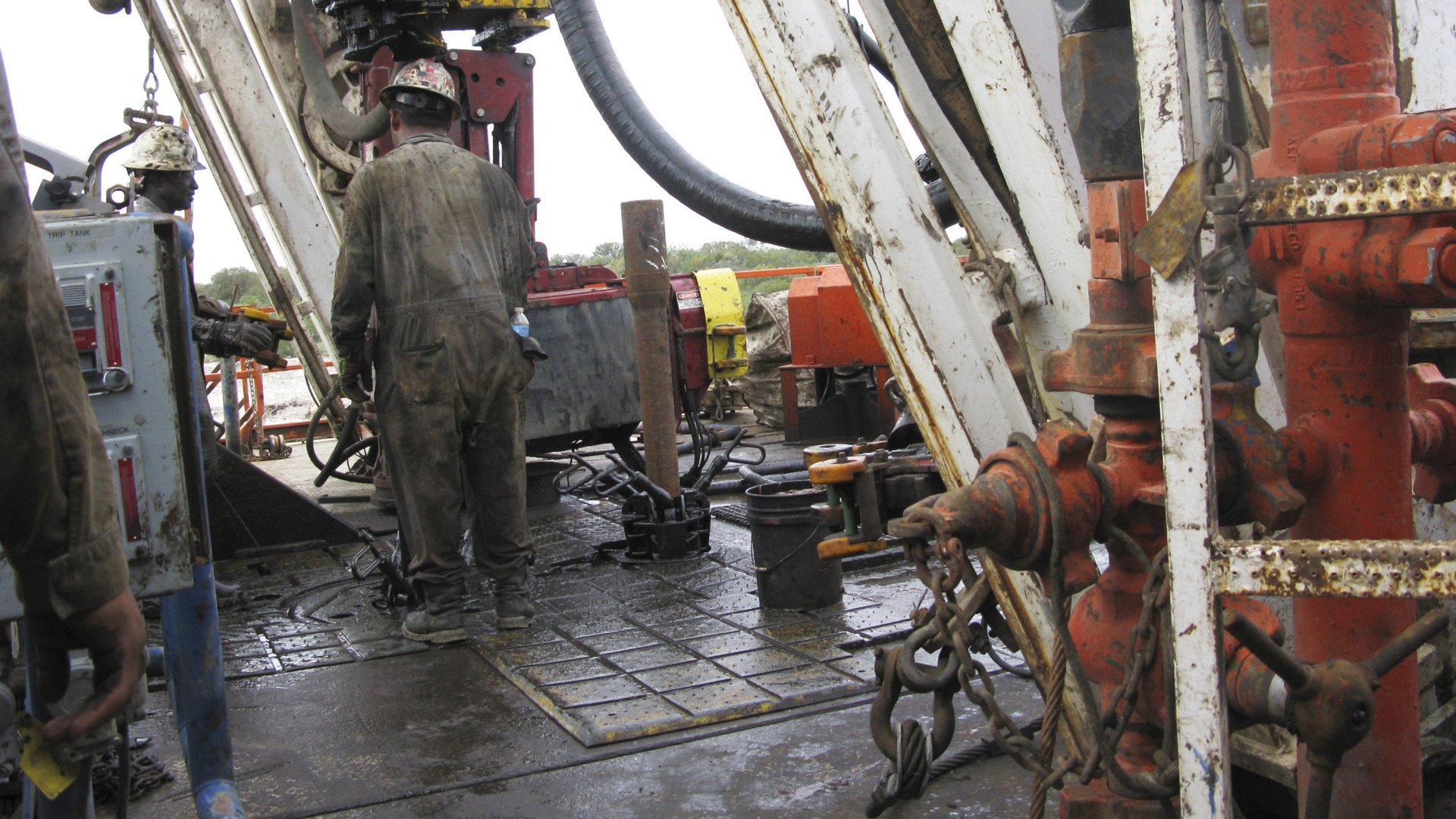
MEXICO CITY—If all goes well, drillers responsible for a shale-oil bonanza in Texas will soon cross the southern US border and extend the hydraulic fracturing boom to Mexico. But first the Mexican government, foreign oil companies or some combination of the two will have to neutralize some of the most savage gangsters in the world.

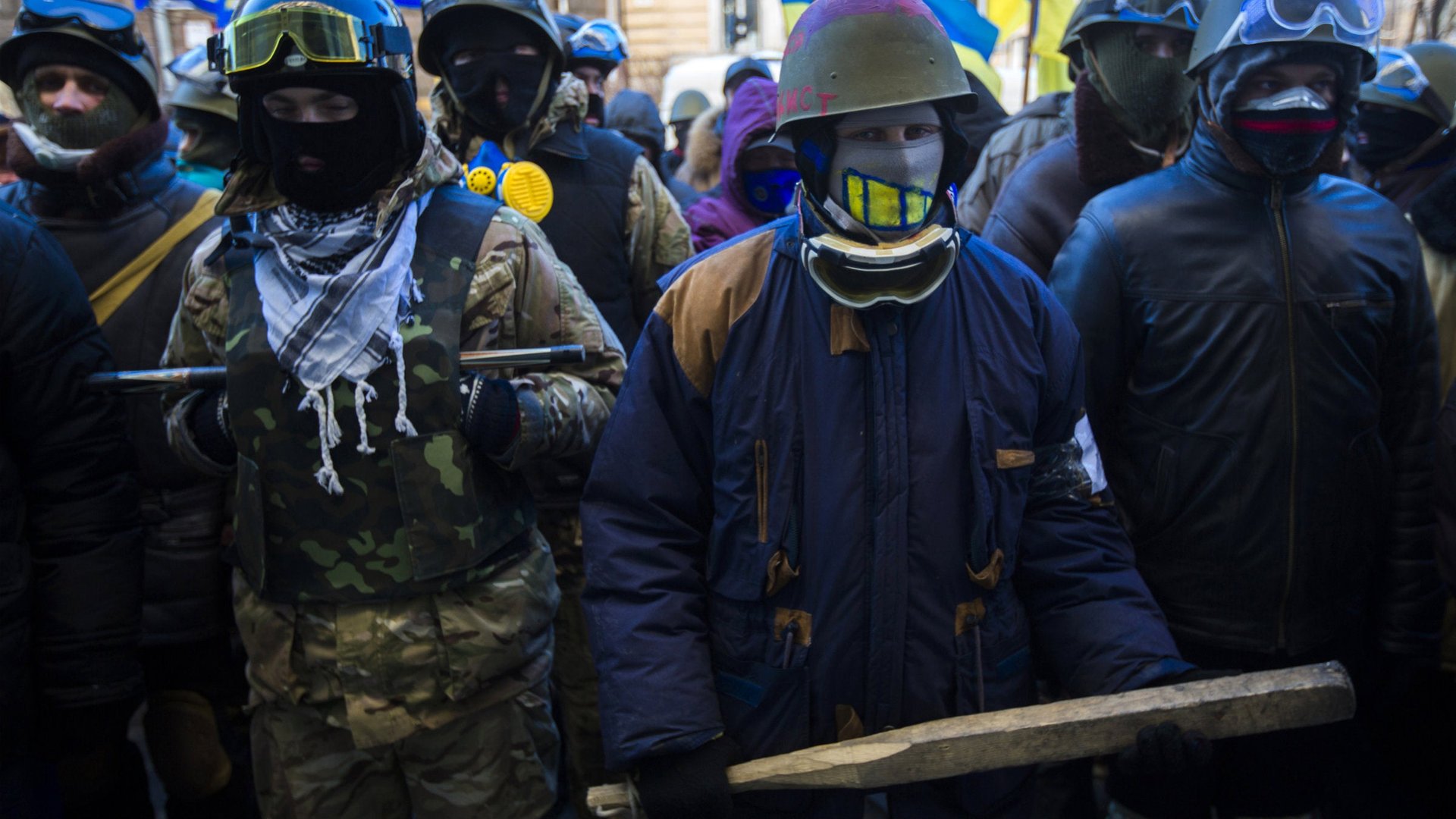
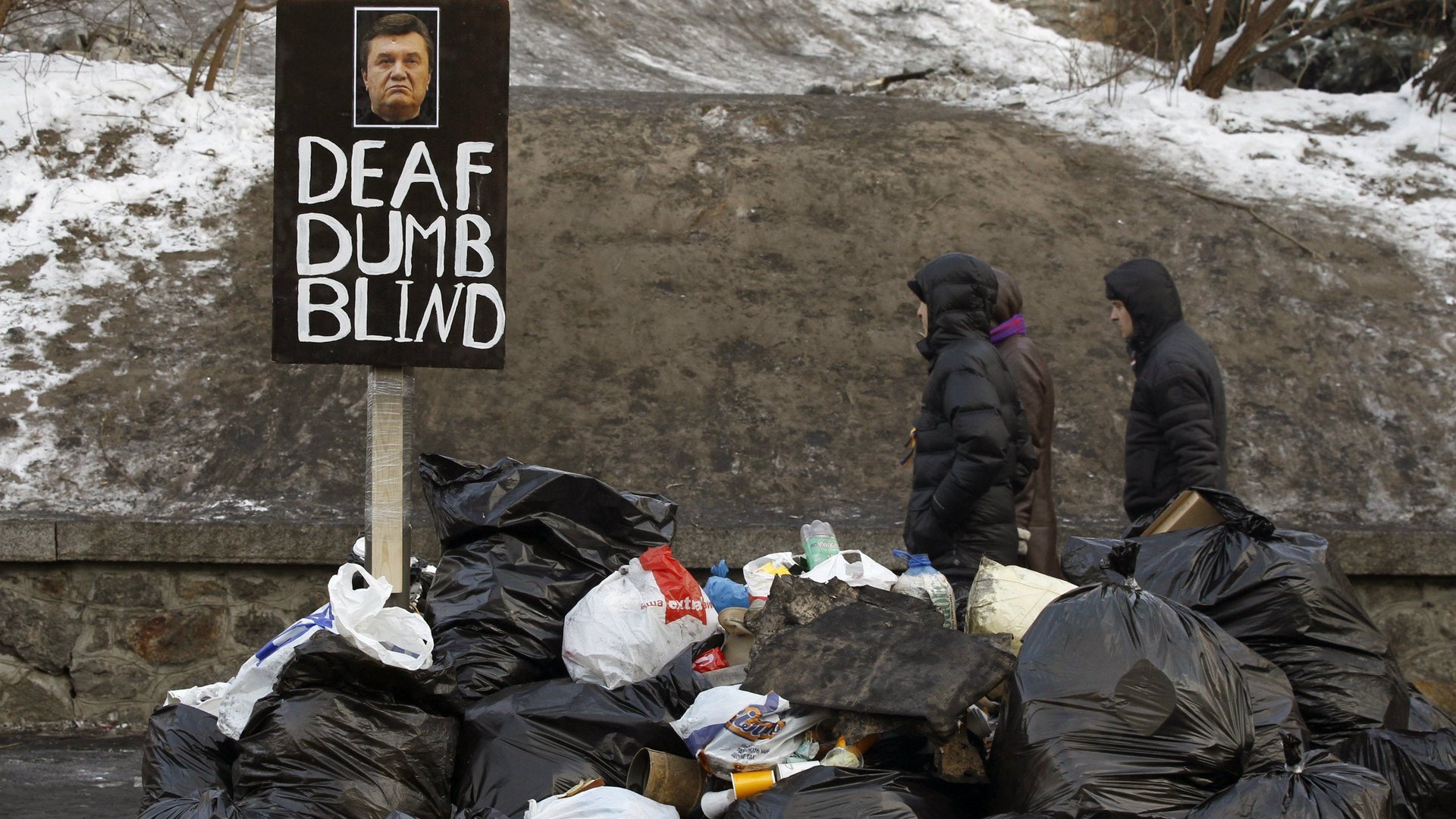
In a ferocious repeat of the Soviet past, Ukrainian President Viktor Yanukovych is conducting one of the region’s deadliest political crackdowns of the last two decades. Whatever happens next—if he manages to serve out his last year in office, is ousted, or cuts a deal to stay on in a lesser capacity—he has joined the short list of the former Soviet Union’s most brutal leaders.

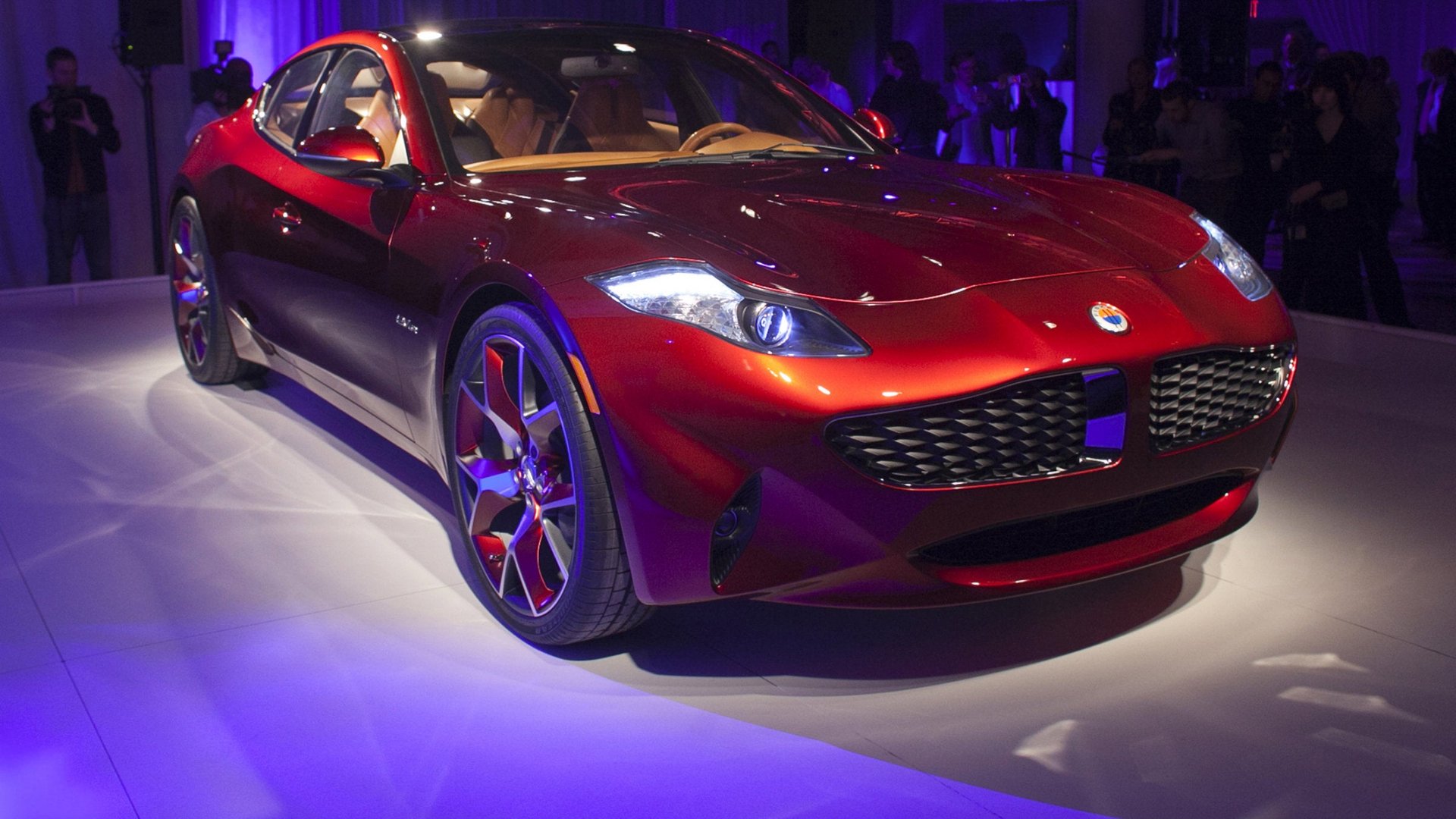
A Delaware judge will decide today whether to accept Wanxiang Group’s outsized $149 million bid for bankrupt electric-car startup Fisker Automotive. The chances are that Judge Kevin Gross will OK the acquisition, which far surpasses the original bid, and will thus create fascinating competition for style- and image-conscious Tesla Motors.

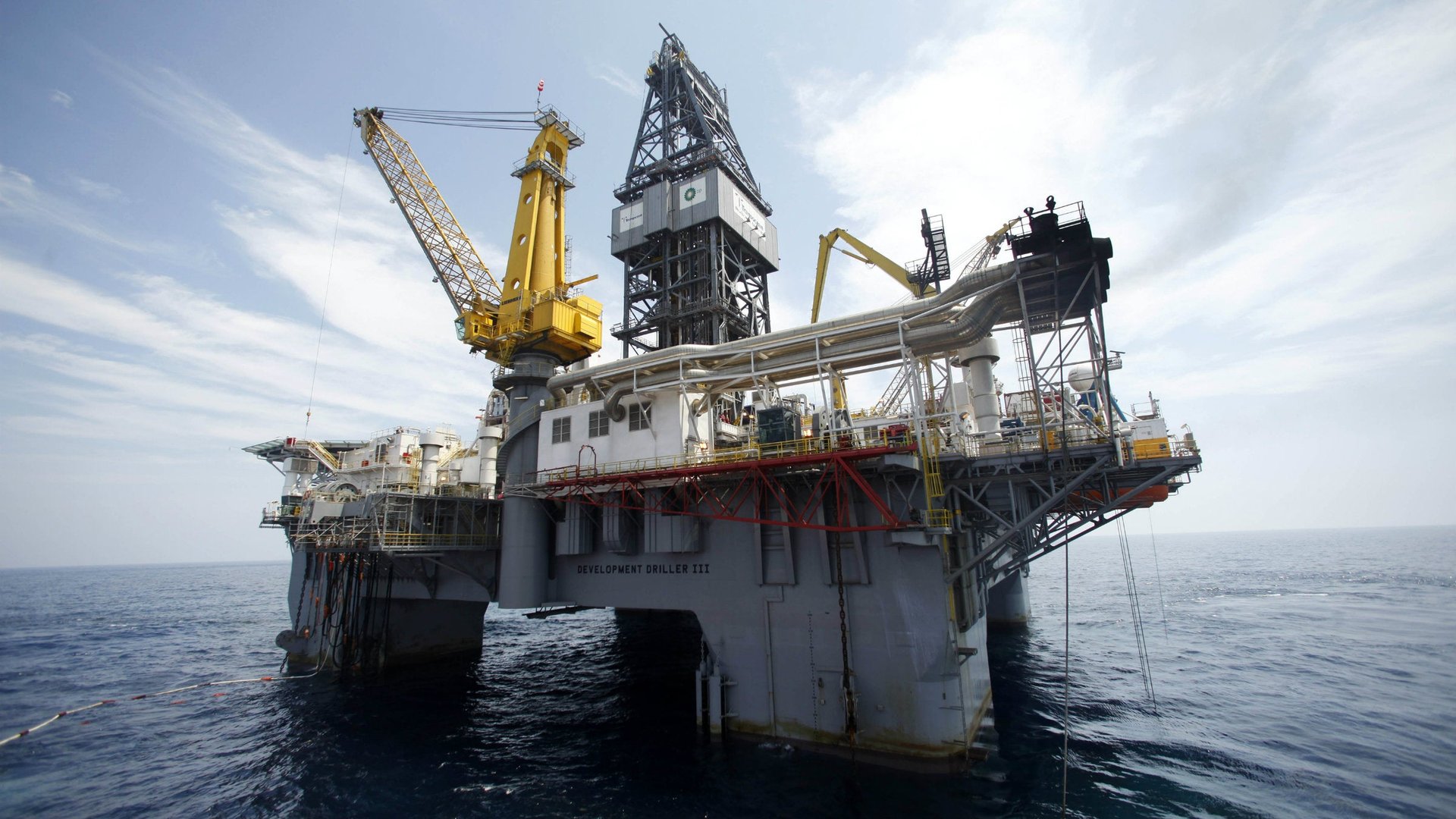
An unmistakable message was hidden in the flurry of downbeat oil company earnings reports released in the last week or so: A major technological advance is on its way in old energy, new energy, and perhaps both. Not necessarily soon, but unquestionably coming.

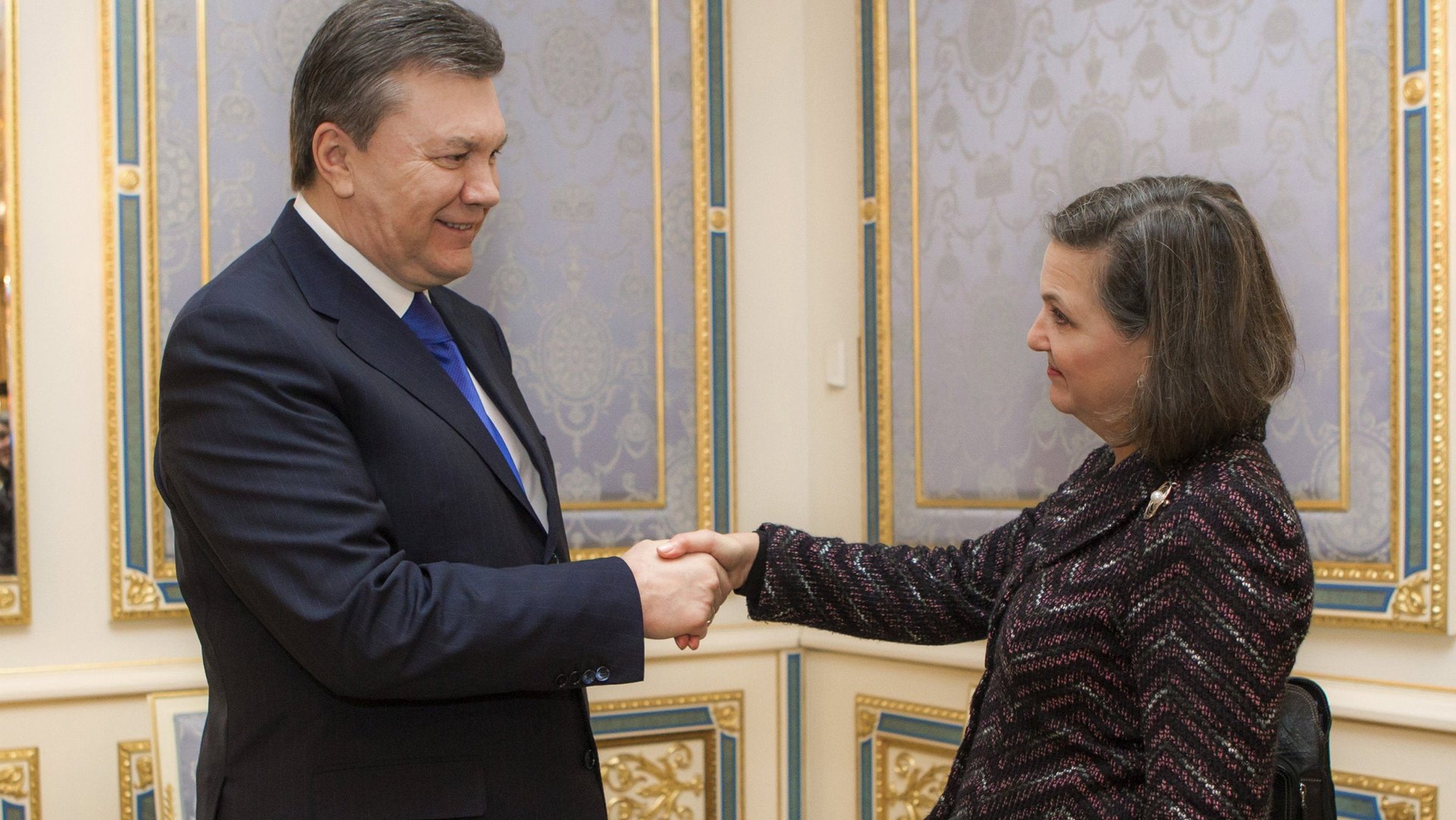
Just as a senior US diplomat arrived in Ukraine today in an effort to quell its crisis, a leaked tape seems to show her in a loose, profanity-laced strategy session aimed at confounding Russia and empowering a favored opposition figure.

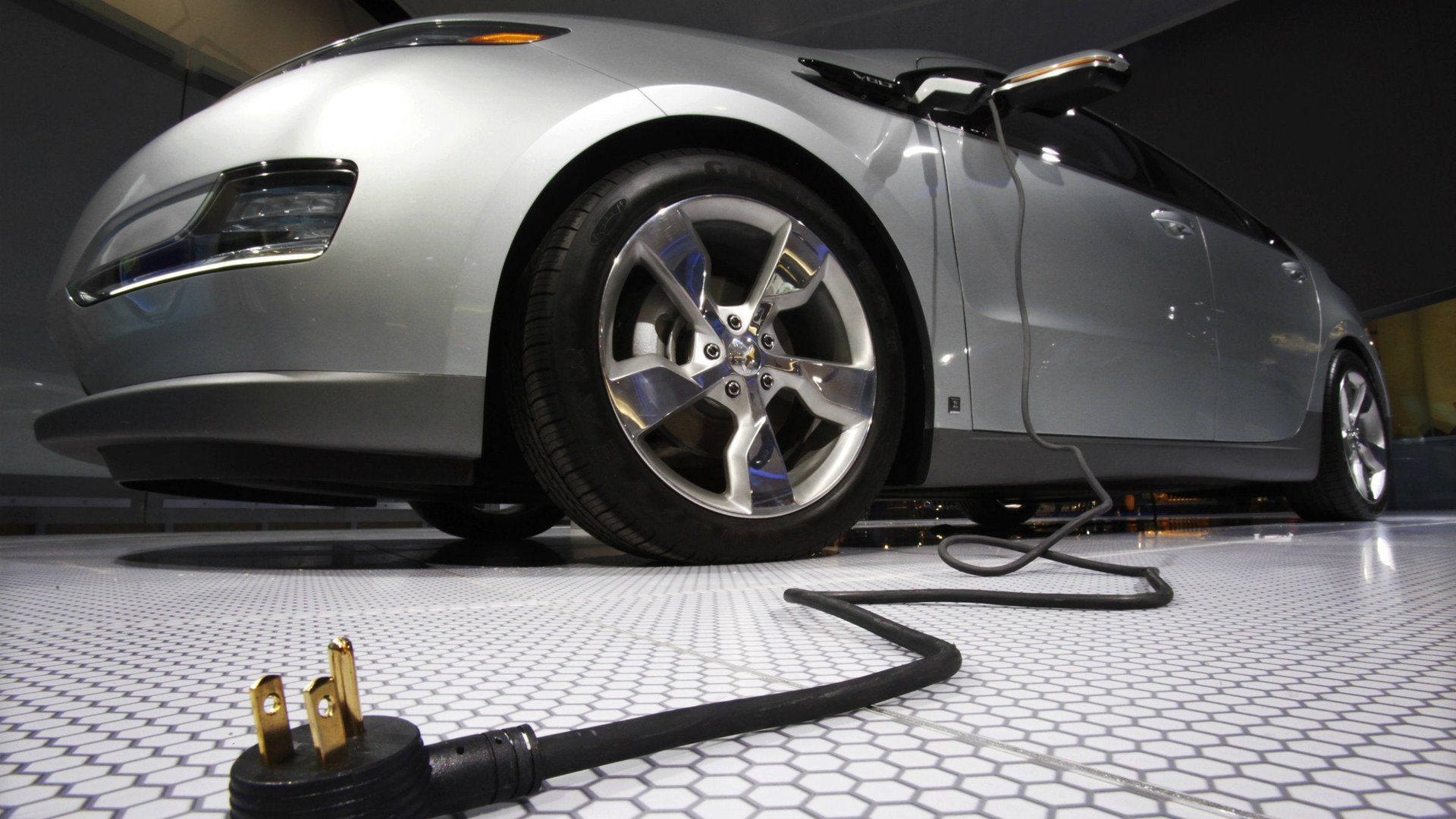
This winter’s horrendous cold is probably to blame for depressed US car sales last month, including plug-in electric cars. When it lifts, forecasters think motorists will end up pushing sales of gasoline-driven models to levels not seen since before the financial crisis. But don’t look for electrics to take off along with them—with an exception or two, they still suffer from relatively high sticker prices and uncompetitive performance.

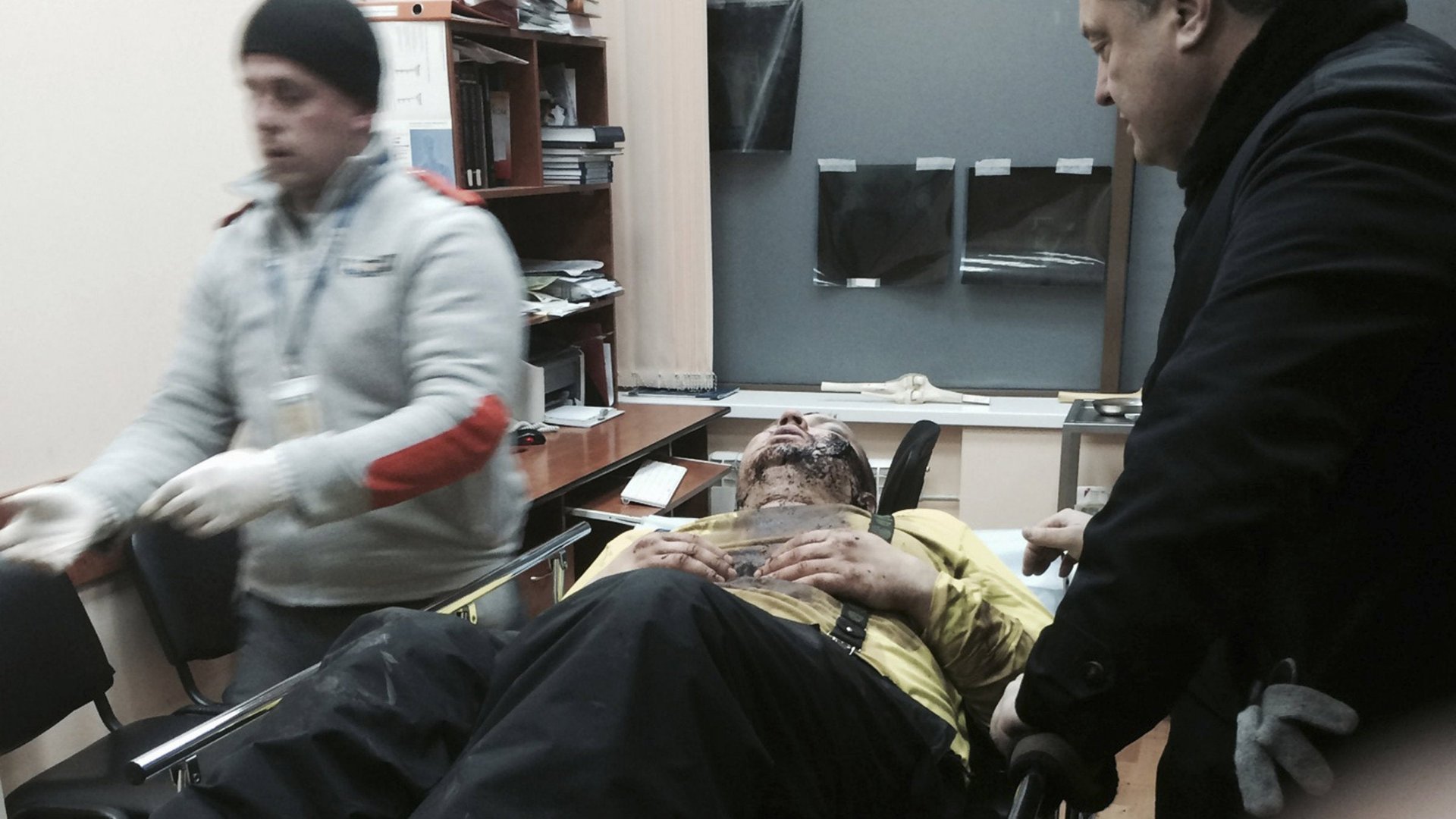
Much international attention has focused on a brutal attack against a Ukraine opposition figure named Dmytro Bulatov, who surfaced last week after having vanished for eight days. Part of an ear was cut off and his hands had been perforated in what he called a crucifiction. Bulatov had been a leading figure in protests that have rocked Ukraine, demanding the resignation of president Viktor Yanukovych.

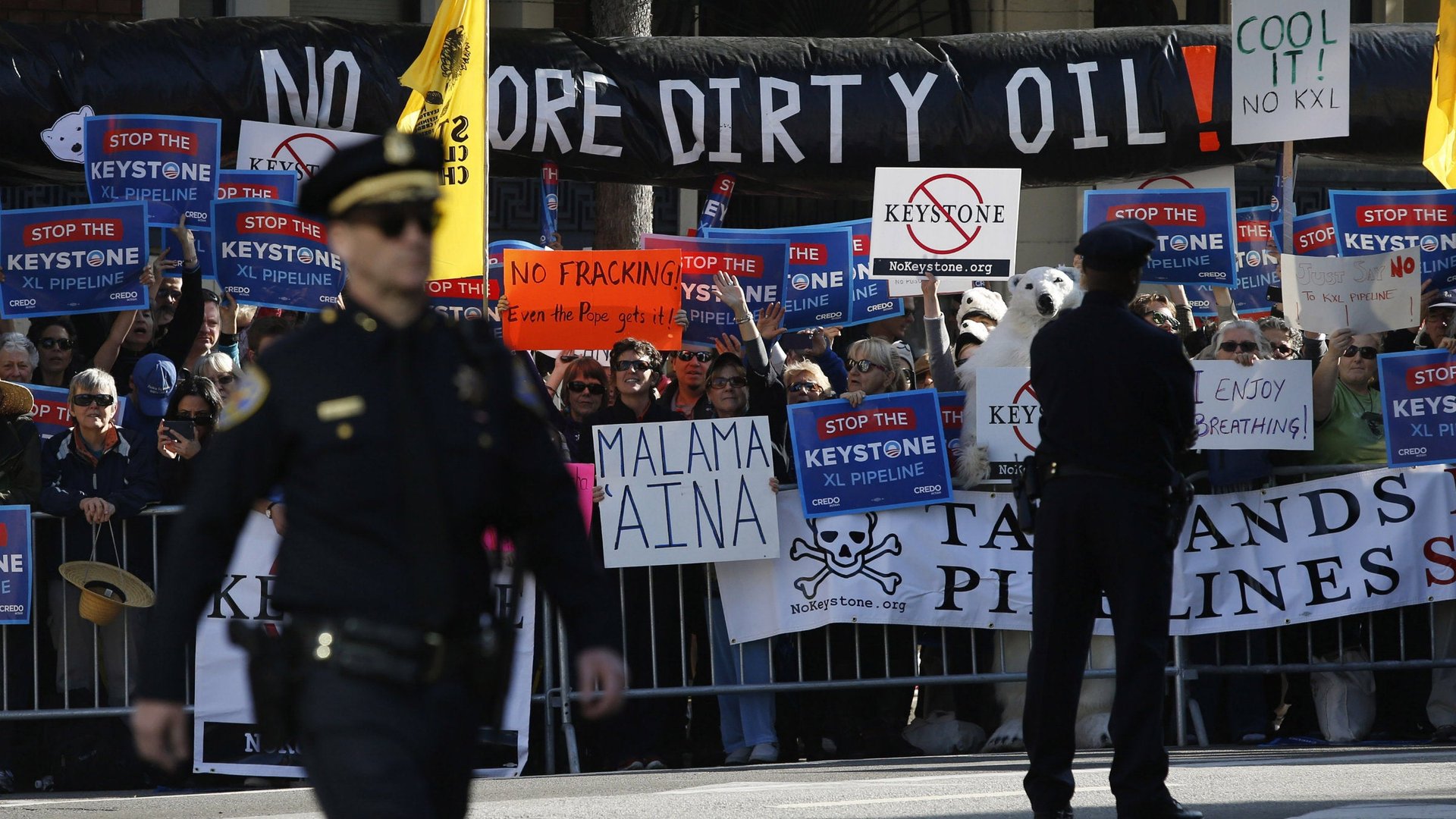
A US State Department review today rebuffed key objections to a huge oil pipeline from Canada that has been a loci for American protestors who starkly equate the project with Armageddon.

This article has been updated.

The market has finally decided that Ukraine is at a crisis point. This morning, the yield on Ukrainian dollar bonds due this June rose to 12.85%, the highest since president Viktor Yanukovych last month ditched the European Union and agreed to a new trade alliance with Russia.

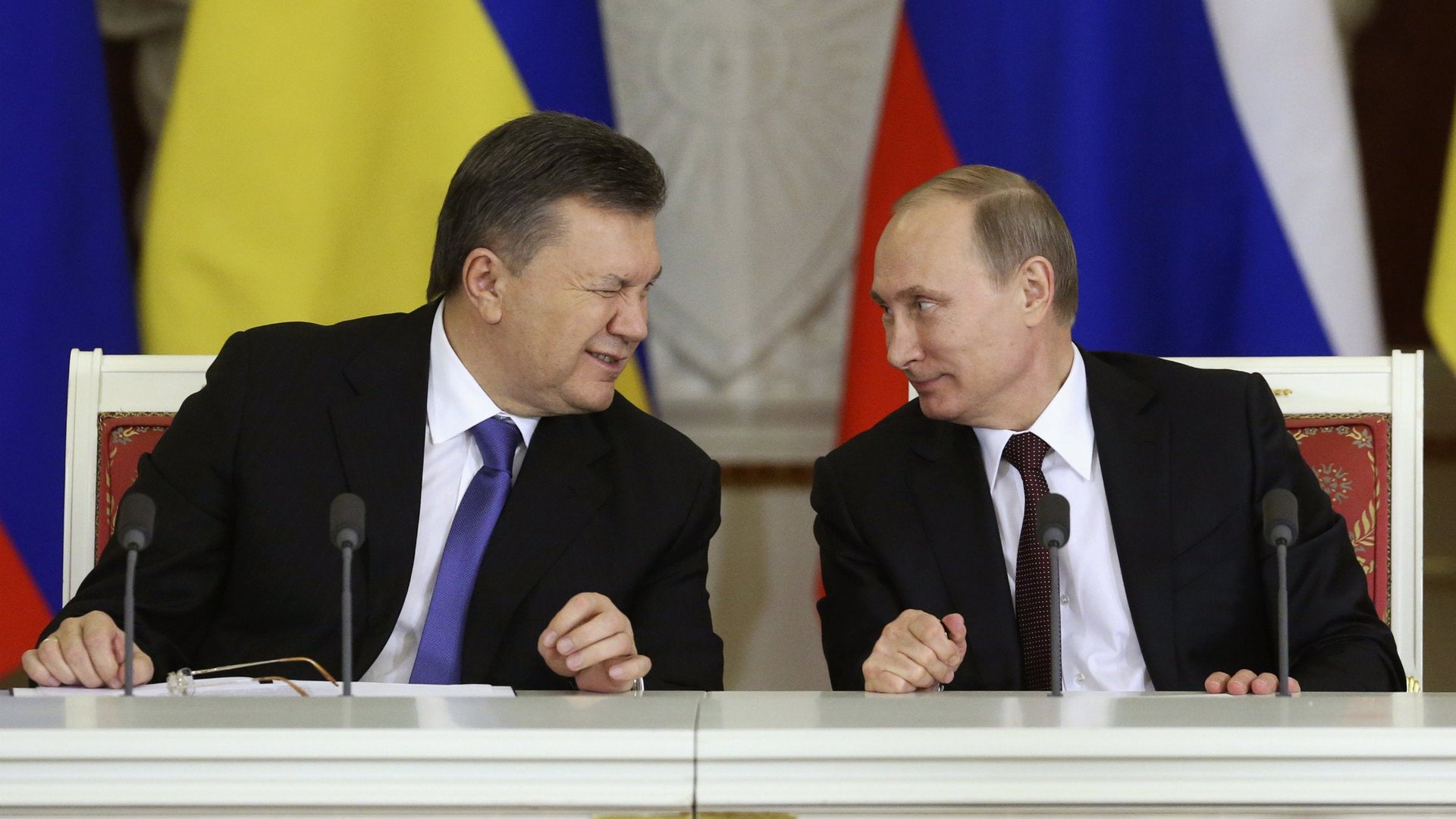
Russian president Vladimir Putin is treating the uprising in neighboring Ukraine with unusual restraint. The same man who in 2008 dispatched tanks and annexed territory to bring Georgia to heel now says that if an independent-minded Ukrainian government should take power, it can expect a continued friendly economic bailout (as long as it pays its bills, naturally).

Ukraine’s parliament has repealed controversial legislation that all but outlawed public dissent, and Prime Minister Mykola Azarov has offered his resignation. But the concessions seem unlikely to satisfy the emboldened opposition, and the indications are that president Viktor Yanukovych’s days in office are numbered. If he is forced out—either by resigning or in snap elections—the likely outcomes include freedom for his imprisoned nemesis Yulia Tymoshenko, closer relations with Europe and a breach with Russian president Vladimir Putin.

A popular new narrative has it that a pillar of the American rite-of-passage—the urge to drive—is passé. According to the theory of “peak travel,” teens of legal driving age are no longer rushing to obtain licenses. Unlike prior generations, they’re not hurrying to buy an automobile. And when they finally do make the big purchase, they are driving much less.

Will Iran and the broader world strike a long-term deal this year? Will Iraqis and Syrians tamp down their respective civil wars, and will Iran help to get them there? What about China and Japan? Will they go to war over the Senkaku Islands?

This story has been updated

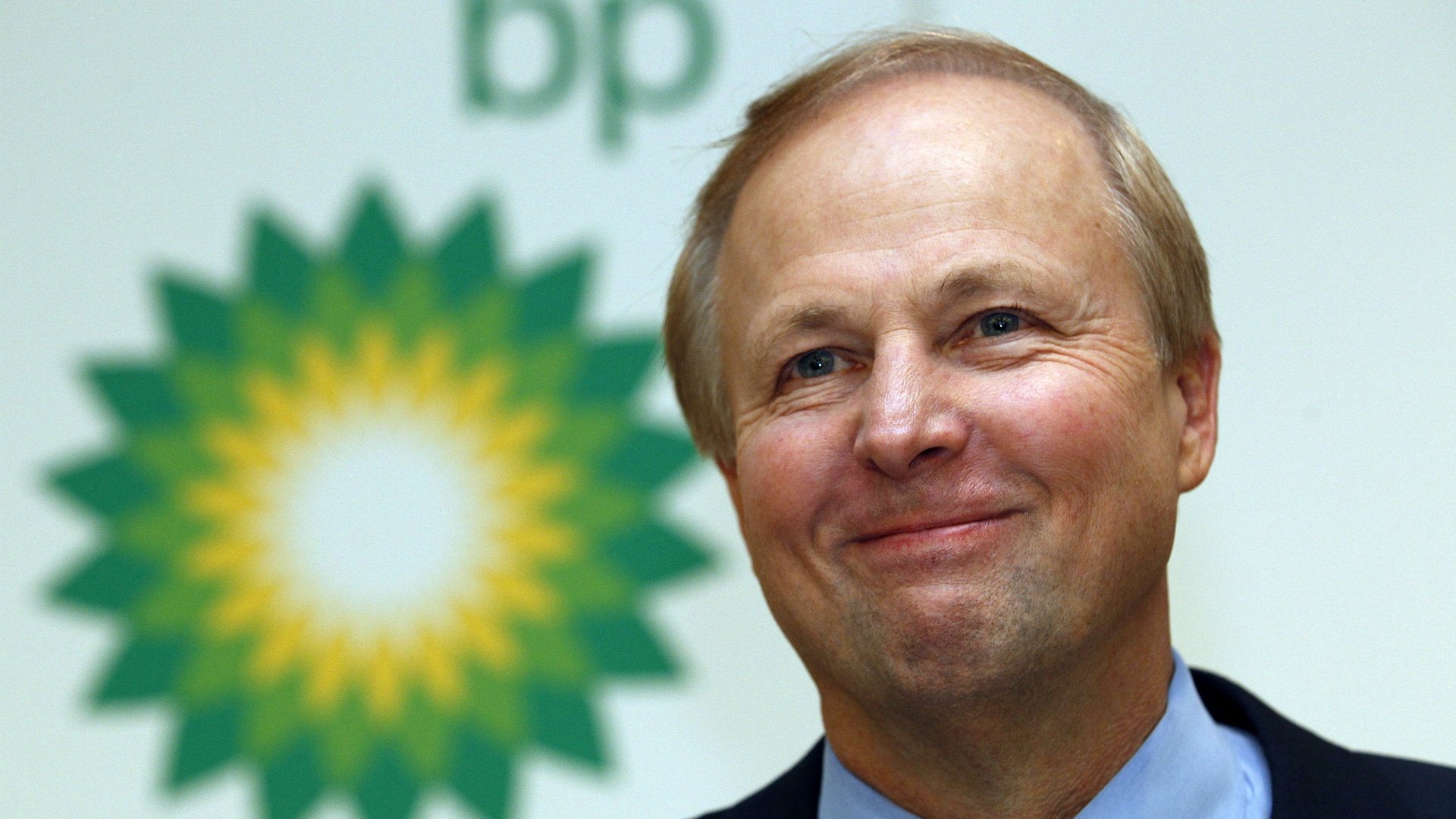
Bob Dudley, now CEO of BP, believed he was being poisoned during his stint working in Russia, and fled when he heard he was under imminent threat of arrest. This is according to a very good profile (paywall) in the latest issue of the New Yorker of Len Blavatnik, a billionaire oligarch who was a partner in a BP oil venture there.

The Iraqi government has raised the stakes yet again in its brinksmanship with Kurdistan—unable so far to halt the Kurds’s headlong push as an independent oil exporter, Baghdad has prepared a 2014 budget that entirely cuts off the northern region.

Moscow privately denies a report that it is conducting barter negotiations that would increase Iranian crude oil exports by up to 50%, a source privy to US State Department communications has told Quartz. But if Russian president Vladimir Putin has in fact sanctioned such discussions, it is because of the attractions of a sweet deal and a chance yet again to flaunt his foreign policy independence.

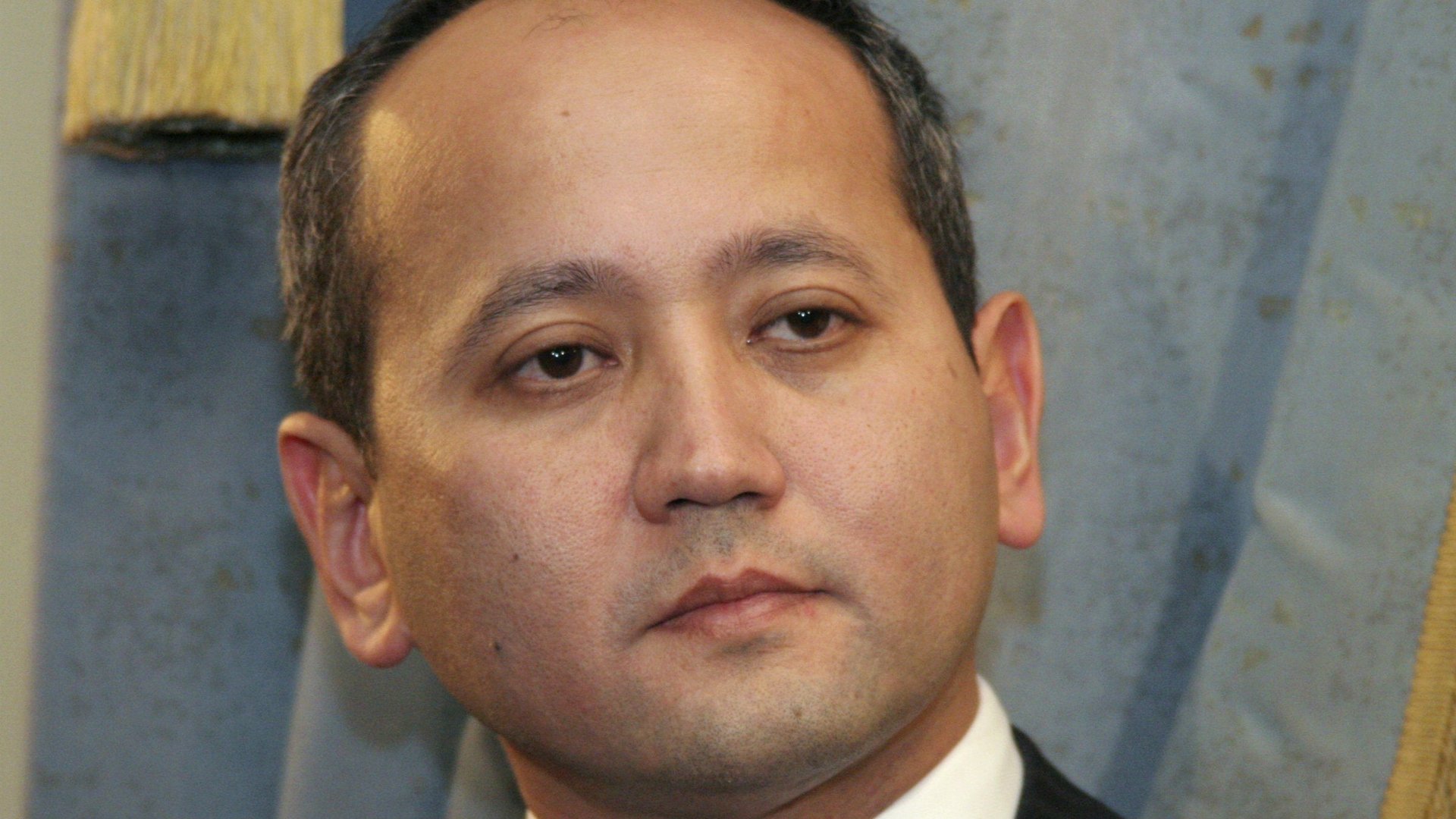
Four years ago, Kazakhstan took control of the private BTA Bank, sending its sacked chairman fleeing to London and unraveling what was allegedly one of Europe’s biggest financial frauds. Along the way, private investigators unearthed some 1,000 shell companies allegedly used by Mukhtar Ablyazov to hide $6 billion in stolen bank assets and cash. Ablyazov himself was eventually tracked down on the French Riviera, spotted through a villa window, clad only in underwear, arranging lilies on a bed while awaiting his mistress. Days later, French commandos disguised as gardeners arrested him.

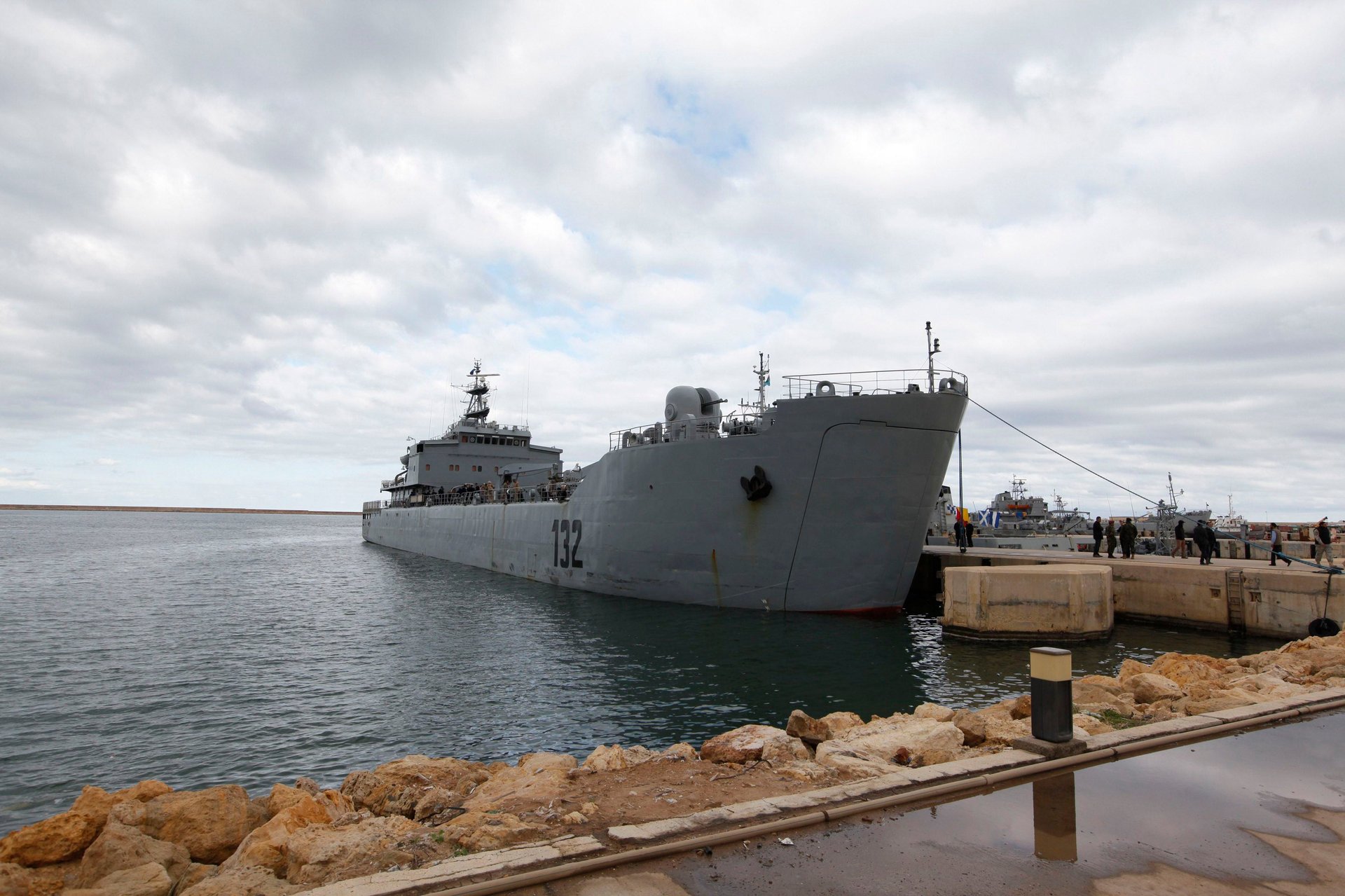
There is a breakout of new rebel petro-states, but the mother countries are fighting back: Baghdad says it will sue anyone who buys unauthorized oil from Iraqi Kurdistan, and Libya has threatened to sink any tanker attempting to load crude from its insurgent east.

The most prominent oil bull on Wall Street says the US government seriously underestimates the continuing rise in American oil production. Citi’s Edward Morse, who defied the tide to correctly call the 2008-2009 oil price crash, says that the US Energy Information Administration (EIA)—while boosting its previous projection for US oil production—is still far off the mark.