

Business News
An epidemic in bats threatens billions of dollars in crops—so why is it being ignored?This article has been corrected.
Updated July 21, 20225 min read
This article has been corrected.

What to watch for today
What to watch for today
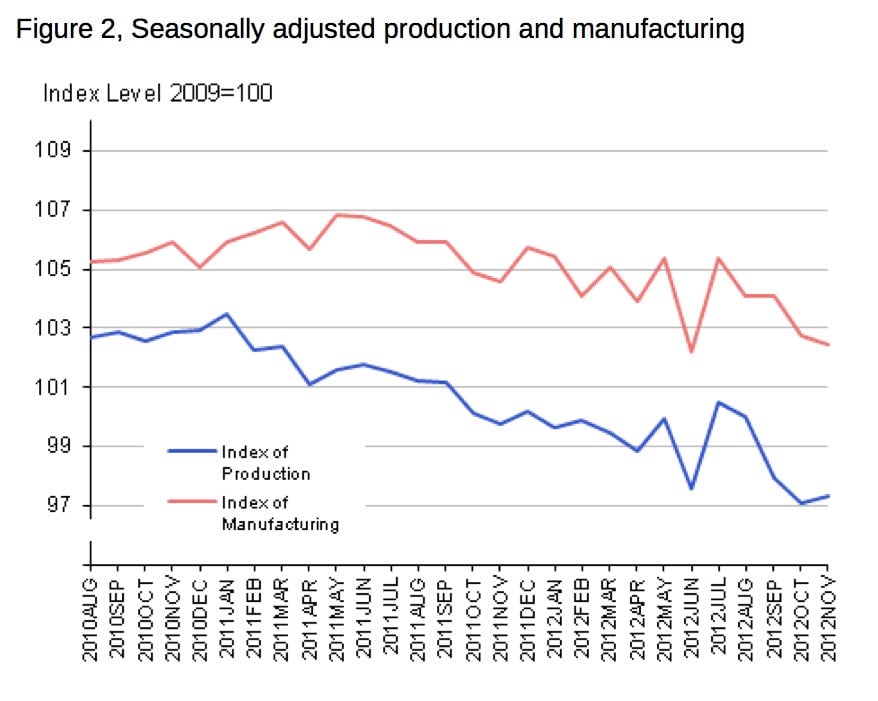
Surprisingly bad manufacturing and production numbers out today in the UK are sparking fears of a triple-dip recession. Manufacturing output fell 0.3% in November from the previous month, according to figures (pdf) from the Office for National Statistics, while industrial production rose 0.3% from October, which was below forecasts. Experts had called for a better month given North Sea oil and gas production had resumed following a longer-than-expected maintenance period. The construction sector also disappointed with output contracting by 9.8% from November 2011.

Samin Tan, chairman of Bumi, one of the world’s largest mining companies, has fallen for one of the world’s oldest tricks in the book, reports the London Times (paywall). A thief compliments your taste in suits while stealing your wallet. In this case, it was Tan’s vanity that was flattered and confidential corporate documents that were snatched.

The European Central Bank’s (ECB) decision today to leave its benchmark rate unchanged at 0.75% was widely expected, but it nonetheless sent soothing signals to the frayed nerves of the euro zone. As if on cue, yields on Spain’s 10-year government bond fell to 4.94% on Thursday, the lowest level in 10 months, suggesting renewed confidence in its bond market. Meanwhile, the Bank of England also left its key lending rate unchanged at a record low of 0.5%.
And the winner is…
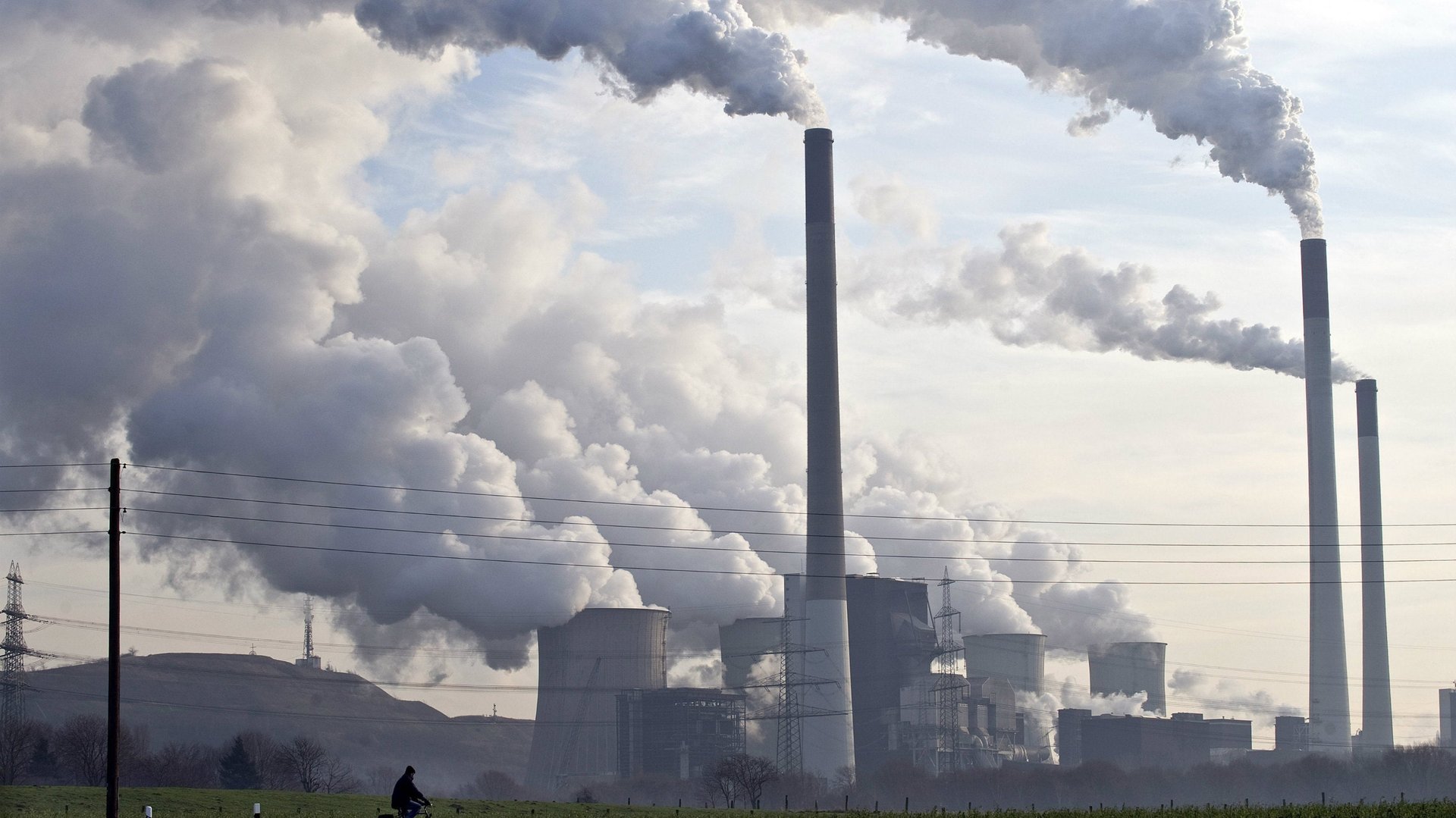
A few years ago, carbon capture and storage (CCS) technology was seen as the best way to clean up coal and cut carbon emissions. And Europe was seen as the expected leader in the field. But instead, reports the science journal Nature, Europe has fallen behind North America in the race to create systems that separate carbon dioxide from exhaust gases.

Though still reeling from a financial crisis and the economic fallout, the European Union’s high-tech manufacturing increased 26% from the beginning of 2005 through to the third quarter of 2012, according to Eurostat’s index of indicators (pdf), while industrial production as a whole only just returned to 2005 levels. Though many EU countries saw average annual growth rates for high-tech industrial production soar during that period—for example, Estonia’s and Austria’s grew 35.1% and 14.5%, respectively—EU stragglers like Greece, Italy and Portugal all posted negative growth.
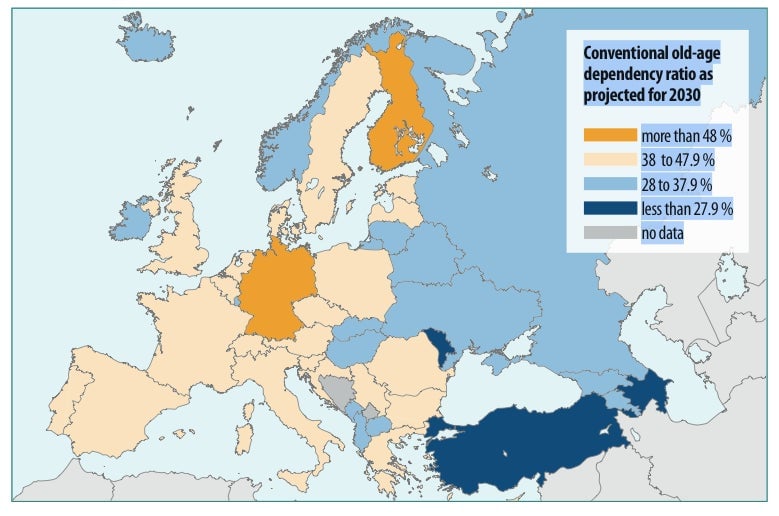
Fertility rates have been falling across Europe for decades and economists are worried, as political leaders should be, about who exactly will support Europe’s aging populations. Countries in eastern and southern Europe are of particular concern, suggest recent data from the Vienna Institute of Demography, with troubling combinations of aging populations, increasing migration, and far too few babies.

Bad news on the employment front again in Europe, as joblessness keeps creeping up. November numbers out today from Eurostat show unemployment of 10.7% for the 27 European Union countries, and 11.8% for the 17 euro zone countries—up from 11.7 in October. The EU figure remained stable from October. The statistics show more than 26 million people out of work in Europe, with some 154,000 people losing their jobs over the past month alone. The figures are more alarming when compared to the same period in 2011, when there was 10% unemployment across the EU, and 10.6% across the euro zone. Here are the country abbreviations for the chart above:

You might think it’s a club with dubious benefits and onerous duties nowadays, yet Latvian government officials remain gung-ho to be part of the euro zone. Next month the Baltic country of roughly 2.1 million people will ask the European Commission to start the membership process so that it can be the 18th nation to join the common currency bloc.

In a surprise move on Sunday, the Basel Committee on Banking Supervision unveiled relaxed rules on liquidity coverage ratios and the types of assets banks must hold as collateral, as well as extending the timeline for full implementation and enforcement. The changes should keep credit loose and limit bank exposure to sovereign debt, though questions remain on whether the new rules discourage the types of risky behavior that set off the global financial crisis in the first place.

The Spanish government has been quietly and aggressively draining its pension guarantee program to buy its own bonds (paywall), reports the Wall Street Journal, potentially putting future pension payouts at risk. The government has tapped the Social Security Reserve Fund so many times—€4 billion ($5.3 billion) to cover pensions last November and another €3 billion to pay for “unspecified treasury needs” in September, as examples—that government has had to raise the annual legal limit on emergency withdrawals. Currently, some 90% of the €65 billion fund has gone into risky Spanish debt, says the WSJ.

In an ongoing effort to crack down on tax evasion, the UK government today published a Flickr page of the “top tax cheats” of 2012. The profiles break down the crimes of 32 criminals that Her Majesty’s Revenue and Customs (HMRC) sentenced to a combined total of more than 150 years in prison last year in a demonstration of the government’s commitment to punishing tax evaders, said Exchequer Secretary to the Treasury David Gauke in a statement. ”We hope that publishing these pictures will help get across that it always makes sense to declare all your income, and tax dodgers are simply storing up trouble for the future,” he added.

The first people in America to say smoking was bad for your health were greeted with derision and called quacks. Even while studies emerged in the 1950s linking smoking to various ailments including lung cancer and heart disease, tobacco supporters (nearly half of Americans smoked back then) questioned whether anti-smoking campaigners detracted from more serious attempts to get at the real causes of these diseases. Robert Lustig, a pediatrician and author of a book out last week, Fat Chance, is sympathetic. He’s heard it all before.

Iraqi mobile phone operator Asiacell is seeking to raise some $1.3 billion on the Baghdad stock market in the first major IPO since the 2003 US-led invasion. Company and government leaders are championing what will be the nation’s biggest initial public equity offer ever, hoping to raise money, as well as energize the market, attract foreign funds, and shore up investor confidence after a decade of strife and instability.

On the afternoon of Dec. 21, a woman attempted to cash a check for €147,600 ($195,363) at a Greek bank. It could have been a very merry Christmas, but instead she and four others were arrested and implicated in a multi-million euro embezzlement scheme involving the Greek national tourism agency, reports the Wall Street Journal (paywall).
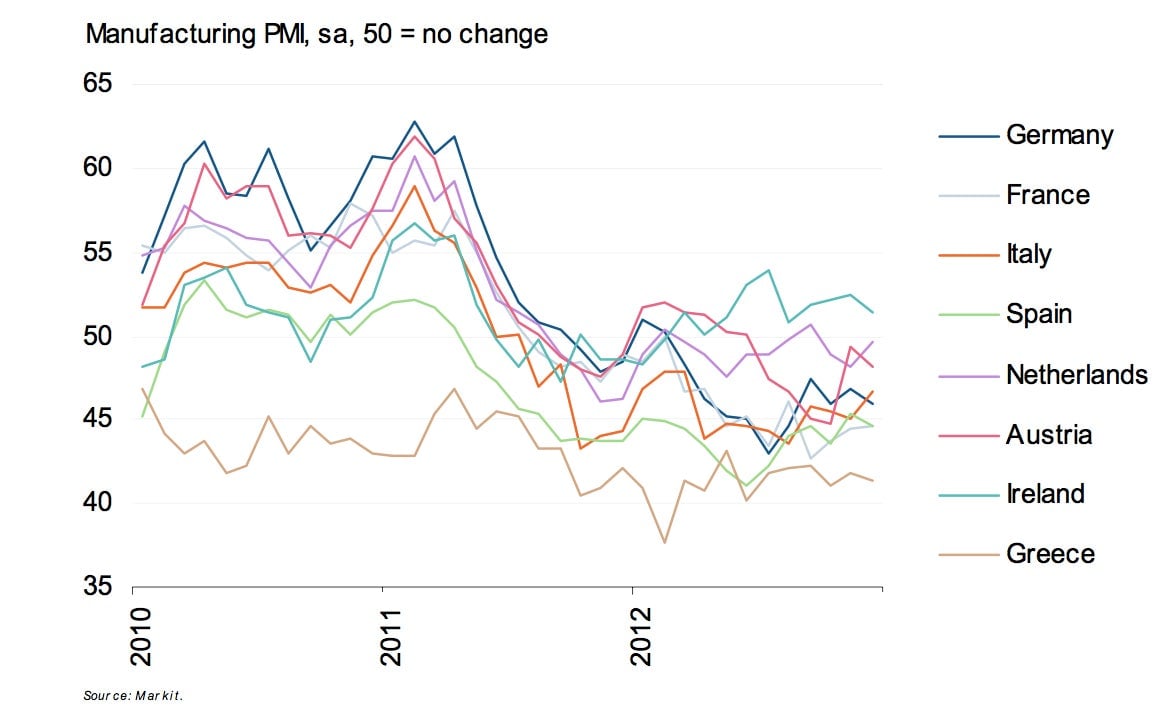
Manufacturing production in the euro zone contracted more than initially expected for December, according to numbers out today from Markit, while manufacturing in the UK grew at the fastest rate in 15 months on the back of surprising domestic demand. These figures drawn from polling purchasing managers monthly, suggest the euro zone could be in for another year of recession amid continuing weak domestic and international demand. Only Ireland showed improved operating conditions, while downturns accelerated in Germany, Spain, Austria and Greece.

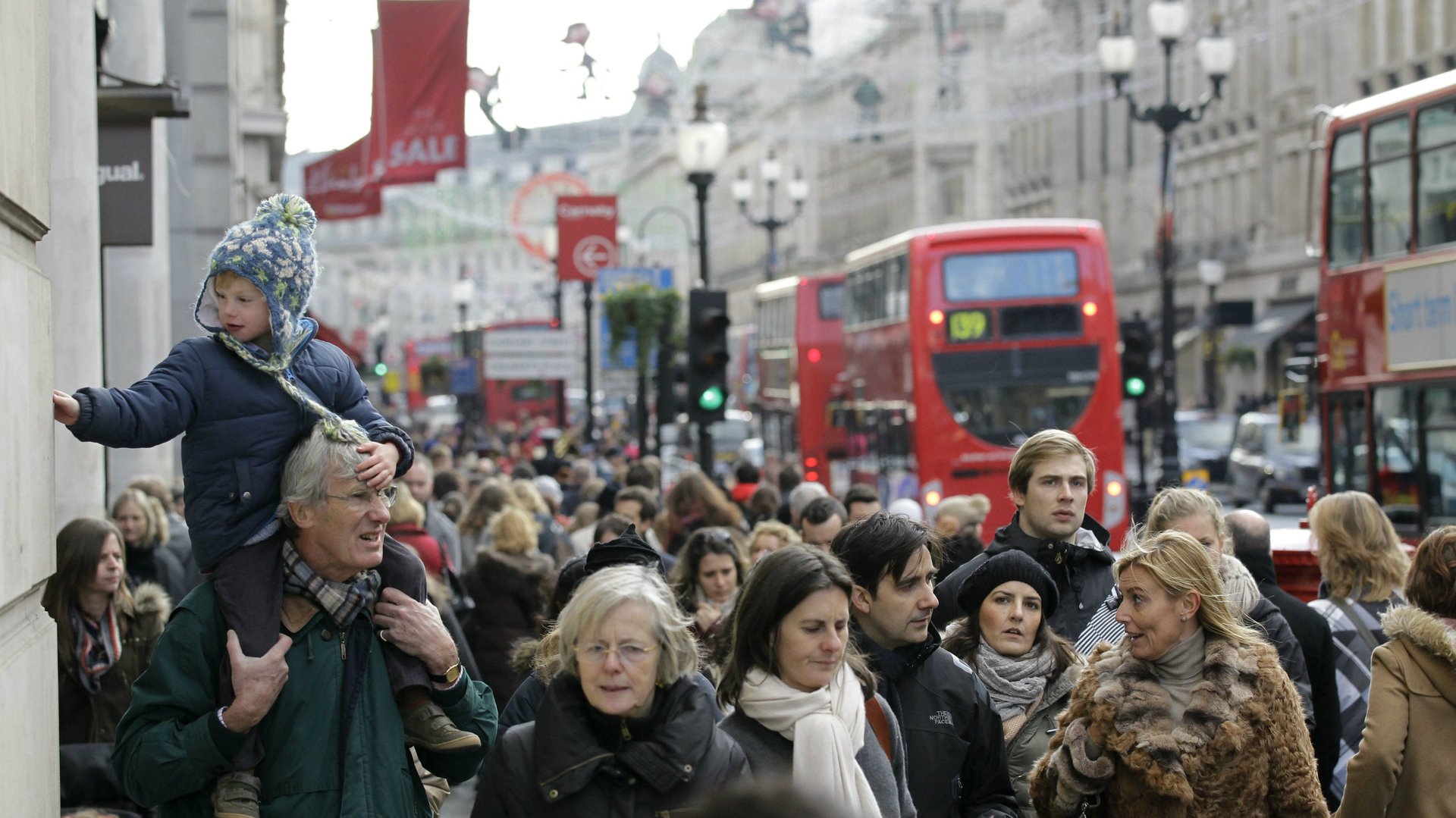
British retailers suffered a bruising in 2012 with 194 bankruptcy filings—up 6% from 2011, and up 18% from 2010—according to a new report from Deloitte. More filings are expected this quarter, says Lee Manning, restructuring services partner at Deloitte, citing unspectacular Christmas sales, tight consumer budgets, online competition, and too many shops. Large chains suffered the most.
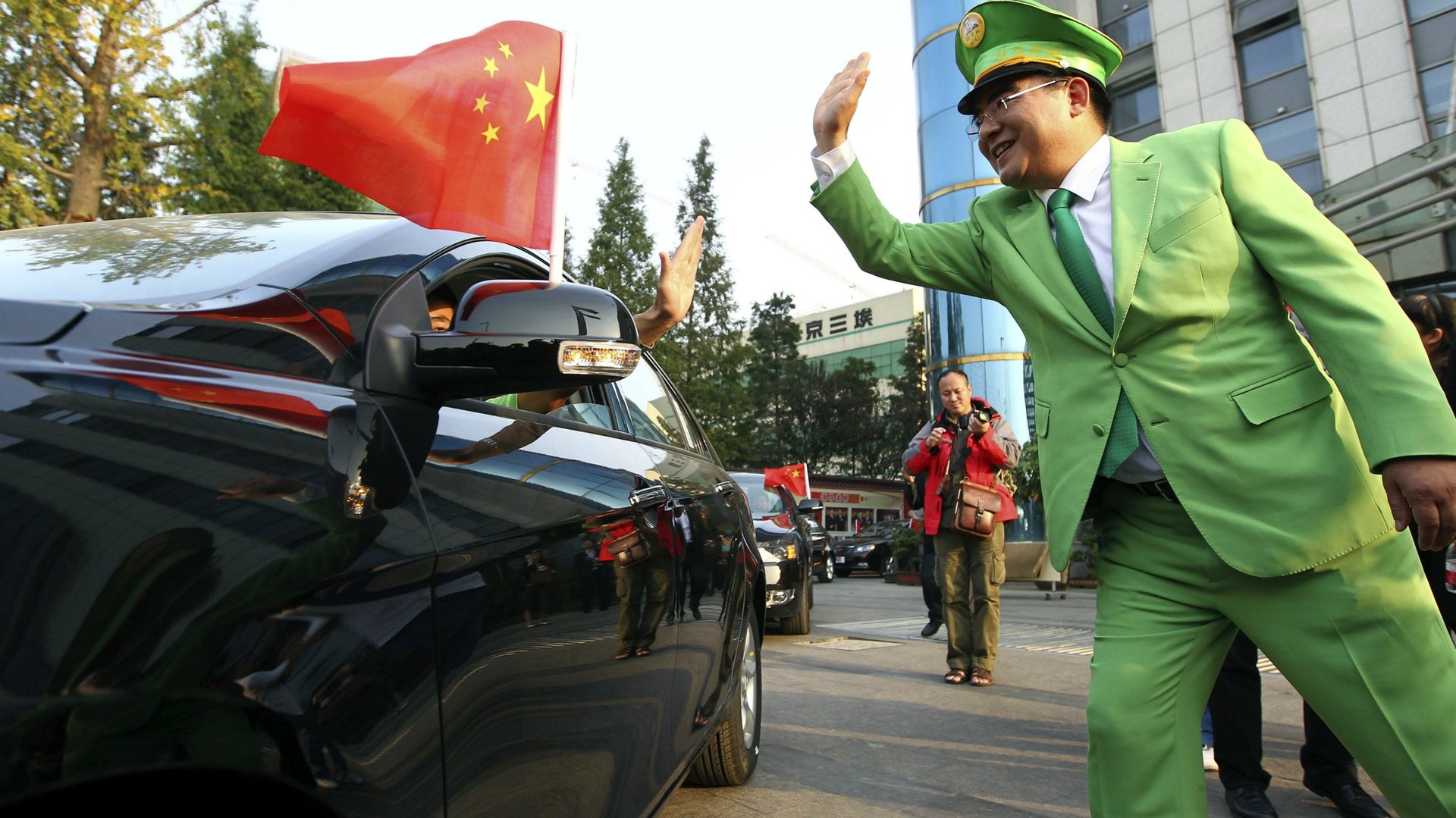
The Financial Times reports that China, for the first time, is set to produce more cars than Europe in 2013 as Chinese auto production reaches 10 times its 2000 level. Forecasts prepared for the FT show that China will make roughly 19.6 million cars and other light vehicles compared to 18.3 million in Europe. In 2012, Europe manufactured 18.9 million and China made 17.8 million. Projections show global car production volumes growing by 2.2% this year, compared to 4.9% in 2012.

(Updated at 2.48pm Jan. 2 with Starbucks comment)

New Year’s resolutions are always so bright-eyed and seemingly earnest, and the addresses delivered today and yesterday by many of the world’s leaders to their people were no different.
Finance ministers from the European Union clinched a deal just before dawn to make the European Central Bank (ECB) chief supervisor over some 150 of the euro zone’s biggest banks. It’s a first step toward banking union that theoretically bolsters the euro and gives European leaders a common way to help ailing banks so economies aren’t dragged down when banks fail, as happened in Ireland and Spain. It’s a good first move—especially considering many observers thought key decisions on banking union would be delayed until next year—but it’s only the beginning.