
New Chinese regulations set to take effect July 15 are forcing ByteDance and Alibaba Group Holding to wind down tools that let users create and engage with personalized AI companion figures.
Beijing's rules on humanlike AI interaction services take effect July 15, targeting emotional dependence and content harmful to minors
CFOTO / Getty Images
New Chinese regulations set to take effect July 15 are forcing ByteDance and Alibaba Group Holding to wind down tools that let users create and engage with personalized AI companion figures.
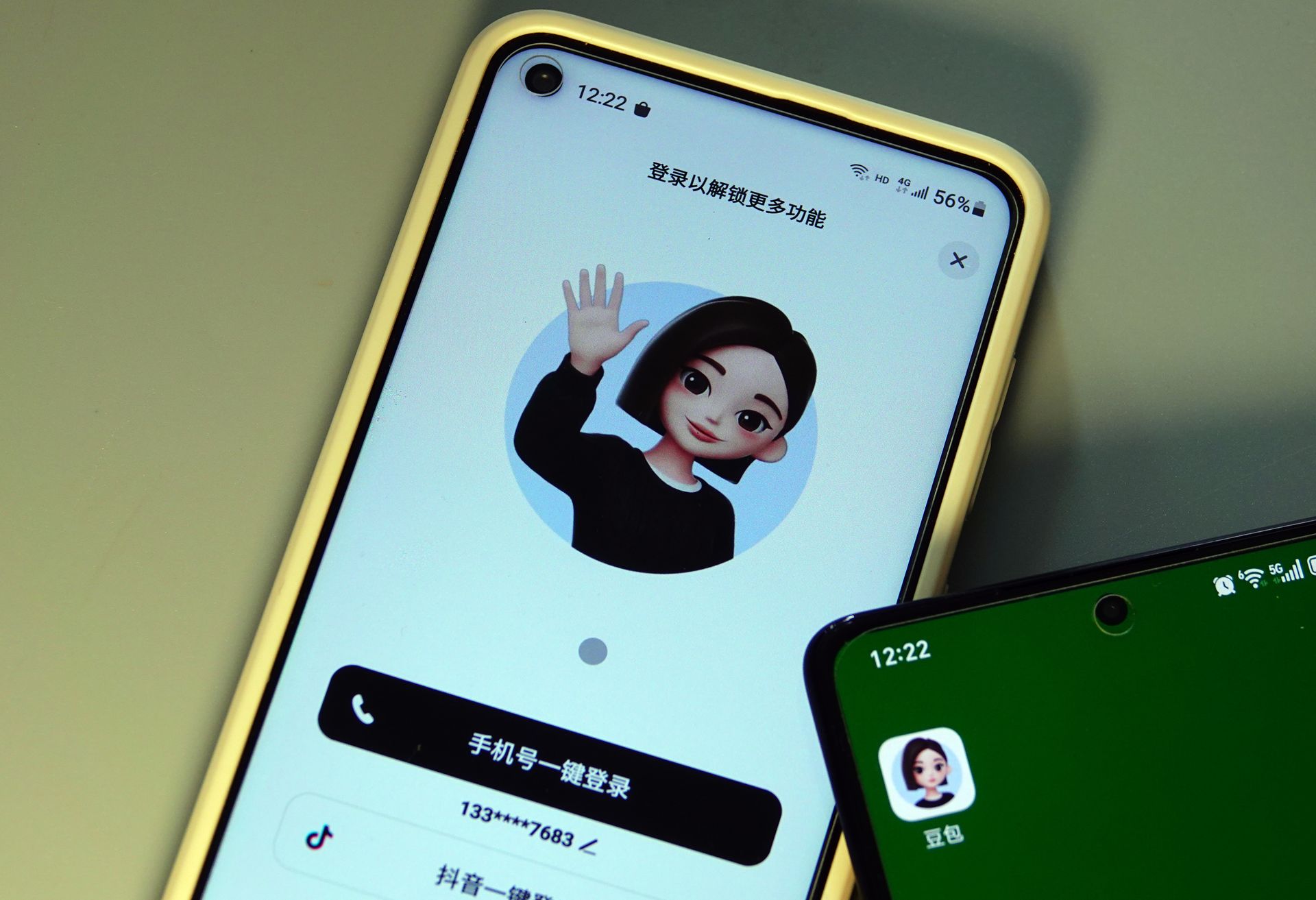
An in-app notification reviewed by Bloomberg revealed that Doubao, ByteDance's AI chatbot and the most widely used in China, plans to remove its persona customization capability when the rules take effect. Alibaba's Qwen has issued a similar alert. Tencent Holdings' Yuanbao has also made comparable moves, according to the South China Morning Post.
Before the rollback, both platforms gave users access to rosters of AI agents that could be tailored around particular abilities, topics, and conversational tone — whether built by the company or by users themselves. Through those tools, according to the South China Morning Post, someone could configure a chatbot to take on a persistent identity, such as a study tutor, a role-play character, or a named personal companion. Among the formats that gained traction on Chinese platforms, were romantic AI partners, therapy-style bots operating without professional licensing, and chatbot personas modeled on celebrity pop figures.
The changes are driven by the Interim Measures for the Administration of Artificial Intelligence Anthropomorphic Interaction Services, issued in April and effective July 15. According to the South China Morning Post, the framework applies to AI products designed to replicate how humans think, speak, and present themselves in order to maintain ongoing emotionally oriented interactions with users. The Cyberspace Administration of China is behind the new framework, according to Bloomberg.
The new rules ban content meant to trigger strong emotional reactions in minors and any AI behavior that creates attachments strong enough to replace real-life relationships. Companies also cannot use private user conversations to train their models. Regulators say the rules address concerns like radicalization, data privacy, psychological and physical harm, and compulsive use. The regulations make an exception for tools with practical uses, such as customer support, answering questions, helping with work tasks, or supporting learning and research, as long as they are not designed for ongoing emotional engagement.
These regulations show a wider worry about the psychological impact of conversational AI. In the United States, regulators and lawsuits have raised similar issues. Legal actions against OpenAI and Alphabet $GOOGL-backed Character.AI claim that their chatbots encouraged harmful emotional attachments and, in the worst cases, were linked to the deaths of vulnerable people.
China's scrutiny of AI companionship is extending beyond software. Citing a People's Daily report, Bloomberg noted that a pair of Chinese robotics trade associations have called for stronger ethical standards to govern the physical side of AI intimacy, coinciding with a wave of companion and humanoid robots entering the consumer market.
Beijing has been positioning itself as a proponent of global AI governance frameworks, calling for a worldwide AI cooperation body while also building out domestic AI hardware to reduce dependence on U.S. chips. The new companion AI rules add a significant consumer-facing constraint to that picture, limiting how major platforms can deploy emotionally engaging features even as they invest heavily in AI across their product lines.
Join 500,000+ readers who start their day with Quartz.
By subscribing, you agree to our Terms of Service and Privacy Policy.