The Federal Reserve announced the leadership and objectives of five task forces Thursday that will examine how the central bank conducts monetary policy, naming 15 co-leaders drawn from academia, business, and former central banking.

Marc Andreessen, former Walmart CEO Doug McMillon, and former Bank of England Governor Mervyn King are among 15 co-leaders tapped by the new Fed chair
Chip Somodevilla / Getty Images
The Federal Reserve announced the leadership and objectives of five task forces Thursday that will examine how the central bank conducts monetary policy, naming 15 co-leaders drawn from academia, business, and former central banking.
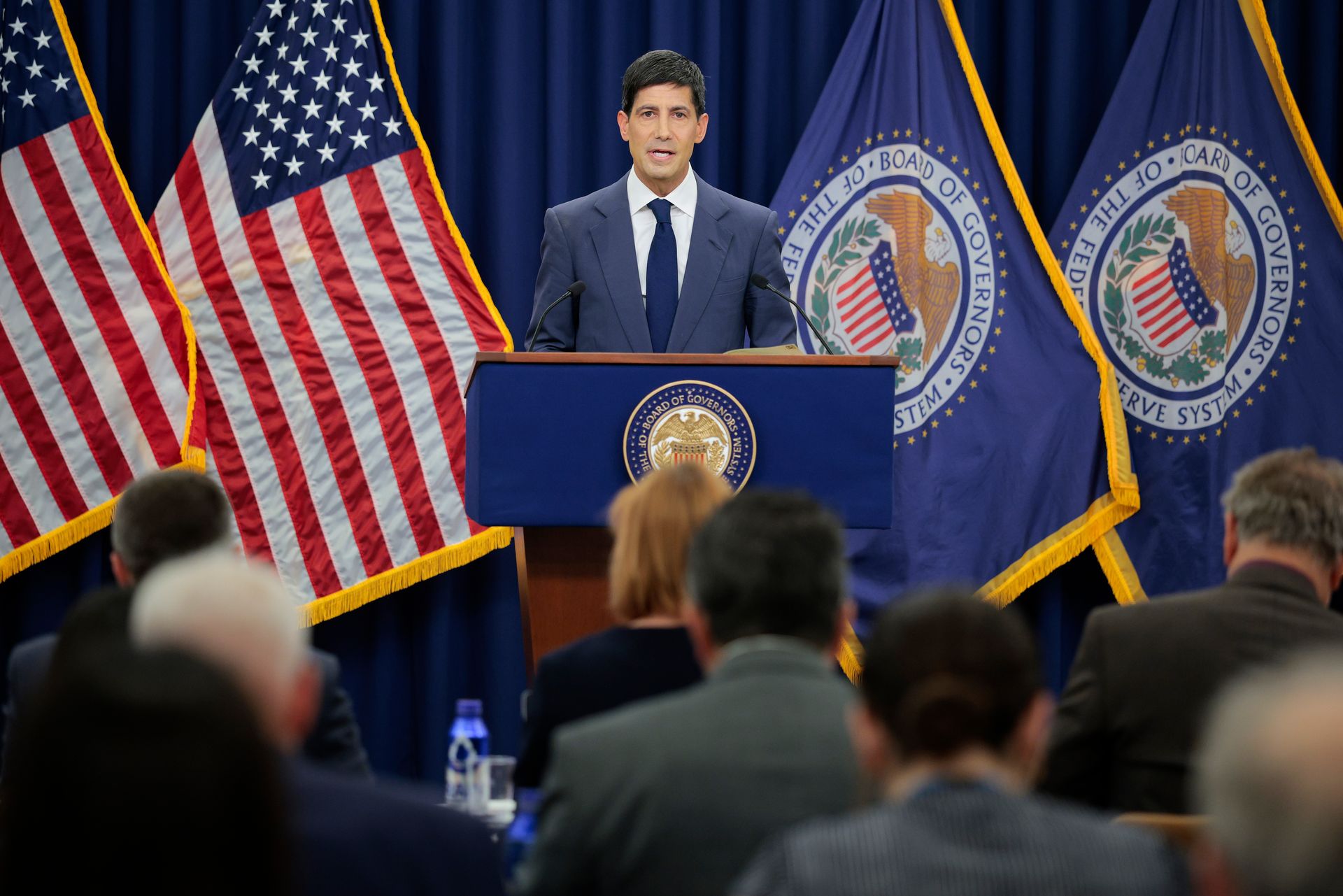
Fed Chair Kevin Warsh said the task forces would assess whether the Fed's "means and methods, analytical tools and policy approaches can be improved upon." Each panel will be supported by Fed staff and will report its findings to the Federal Open Market Committee.
The five task forces and their co-leaders are: Communications, led by Peter R. Fisher of the University of Washington, Arminio Fraga of Gávea Investimentos and former president of the Central Bank of Brazil, and Mervyn King, former governor of the Bank of England; Balance Sheet Policy, led by Karen Dynan and Jeremy Stein of Harvard University and Raghuram Rajan of the University of Chicago Booth School of Business, who also served as former governor of the Reserve Bank of India; Data, led by Raj Chetty of Harvard, Kevin Murphy of the University of Chicago, and Doug McMillon, former president and CEO of Walmart $WMT; Productivity and Jobs, led by Marc Andreessen, cofounder and general partner of Andreessen Horowitz, Charles I. Jones of Stanford University, and Asha Sharma, executive vice president and Xbox CEO at Microsoft $MSFT; and Inflation Frameworks, led by Greg Mankiw of Harvard and former chairman of the Council of Economic Advisers, Thomas Sargent of New York University and Nobel laureate, and William White of the C.D. Howe Institute and former economic adviser to the Bank for International Settlements.
Warsh offered his own assessment of the assembled group in a written statement: "I am honored that the best minds from a range of disciplines have agreed to work with us to sharpen our performance as an institution. The goal is straightforward: to ensure the Fed is best positioned to achieve our objectives in this consequential time."
Warsh held his first FOMC meeting in June, at which he put forward the plan to create the five task forces. He has indicated he expects the groups to conclude their work by year-end. According to the Fed, each panel is expected to function without outside interference, carrying an obligation to pursue evidence wherever it leads, offer unvarnished assessments, and deliver well-grounded conclusions back to the committee.
Among the personal relationships underpinning the selections, the bond between Warsh and Andreessen is notable — the two crossed paths at Stanford University about three decades ago, CNN reported. Other members of the panels share professional history with Warsh stretching across several chapters of his career, including his previous service as a Fed governor, a White House role under former President George H.W. Bush, and a long affiliation with the Hoover Institution at Stanford.
The productivity and jobs task force has received special attention because Warsh has said that productivity gains from AI could affect interest rates. The June FOMC minutes showed the committee discussed whether demand driven by AI could raise inflation, but also considered that better productivity might help lower price pressures. The Fed's main interest rate is now between 3.5% and 3.75%. The next FOMC meeting is scheduled for July 28 and 29.
Join 500,000+ readers who start their day with Quartz.
By subscribing, you agree to our Terms of Service and Privacy Policy.