
Quartz
Subscribe
Quartz
Subscribe
Edition
Business News
A.I.
Technology
Money & Markets
Leadership
Lifestyle
Latest

Get Quartz in your inbox

Free daily briefing on global business news.

Business News
AirlinesAutomobilesFoodPharmaceuticalsPolitics & GovernmentRetail & EcommerceSpace & AerospaceEarnings
Technology
A.I.ComputingConsumer TechSpace & AerospaceEarnings
Money & Markets
Economic IndicatorsMarketsPersonal FinanceEarnings
Lifestyle
Cars & BikesCollectingEntertainmentFood & Fine DiningHealth and FitnessReal EstateTravel
Quartz

Global business news for a smarter world

Topics

  • Business News
  • Money & Markets
  • Tech & Innovation
  • Generation A.I.
  • Lifestyle
  • Leadership

Products

  • Daily Brief
  • Weekly Digest
  • Member Benefits
  • Quartz Pro

Legal

  • Sitemap
  • About
  • Accessibility
  • Privacy
  • Terms of Service
  • Advertising

© 2026 Quartz Media, Inc. All rights reserved.

Beyond Silicon Valley

Meta's news ban in Canada is getting in the way of Yellowknife wildfire evacuations

Meta pulled Canadian news links from Facebook and Instagram in response to the Online News Act

By Ananya Bhattacharya·3 min read·Updated August 18, 2023
Add QZ to Google

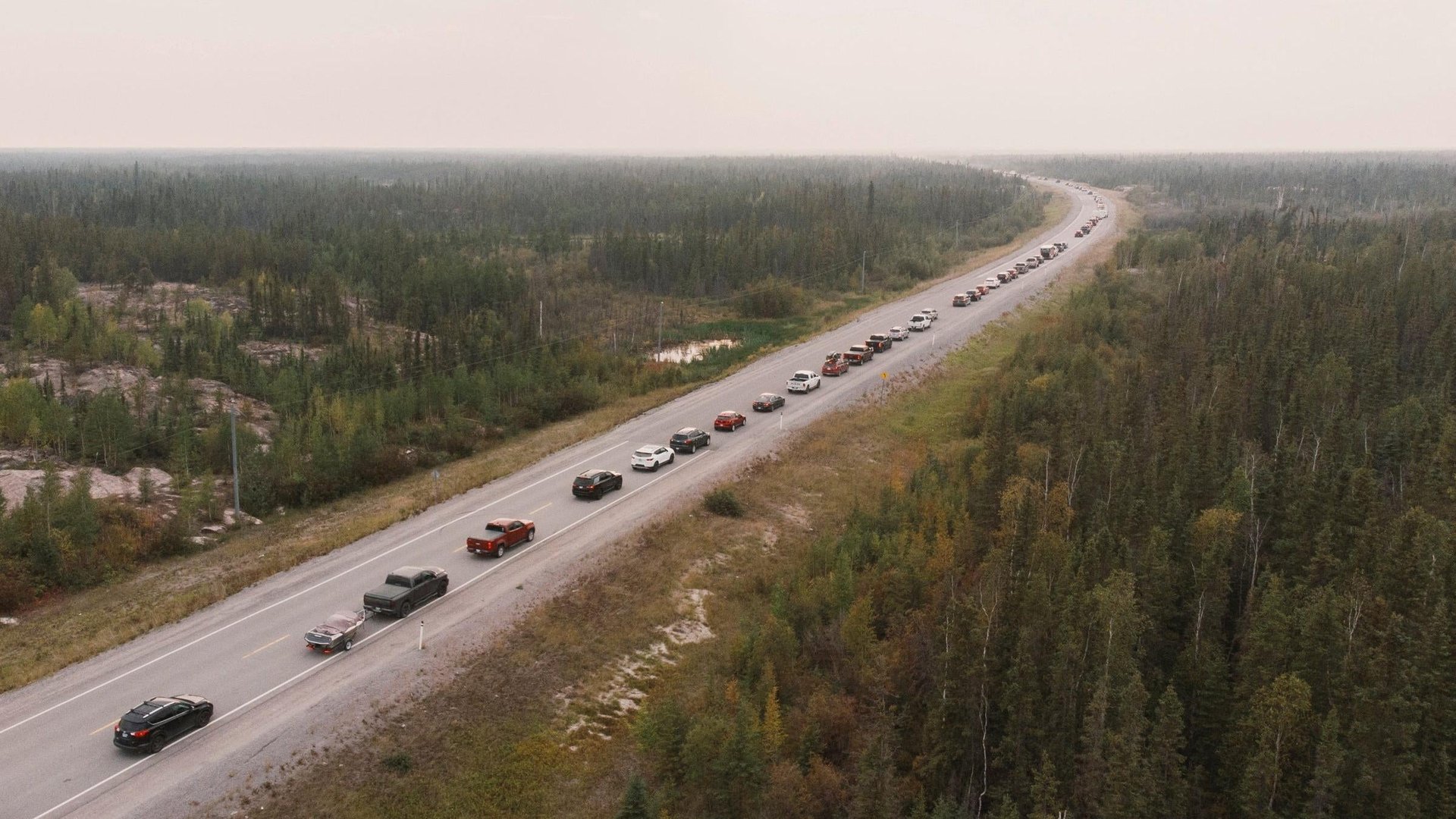
The ongoing tussle between Meta $META and Canada’s federal government over big tech’s compensation for news publishers has created a local media vacuum for Yellowknife evacuees, who had to flee the Northwest Territories’ capital because of a rapidly approaching wildfire, making it harder to spread life-saving information in the midst of the emergency.


Bill C-18, or the Online News Act, which forces large social media platforms to pay Canadian news publishers for sharing their content, recently became law despite pushback from internet companies. Meta, the parent company of Facebook and Instagram, said it would pull news from its subsidiaries if the requirement became mandatory—and on Aug. 1, it did.

As the Northwest Territories battle 236 of the 1,050 fires active in the country, sharing information directly from credible news sources like national publisher CBC, local newspaper The Yellowknifer, and digital broadcaster Cabin Radio on social media is off the table for the 20,000 Yellowknife residents hit with an evacuation order.

Meanwhile, Meta is sticking to its guns. “People in Canada are able to use Facebook and Instagram to connect to their communities and access reputable information, including content from official government agencies, emergency services and non-governmental organisations,” Meta spokesperson David Troya-Alvarez told CBC on Aug. 17.

One big number: Canadians rely heavily on Facebook, Google for local news

Up to 50%: Share of Canadians that use social media or Google $GOOGL to find out what’s happening in cities and towns across the country, according to Dwayne Winseck, professor of communication and media studies at Carleton University

Quotable: Google will follow in Meta’s footsteps in banning news for Canadian users

“We’re annoyed, because here we are in the middle of a severe wildfire season, with a bunch of evacuations, and your ability to access our reporting is about to be restricted. It makes no sense and, frankly, it’s dangerous. [...] But on the flip side of this: screw ’em all. You don’t actually need Meta or Google to get accurate, timely reporting about the Northwest Territories.”
—Cabin Radio’s Ollie Williams on July 28

The perils of the social media communications ban

The government’s new law and Meta’s reticence to comply are together creating a dangerous online environment. Already, misinformation is running rampant.

“When it comes to how far away the fire is, that’s definitely been a concern for everybody, because I know there’s been a lot of misinformation about where it is and what’s going on with it,” Yellowknife resident Kelsey Worth told CBC mid-evacuation from the North Arm Territorial Park yesterday (Aug. 17). “I watch the satellite maps now because I can’t get an accurate number on where it’s at.”

People are increasingly going directly to the publishers’ websites. But then, to alert friends and family of the natural disaster’s devastating progression, Worth and others are resorting to taking and posting screengrabs from these news sites. While it’s a quick fix in this emergency situation, in the long run, this isn’t a sound strategy.

Ahmed Al-Rawi, head of the Disinformation Project at Simon Fraser University, has warned that the inability to authenticate news will lead to a surge in fake news, including doctored screenshots.

Related stories

🚨 Not just Maui: Snapshots of global climate disasters that followed a record-hot July

🔥 Canada’s massive wildfire problem is worsening

🤑 More countries are asking Google and Meta to save the news—by paying for it


Daily Brief

The essential business news, delivered fresh every morning.

Join 500,000+ readers who start their day with Quartz.

By subscribing, you agree to our Terms of Service and Privacy Policy.

Related

PharmaBristol Myers Squibb is deploying NVIDIA's most powerful AI computing system to speed drug discovery
Money & MarketsOil spikes as Trump says Iran will pay "many times over" for killing three US soldiers
RetailE.U. hits AliExpress with a record €550 million fine for allowing illegal product sales
MarketsJersey Mike's is kicking off its IPO roadshow, targeting up to $1.09 billion
A.I.Head of U.S. federal AI testing institute resigned after just three months