An investigation by The Wall Street Journal revealed that Polymarket recruited a predominantly college-age pool of creators to record simulated trades on counterfeit versions of its platform — findings drawn from an examination of over 1,100 videos alongside internal instructional materials.
Across all 1,105 videos, every apparent wager — totaling roughly $1.9 million — turned out to be fabricated, the Journal determined. Bets appeared in approximately seven out of every ten clips reviewed. Despite the company's prohibition from operating its main crypto exchange in the U.S. — the result of a 2022 Commodity Futures Trading Commission settlement — the creators' outreach was directed squarely at American audiences.
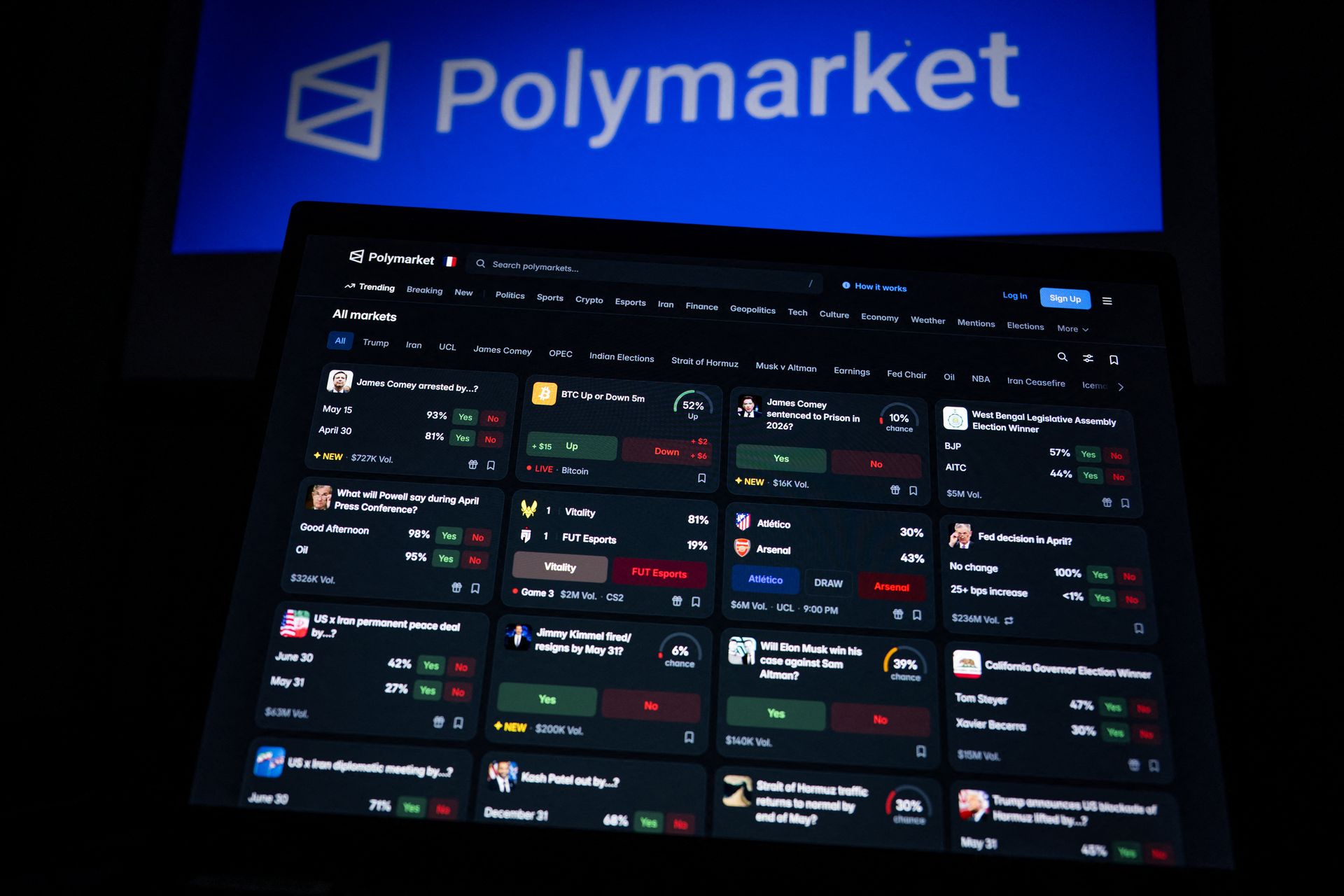
Polymarket built near-perfect copies of its website for the operation. Among the counterfeit domains used was poiymarket.com, which featured in 118 videos; the winning trades displayed there totaled around $900,000, yet the identical positions on the genuine platform would have generated losses exceeding $166,000. Once Journal reporters sought comment from Polymarket, the fraudulent domain went offline.
The fabrications extended to individual markets. In one video, creator George Makihara celebrated a purported $100,000 payout on a bet predicting that President Donald Trump would utter the word "McDonald's $MCD" at some point during January. The word never crossed Trump's lips in public that month; on the actual Polymarket exchange, blockchain records confirm that all 50-plus accounts that genuinely wagered on the outcome were on the losing side.
Monthly compensation for creators typically ran between $2,000 and $3,000, and Polymarket directed them to keep the paid relationship hidden. It was only once Journal reporters began making inquiries that the creators updated their social-media profiles to include "@polymarket partner." The distribution side of the operation was handled by Virality, a marketing firm that managed a broader network of accounts tasked with reposting and spreading the videos; internal guidance reviewed by the Journal — drawn from a chat archive of close to 20,000 messages — showed Virality mandating that all reposts feel spontaneous and authentically personal. According to the analytics firm Tubular, the effort ultimately accumulated over 140 million views across TikTok, Instagram, and YouTube.
Razeen Khan, who spent several months producing content for Polymarket before parting ways with the company in March, drew an analogy to food advertising. "We're depicting what actually happens," Khan told the Journal. "You're still going to buy the burger."
In a written statement, Polymarket described itself as "committed to maintaining accurate, fair, and transparent markets" and said it would undertake a comprehensive review of its active promotional materials.
The revelations add to mounting scrutiny of the platform. Polymarket has previously drawn attention over suspicious trading patterns tied to U.S. military operations against Iran, with a blockchain analytics firm flagging nine linked accounts that achieved a 98% success rate across more than 80 bets. The House Committee on Oversight and Government Reform has since opened an investigation into potential insider trading on both Polymarket and rival Kalshi.
Under federal advertising regulations, companies must make honest representations about their products, and individuals compensated to promote them bear a legal obligation to reveal that financial relationship, the Journal noted. Enforcement history at the Commodity Futures Trading Commission — the agency with jurisdiction over prediction markets — includes past actions taken against firms that marketed their platforms using staged or simulated trading activity.
