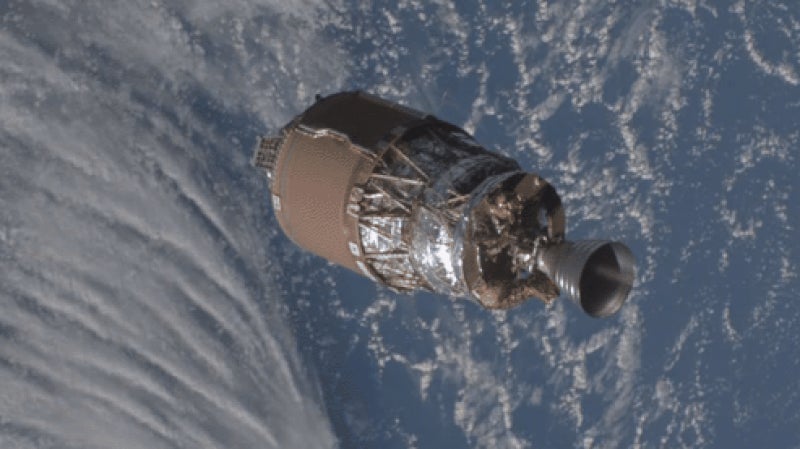
ADRAS-J photographed the upper stage of an H-IIA rocket from a range of several hundred meters and then backed away. This was the first publicly released image of space debris captured from another spacecraft using rendezvous and proximity operations.
Since then, Astroscale has pulled off more complex maneuvers around the H-IIA upper stage, which hasn’t been controlled since it deployed a Japanese climate research satellite in January 2009. Astroscale attempted to complete a 360-degree fly-around of the H-IIA rocket last month, but the spacecraft triggered an autonomous abort one-third through the maneuver after detecting an attitude anomaly.
Scientists have since uncovered and fixed the issue that caused the last flyby to be aborted, and have returned to the useless rocket to see what condition it’s in. Astroscale, the private company behind the program, has now shared some up close up footage of the defunct ship as it tumbles above the Earth.