
When Tesla $TSLA CEO Elon Musk declared over the holiday weekend that he plans to launch a third political party to reshape the 2026 midterms, Tesla investors didn’t celebrate — they sold. The stock plunged nearly 7% on Monday, erasing over $80 billion in market value and reigniting a long-simmering question on Wall Street: How much longer can the Tesla board let Musk run the company as a part-time CEO with full-time distractions?
“The Tesla Board MUST act and create ground rules for Musk,” Wedbush Securities managing director and longtime Tesla bull Dan Ives wrote in a note to clients on Tuesday morning. “The soap opera must end.”
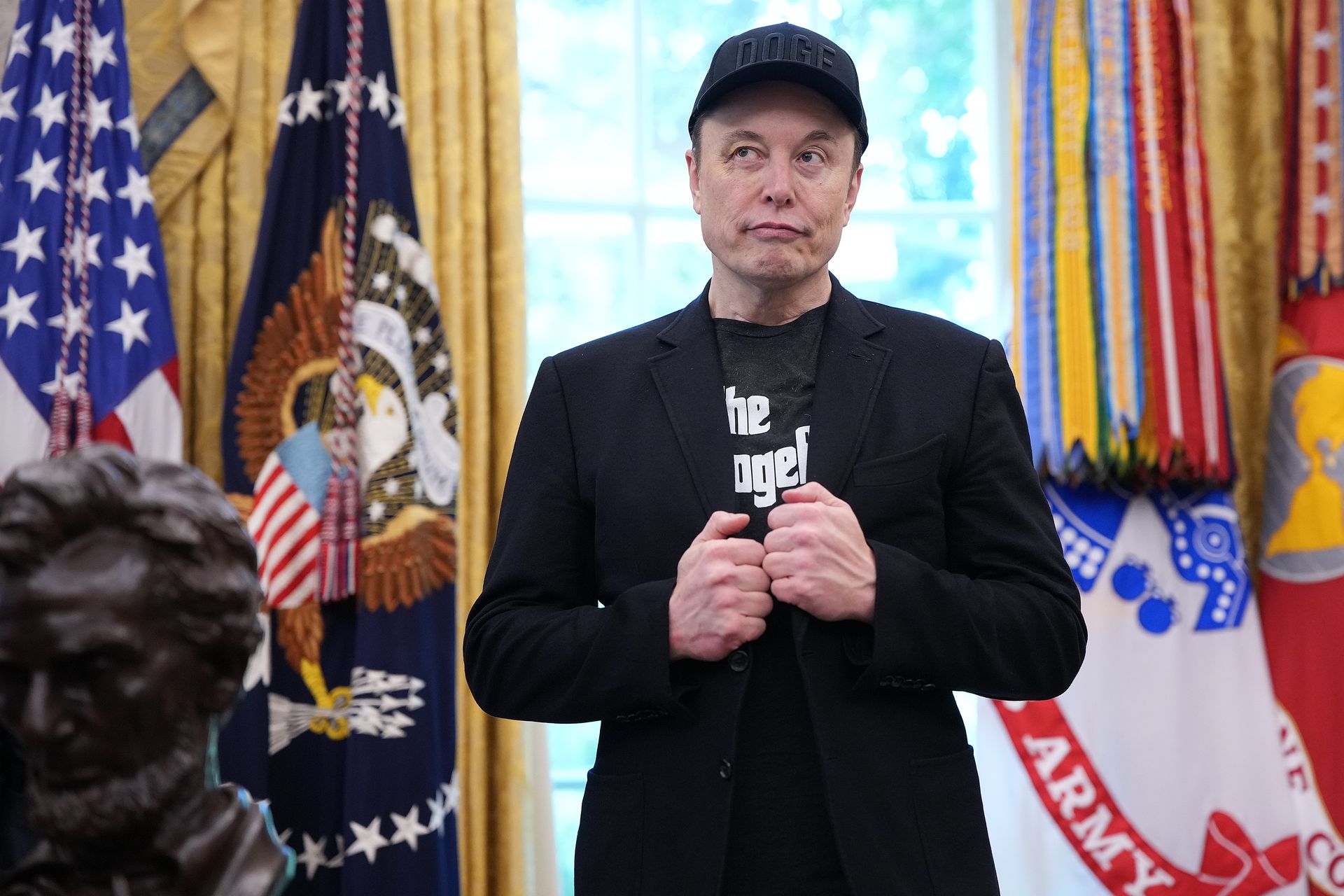
It’s far from the first time Tesla has been pulled into Musk’s personal orbit. The world’s richest man has turned the electric car maker into a stage for his political views, his corporate empire, and now, his ambitions to build what he’s calling the “America Party.” He poured hundreds of millions into President Donald Trump’s 2024 campaign. Musk served as an advisor to the president and led the controversial Department of Governmental Efficiency (DOGE) before pledging in April to return his focus to Tesla — he was “doubling down” on the company, he promised.
By June, it seemed like he might be following through. Then came this weekend’s declaration: a party that would target Senate and House races next year. A declaration that, according to multiple investors, threatens to derail Tesla at a moment when it can least afford a distracted CEO.
“Tesla is heading into one of the most important stages of its growth cycle with the autonomous and robotics future now on the doorstep,” Ives wrote, “and [the company] cannot have Musk spending more and more time creating a political party which will require countless time, energy, and political capital.”
Ives added: “Going after a handful of seats in the Senate and House heading into the 2026 mid-terms would essentially make Musk a foe of Trump and the Republican party ... which is exactly the opposite of what Tesla shareholders want to see with a very important autonomous regulatory framework now on the horizon during the Trump Administration.”
James Fishback, the CEO of investment firm Azoria and a major Tesla shareholder, pulled plans to launch a Tesla-focused ETF, telling Tesla’s board in a letter that Musk’s latest political turn “creates a conflict with his full-time responsibilities as CEO of Tesla.” He wrote, “I encourage the Board to meet immediately and ask Mr. Musk to clarify his political ambitions and evaluate whether they are compatible with his full-time obligations to Tesla as CEO.”
Fishback wrote on X $TWTR, “Elon is free to burn his own money on the ridiculous stunt that is the America Party. He is *not* free to drag shareholders down with him. Elon is a visionary CEO. He needs to focus on Tesla, not on President Trump.”
The stakes are plain. Tesla’s collapsing stock price, slumping vehicle deliveries, and slowing profit margins have triggered a growing sense among analysts that Tesla’s core advantage — its founder — is becoming its biggest liability. Tesla’s second-quarter deliveries fell nearly 14%, and the company now faces rising competition from Chinese EV leader BYD. In April, Tesla posted a staggering 71% first-quarter drop in net income.
Musk, once the crown jewel of the company’s brand, is increasingly a source of risk.
This isn’t new. For years, the Tesla board has operated somewhat like a fan club rather than a check on Musk’s power. It approved his $56 billion compensation package — the largest in corporate history — only to watch it struck down by a Delaware judge in January, who called it an “unfathomable sum” awarded by a board that was neither independent nor credible. Despite that, shareholders voted to reinstate his pay deal in June.
On Sunday, Alexandra Merz, who led the campaign to reinstate the pay package, warned on X: “If I could give one advice to [Tesla’s] Board: Don’t rush into a new compensation package right now. Let the dust settle.”
Ives, in his note, laid out a three-point plan moving forward: Tie Musk’s compensation to a concrete time commitment at Tesla, create a special board committee to oversee his political activity, and if necessary, craft a deal that includes more Tesla equity that is contingent on actual engagement.
“The Board cannot control Musk’s donations … but they can have oversight if his political ambitions/endeavors interfere with his role as CEO of Tesla,” He wrote. “The Board now has to take the bull by the horns.”
Ives added, “Tesla needs Musk as CEO for another five years at least given how important of a role Musk will play in the autonomous and robotics future of Tesla.” That “at least” might be optimistic. Musk’s popularity has waned, not just with the public — polls show a steep drop after his stint in Washington — but with many Tesla buyers and investors. His latest political feud, this time aimed at Trump himself, could backfire spectacularly.
The board, for its part, has stayed quiet. “They should stop this nonsense,” former Musk supporter and investor Ross Gerber told The Washington Post. “But they won’t.”
Earlier this year, The Wall Street Journal reported that Tesla’s board had quietly begun working with executive search firms to explore potential successors for Musk. The report suggested that at least some directors had grown concerned about Musk’s increasingly erratic focus and time-consuming political involvement. Board Chair Robyn Denholm decried the report as “absolutely false,” and Musk called it “a deliberately false article” and a “bad breach of ethics,” but multiple outlets confirmed that the board had at least initiated early-stage conversations. Ives at the time called the move a “warning shot.”
That process reportedly fizzled, but Musk’s latest turn has seemingly revived debate about his role at the helm. Tesla’s fate may be tied to Musk, but if the board fails to enforce even basic guardrails, it could soon become tethered to his political whims, too.
Tesla is at a crossroads. Its robotaxi fleet, which debuted in Austin late last month, could generate trillions in value. The company’s AI strategy, increasingly entangled with Musk’s private company xAI, could put Tesla near the center of the physical AI revolution. But none of that will happen on autopilot.
Musk’s real job is still at Tesla’s headquarters in Texas, not on Capitol Hill. Until the board decides whether or not to step in, the stakes on Wall Street couldn’t be higher. Musk’s America Party might win headlines, but if Tesla and its CEO lose focus, investors could lose everything.
