Quartz
Subscribe
Quartz
Subscribe
Edition
Business News
A.I.
Technology
Money & Markets
Leadership
Lifestyle
Latest

Get Quartz in your inbox

Free daily briefing on global business news.

Business News
AirlinesAutomobilesFoodPharmaceuticalsPolitics & GovernmentRetail & EcommerceSpace & AerospaceEarnings
Technology
A.I.ComputingConsumer TechSpace & AerospaceEarnings
Money & Markets
Economic IndicatorsMarketsPersonal FinanceEarnings
Lifestyle
Cars & BikesCollectingEntertainmentFood & Fine DiningHealth and FitnessReal EstateTravel
Quartz

Global business news for a smarter world

Topics

  • Business News
  • Money & Markets
  • Tech & Innovation
  • Generation A.I.
  • Lifestyle
  • Leadership

Products

  • Daily Brief
  • Weekly Digest
  • Member Benefits
  • Quartz Pro

Legal

  • Sitemap
  • About
  • Accessibility
  • Privacy
  • Terms of Service
  • Advertising

© 2026 Quartz Media, Inc. All rights reserved.

Economic Indicators

What it will cost big banks if the FDIC insures all US deposits

Bailing out uninsured depositors at Silicon Valley Bank and Signature might have been just the start

By Nate DiCamillo·2 min read·Updated April 6, 2023
Add QZ to Google

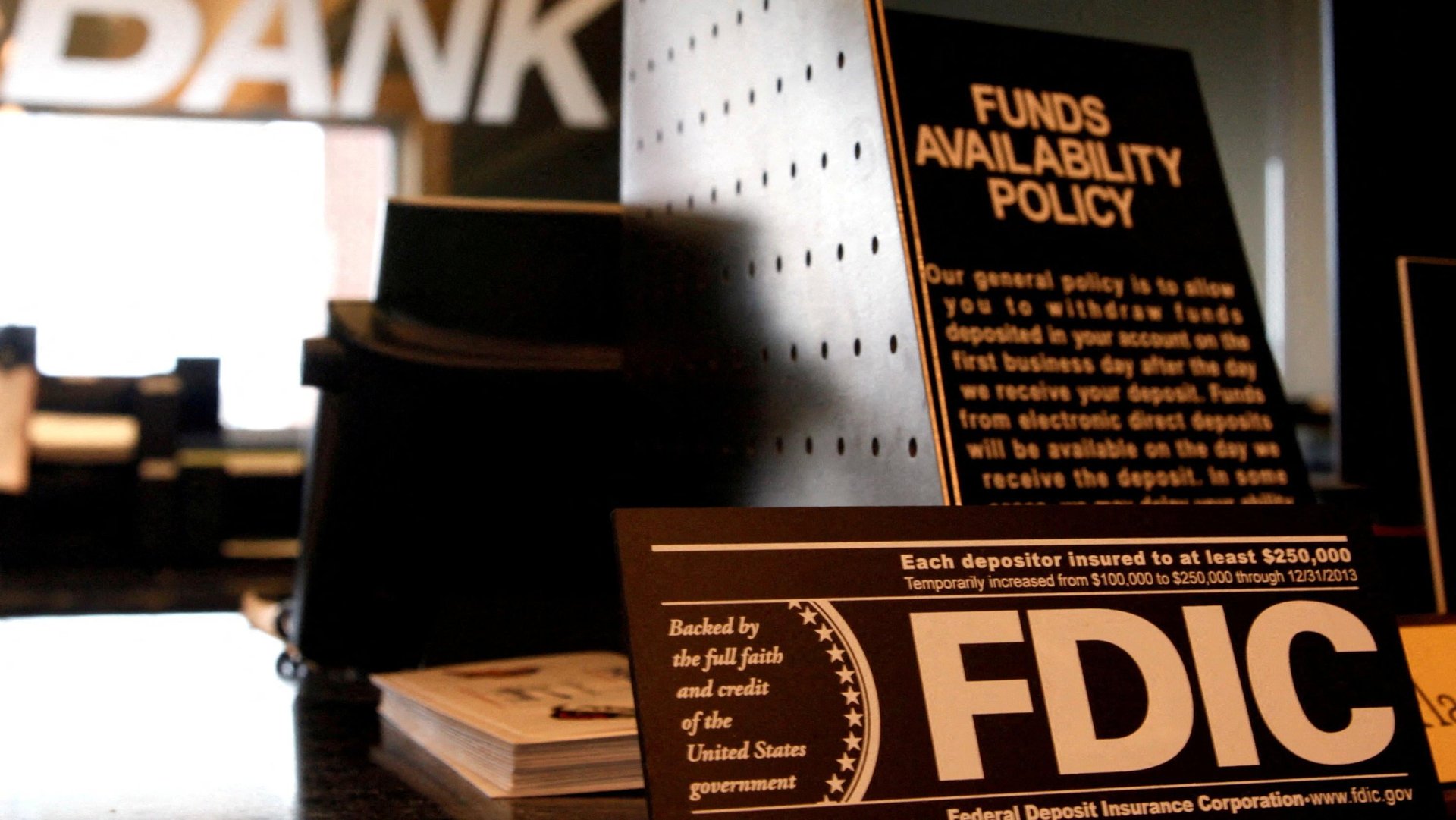
By law, the Federal Deposit Insurance Corp. (FDIC) has to hold the equivalent of 1.35% of all insured deposits in its deposit insurance fund (DIF). Lately, that’s means keeping $128 billion on hand. But the FDIC predicts the fund is going to take a $23 billion dollar hit after the failures of Silicon Valley Bank and Signature Bank.


To cover this loss and top up the DIF again, the banking regulator will simply increase the assessment fees it collects from big banks. But if Congress raises the deposit insurance limit to include all deposits, the numbers are going to swell, said Todd Phillips, a former FDIC lawyer.

US banks hold $17.5 trillion in deposits. Keeping 1.35% of that amount in the DIF comes out to a little over $236 billion, an 84.4% increase from today’s minimum.

To be sure, the DIF is not the only tool the FDIC has to backstop deposits. If the fund goes down to zero—which has only happened in the wake of the 2008 financial crisis—then the FDIC may borrow from the US Treasury. (During the most recent spate of bank failures, the FDIC briefly borrowed $40 billion from Treasury, but returned it after the Federal Reserve stepped in to make its emergency lending tool available to both failed banks, so that all of their depositors would be protected.)

Because of Dodd-Frank, the FDIC is required to charge banks like JPMorgan Chase, Bank of America $BAC, and Wells Fargo $WFC more on their assessment fees to top up the DIF. This means that the majority of this increase would land on the balance sheets of multitrillion-dollar banks which are systemtically important rather than making it harder for community banks to operate.

It’s unlikely this would happen without a fight from banking industry groups though. The last time the FDIC voted to raise the amount that banks were paying into the fund by 0.02 percentage points, banking associations balked but still had to pay. Since Congress has to legislate the deposit insurance increase, trade groups may have more success at shutting down the proposed changes.

Daily Brief

The essential business news, delivered fresh every morning.

Join 500,000+ readers who start their day with Quartz.

By subscribing, you agree to our Terms of Service and Privacy Policy.

Related

Business NewsIntel's revenue surged 25% in second quarter, its fastest growth in 15 years
Cloud ComputingDatabricks is extending its Microsoft Azure partnership into the 2030s
Cloud ComputingTrump is expanding his AI data center pledge to protect consumers from rising electricity bills
Business NewsE.U. fined Google $1 billion for favoring its own services in search
MarketsAlbertsons stock plunges after the grocer slashes its annual sales and profit forecasts